 17 citations
,
January 2019 in “Dermatologic Therapy”
17 citations
,
January 2019 in “Dermatologic Therapy” Tofacitinib is effective and safe for long-term treatment of severe alopecia areata, with many patients achieving complete hair regrowth.
 6 citations
,
May 2015 in “Clinics in Dermatology”
6 citations
,
May 2015 in “Clinics in Dermatology” Acne and other skin conditions can indicate internal diseases like Polycystic Ovary Syndrome (PCOS), and early treatment can prevent long-term issues.
May 2021 in “Medicina internă” High-dose corticosteroid treatment helped improve symptoms in a patient with Adult Onset Still Disease.
 3 citations
,
July 2017 in “International journal of medicine”
3 citations
,
July 2017 in “International journal of medicine” Intralesional triamcinolone acetonide effectively treats alopecia areata, as shown by significant improvements in hair regrowth and dermoscopic indicators.
30 citations
,
July 2009 in “Experimental and clinical endocrinology & diabetes” Cyproterone acetate effectively treats sexual disorders by reducing sexual functions and is generally well-tolerated.
1 citations
,
January 2022 in “Skin appendage disorders” DCPA is a chronic skin condition affecting the legs, often misdiagnosed, and needs more research for better understanding and treatment.
 April 2023 in “Journal of Investigative Dermatology”
 Acne patients have higher skin mTORC1 activity, which is reduced by isotretinoin treatment.
 October 2024 in “Journal of the Endocrine Society”
 Certain genetic variants reduce enzyme activity, contributing to non-classic congenital adrenal hyperplasia.
July 2026 in “Journal of the American Academy of Dermatology” Acanthosis Nigricans is the most common skin sign of insulin resistance.
 May 2024 in “Journal of cosmetic dermatology”
 Tofacitinib is an effective and safe treatment for alopecia areata.
Early diagnosis and treatment are crucial for skin emergencies and drug reactions.
 1 citations
,
May 2017 in “Journal of the American Academy of Dermatology”
1 citations
,
May 2017 in “Journal of the American Academy of Dermatology” Oral tofacitinib may be an effective and tolerable treatment for some people with severe alopecia areata.
August 2024 in “JAAD Case Reports” Upadacitinib successfully regrew hair in a child with alopecia universalis and specific genetic mutations.
 4 citations
,
July 2025 in “Frontiers in Immunology”
4 citations
,
July 2025 in “Frontiers in Immunology” Early intervention with JAK inhibitors may prevent alopecia areata progression.
5 citations
,
January 2015 in “Molecular Genetics and Metabolism”  48 citations
,
November 2017 in “Journal of the American Academy of Dermatology”
48 citations
,
November 2017 in “Journal of the American Academy of Dermatology” Tofacitinib 2% ointment helped hair regrow in 3 out of 10 patients with alopecia areata, but caused side effects like scalp irritation and raised cholesterol in some.
4 citations
,
January 2025 in “Dermatologica Sinica” Experts recommend personalized treatment plans for alopecia areata, using corticosteroids and minoxidil for mild cases, and stronger medications for severe cases.
5 citations
,
October 2022 in “Biology” CAP1 helps Arabidopsis plants grow better under ammonium stress.
 1 citations
,
August 2021 in “Journal of The American Academy of Dermatology”
1 citations
,
August 2021 in “Journal of The American Academy of Dermatology” Baricitinib helped improve hair, eyebrow, and eyelash growth in alopecia areata patients.
40 citations
,
September 2014 in “Journal of cosmetic and laser therapy” Transepidermal drug delivery effectively treated areata alopecia with minimal side effects.
 September 2023 in “Curēus”
 Alopecia areata may be linked to hearing problems, so patients should monitor their hearing.
March 2026 in “British Journal of Dermatology” Deucravacitinib did not significantly improve hair regrowth in alopecia areata patients.
21 citations
,
May 2023 in “The Journal of Allergy and Clinical Immunology In Practice” 4 citations
,
August 2006 in “The Journal of Dermatology” HLA can be linked to autoimmune hepatitis.
 6 citations
,
November 2017 in “Dermatologic Therapy”
6 citations
,
November 2017 in “Dermatologic Therapy” Combining mometasone furoate cream with adapalene gel is safer and more effective for hair regrowth in alopecia areata than using the cream alone.
128 citations
,
December 2006 in “Journal of Biological Chemistry” Altering SSAT affects fat metabolism and body fat in mice.
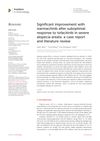 February 2026 in “Frontiers in Immunology”
 Ivarmacitinib significantly improved hair regrowth in severe alopecia areata after tofacitinib was less effective.
July 2025 in “The Egyptian Journal of Hospital Medicine” Both treatments improved alopecia areata, but methotrexate caused more skin darkening, while triamcinolone caused skin lightening and thinning.
 2 citations
,
April 2023 in “JEADV. Journal of the European Academy of Dermatology and Venereology/Journal of the European Academy of Dermatology and Venereology”
2 citations
,
April 2023 in “JEADV. Journal of the European Academy of Dermatology and Venereology/Journal of the European Academy of Dermatology and Venereology” JAK-inhibitors for alopecia areata are generally safe with mostly mild side effects and a low rate of treatment withdrawal.
 2 citations
,
June 2023 in “Journal of cell science”
2 citations
,
June 2023 in “Journal of cell science” Mutations in iRhom2 affect hair and skin in mice and are linked to esophageal cancer, with ADAM17 playing a crucial role.