Search
for
Sort by
Research
480-510 / 1000+ results
research 52243 AH-001: An Emerging Androgen Receptor Degrader Showing Therapeutic Potential in Addressing Androgenetic Alopecia (AGA)
AH-001 could be a safer and more effective treatment for hair loss.

research Supplementary Material for: TOFACITINIB IN OVERLAPPING AUTOIMMUNE AND AUTOINFLAMMATORY DISORDERS: A CASE REPORT OF A DUAL GRAHAM-LITTLE-PICCARDI-LASSEUR SYNDROME AND HIDRADENITIS SUPPURATIVA
Tofacitinib significantly improved symptoms in a patient with overlapping autoimmune disorders.
research Pharmacotherapy of alopecia areata
JAK inhibitors and combination therapies show promise for treating severe alopecia areata.
research Koilonychia in a Patient with Alopecia Areata.
Koilonychia in alopecia areata can improve with oral corticosteroids.
research Myodegeneration in EDA-A2 Transgenic Mice Is Prevented by XEDAR Deficiency
XEDAR deficiency prevents muscle degeneration in EDA-A2 transgenic mice.
research Metabolic and Vascular Inflammation in Alopecia Areata: Linking Uric Acid, Lipid Imbalance and ICAM ‐1 Upregulation
Improving blood vessel health and controlling uric acid may help manage alopecia areata.
research Randomized comparison of topical betamethasone valerate foam, intralesional triamcinolone acetonide and tacrolimus ointment in management of localized alopecia areata
Intralesional triamcinolone acetonide is the most effective treatment for localized alopecia areata.
research The hyperandrogenic-insulin-resistant acanthosis nigricans syndrome: therapeutic response
Most patients improved with oral contraceptives, but some needed additional treatment.
research Melanocortin receptor type 2 (MC2R, ACTH receptor) expression in patients with alopecia areata
Lower MC2R expression may contribute to alopecia areata.

research Alopecia Areata and Atopic Dermatitis: Common Mechanisms and Emerging Therapeutics
Alopecia areata and atopic dermatitis share immune system issues, and treatments like JAK inhibitors can help both.

research Barley disease susceptibility factor RACB acts in epidermal cell polarity and positioning of the nucleus
RACB in barley is crucial for cell polarity and nucleus positioning, aiding fungal infection.
research Chicken scratches.
Biotinidase deficiency can be easily diagnosed and treated with biotin to prevent serious harm.
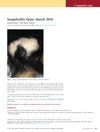
research SnapshotDx Quiz: March 2016
JAK inhibitors may help treat alopecia areata by reversing hair loss.
research Alopecia areata incognita: a comment
The author clarified that Alopecia Areata Incognita (AAI) and diffuse Alopecia Areata (AA) are different conditions and the case discussed was actually AA, not AAI.
research Evaluation of Paraoxonase 1 Serum Level in Male Androgenetic Alopecia Patients
Men with male pattern baldness have lower levels of the antioxidant PON1.
research Complete remission of alopecia areata under treatment of chronic hand eczema with alitretinoin
Alitretinoin may help treat alopecia areata.
research 9209 Functional Evaluation Of Novel CYP21A2 Variants: Expanding The Genetic Basis Of Non-classic CAH
Certain genetic variants impair enzyme activity, contributing to non-classic congenital adrenal hyperplasia.
research Mechanistic synergy of hair growth promotion by the Avicennia marina extract and its active constituent (avicequinone C) in dermal papilla cells isolated from androgenic alopecia patients
Avicennia marina extract and avicequinone C can potentially promote hair growth and treat hair loss by interfering with hair loss mechanisms and boosting growth factors.

research Line‐field confocal optical coherence tomography in alopecia areata and histopathological correlation
LC-OCT is a useful noninvasive tool for diagnosing and monitoring alopecia areata.
research 266 Myristoylphorbol Acetate (MPA) Enhances Metastasis Via Up-regulation of Eph A2 Transcription Activity
MPA increases cancer spread by boosting Eph A2 activity.
research A COMPARISON OF INTRA-LESIONAL TRIAMINOLONE HEXA-CETONIDE AND TRIAMCINOLONE ACETONIDE IN ALOPECIA AREATA
Both steroids effectively promote hair growth for at least 9 months.

research Association of Acne Tarda with Endocrinological Disorders
Adult acne is often related to hormonal disorders, especially in women, and may need long-term treatment involving specialists.
research Retrospective review of diphencyprone in the treatment of alopecia areata
Diphencyprone helped most patients with alopecia areata regrow some hair.

research Real‐life effectiveness and safety of baricitinib in adults with alopecia areata: A multicentre study
Baricitinib effectively reduces hair loss in alopecia areata and is well-tolerated.

research 52811 A comparative study of pain perception during platelet rich plasma therapy using sodium citrate and acid citrate dextrose-A as anticoagulant
Sodium citrate causes less pain than acid citrate dextrose-A in PRP therapy.

research Significant efficacy of tofacitinib from China in the treatment of alopecia areata: a case report
Tofacitinib effectively regrows hair in alopecia areata but may need continuous use.
research Acne keloidalis nuchae in renal transplant patients receiving tacrolimus and sirolimus
Renal transplant patients on tacrolimus and sirolimus may develop acne keloidalis nuchae.
research Sticking It to Alopecia
Triamcinolone acetonide injections help regrow hair in alopecia areata patients.
research The Fraser Complex Proteins (Frem1, Frem2, and Fras1) Can Form Anchoring Cords in the Absence of AMACO at the Dermal–Epidermal Junction of Mouse Skin
Certain skin proteins can form anchoring structures without the protein AMACO.