90 citations
,
August 2006 in “British Journal of Dermatology” PRIDE syndrome includes skin and hair issues from cancer treatment with EGFR inhibitors.
 62 citations
,
April 2016 in “Best Practice & Research in Clinical Obstetrics & Gynaecology”
62 citations
,
April 2016 in “Best Practice & Research in Clinical Obstetrics & Gynaecology” The conclusion is that there's a need for a new conference to establish stricter guidelines for diagnosing Polycystic Ovary Syndrome (PCOS).
2 citations
,
March 1994 in “Oncology Reports” Keratoacanthomas and squamous cell carcinomas have similar keratin patterns, making them hard to tell apart.
June 2026 in “BULLETIN OF STOMATOLOGY AND MAXILLOFACIAL SURGERY” Keratoacanthoma should be accurately diagnosed and treated based on its characteristics, often using surgery or tissue-preserving methods.
December 2024 in “Value in Health” A comprehensive approach is needed to accurately assess alopecia areata severity and guide treatment decisions.
 3 citations
,
August 2021 in “Research Square (Research Square)”
3 citations
,
August 2021 in “Research Square (Research Square)” The most common sign of aging at the gene level is more Ectodysplasin A2 Receptor (EDA2R) being made.
6 citations
,
January 2015 in “Indian Dermatology Online Journal” PEODDN is a rare skin disorder with limited treatment options, best treated with laser therapy.
Mutations in specific genes cause different types of ectodermal dysplasias.
 11 citations
,
May 2011 in “World Journal of Pediatrics”
11 citations
,
May 2011 in “World Journal of Pediatrics” The document emphasizes the importance of correctly identifying and classifying genetic hair disorders to help diagnose related health conditions.
 177 citations
,
December 2002 in “The Lancet”
177 citations
,
December 2002 in “The Lancet” Fibrinogen/LDL apheresis may improve speech perception in sudden hearing loss, especially for those with high fibrinogen and LDL levels.

CRPS I is complex, linked to immune and nerve issues, and needs comprehensive treatment.
October 2024 in “Endocrinology Insights” The Bethesda system is effective for identifying thyroid cancer but has low sensitivity.
29 citations
,
February 1989 in “Journal of Cutaneous Pathology” A unique hair tumor with a rippled pattern was identified, showing incomplete differentiation and unusual cell arrangements.
The C-CAT tool helps assess and improve treatment for central centrifugal cicatricial alopecia.
 September 2018 in “Journal of the American Academy of Dermatology”
 Elderly patients with CCCA were all African American with low vitamin D, but no iron or zinc deficiencies, and no hormonal imbalances compared to younger patients.
7 citations
,
August 1971 in “JAMA” Tinea faciale can be mistaken for lupus due to similar symptoms.
1 citations
,
June 2023 in “Medicina” People with Epidermolysis bullosa have many health problems including poor oral health, which is often neglected due to other medical issues.
January 2026 in “Al-Furat Journal for Health and Medical Sciences” Enterococcus faecalis may be linked to the severity of alopecia areata.
 12 citations
,
March 2004 in “International Journal of Dermatology”
12 citations
,
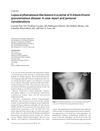
March 2004 in “International Journal of Dermatology” Woman's hair loss diagnosis changed from CTE to AA; multiple biopsies important for accurate diagnosis.
95 citations
,
October 2007 in “International Journal of Dermatology” A new method accurately classifies hair types, showing global hair diversity.
 October 2021 in “International journal of research in dermatology”
 No link between scalp patterns and alopecia severity in children, but more severe cases often had nail abnormalities.
 5 citations
,
May 2019 in “Anais Brasileiros de Dermatologia”
5 citations
,
May 2019 in “Anais Brasileiros de Dermatologia” Finger length ratios might predict risk for skin condition in males.
1 citations
,
January 2018 in “Indian dermatology online journal” Early diagnosis and genetic evaluation of ADULT syndrome are crucial to reduce stress and medical costs.
May 2026 in “JAAD International” Timely diagnosis of certain hair loss conditions is crucial to prevent permanent hair loss.
1 citations
,
April 2024 in “Journal of Cutaneous Pathology” Recurrent NICF is a rare skin condition with unclear causes, involving follicle inflammation and crystal deposits.
 46 citations
,
June 2018 in “American Journal of Clinical Dermatology”
46 citations
,
June 2018 in “American Journal of Clinical Dermatology” Hair loss is common in lupus patients and can be permanent or reversible, depending on the type, with various treatments available.
 46 citations
,
January 2015 in “Pediatric Rheumatology”
46 citations
,
January 2015 in “Pediatric Rheumatology” Skin symptoms are important for diagnosing and managing juvenile-onset systemic lupus erythematosus and usually get better with treatment.
 31 citations
,
March 2018 in “Frontiers in Immunology”
31 citations
,
March 2018 in “Frontiers in Immunology” The document concludes that anti-dsDNA antibodies are not unique to SLE and their use as indicators is doubtful, highlighting the need for better understanding and classification of the disease.
 15 citations
,
January 2014 in “Anais Brasileiros de Dermatologia”
15 citations
,
January 2014 in “Anais Brasileiros de Dermatologia” Lupus treatment requires a combination of drugs and therapies, with research needed for new options.
 15 citations
,
December 2011 in “Journal of the European Academy of Dermatology and Venereology”
15 citations
,
December 2011 in “Journal of the European Academy of Dermatology and Venereology” Hair loss in systemic lupus erythematosus patients is unique and improves with treatment.