 September 2021 in “Revista Interdisciplinar em Saúde”
 Oral isotretinoína effectively stabilizes frontal fibrosing alopecia.
March 2022 in “JAAD case reports” Accurate diagnosis is crucial for effective treatment of hair loss.
 4 citations
,
January 2011 in “Journal of UOEH”
4 citations
,
January 2011 in “Journal of UOEH” Autoimmune hair loss may be linked to increased Th1 and Th17 cells and decreased Th2 cells.

Follicular atopic dermatitis in dark skin can look different, making diagnosis harder.
10 citations
,
July 2021 in “Clinical Cosmetic and Investigational Dermatology” Combining transverse needling with mini-punch grafts improves vitiligo repigmentation effectively.
January 2012 in “Open MIND” Oral minoxidil can cause painful skin bumps and scarring in some people.
 June 2023 in “British journal of dermatology/British journal of dermatology, Supplement”
 The case suggests that dissecting cellulitis of the scalp can occur in a White child and should be considered when diagnosing pediatric scarring alopecia.
9 citations
,
November 2015 in “JAMA dermatology” A 91-year-old woman's hair turned black in one spot, with skin changes underneath.
 11 citations
,
February 2021 in “Journal of Cosmetic Dermatology”
11 citations
,
February 2021 in “Journal of Cosmetic Dermatology” Oral tofacitinib helped regrow hair in over half of the patients with severe alopecia, but relapses and side effects were common.
 48 citations
,
November 2017 in “Journal of the American Academy of Dermatology”
48 citations
,
November 2017 in “Journal of the American Academy of Dermatology” Tofacitinib 2% ointment helped hair regrow in 3 out of 10 patients with alopecia areata, but caused side effects like scalp irritation and raised cholesterol in some.
1 citations
,
May 2024 in “Skin Appendage Disorders” Trichoscopy helps better diagnose and treat Frontal Fibrosing Alopecia in black patients.
 4 citations
,
February 1988 in “Journal of the American Academy of Dermatology”
4 citations
,
February 1988 in “Journal of the American Academy of Dermatology” Congenital triangular alopecia is more common than thought and some treatments can be beneficial for appearance concerns.
 115 citations
,
March 2019 in “Nature Communications”
115 citations
,
March 2019 in “Nature Communications” Frontal fibrosing alopecia is linked to four genetic areas, especially the HLA-B*07:02 allele.
 January 2022 in “Дерматологія та венерологія”
 Frontal fibrosing alopecia causes hair loss along the frontal hairline, mainly in postmenopausal women, and needs better treatments.
9 citations
,
January 1999 in “Dermatology” Acyclovir can prevent rejection of skin grafts in herpes-related lip leucoderma.

A rare skin reaction occurred when a man took paracetamol, causing a new rash in an area already affected by hair loss.
8 citations
,
January 2013 in “International journal of trichology” Two people had unusual ring-shaped hair loss due to an autoimmune disorder.
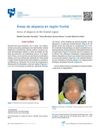 January 2025 in “Revista del Centro Dermatológico Pascua”
 Early diagnosis and treatment can help manage fibrosing alopecia in older women.
 1 citations
,
January 2014 in “Rinsho Shinkeigaku”
1 citations
,
January 2014 in “Rinsho Shinkeigaku” Immunological treatment improved both neuropathy and alopecia.
 16 citations
,
January 2007 in “Actas dermo-sifiliográficas/Actas dermo-sifiliográficas”
16 citations
,
January 2007 in “Actas dermo-sifiliográficas/Actas dermo-sifiliográficas” The document concludes that there are no reliable treatments for frontal fibrosing alopecia, with only temporary benefits from current options.
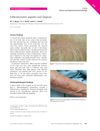 May 2014 in “Clinical and Experimental Dermatology”
 A 70-year-old woman with a rare skin condition improved after treatment with topical steroids and acitretin.
 1 citations
,
September 2015 in “Serbian Journal of Dermatology and Venereology/Serbian Journal of Dermatology and Venerology”
1 citations
,
September 2015 in “Serbian Journal of Dermatology and Venereology/Serbian Journal of Dermatology and Venerology” A 19-year-old male had two rare skin conditions causing scarring and permanent hair loss.
Cicatricial alopecia can progress to complete hair loss, making diagnosis and management difficult.
 December 2023 in “Journal of General Procedural Dermatology and Venereology Indonesia”
 A 61-year-old Filipino man had a skin condition that looked like another disease, making diagnosis difficult.
December 2014 in “Actas dermo-sifiliográficas/Actas dermo-sifiliográficas” Hair removal with intense pulsed light can cause rare skin lesions that are hard to fully treat.

Isotretinoin may cause temporary, reversible facial hair growth in some women.
 2 citations
,
March 2022 in “Modern Rheumatology Case Reports”
2 citations
,
March 2022 in “Modern Rheumatology Case Reports” A medicine called tofacitinib worked to treat a hair loss condition linked with a muscle and skin disease.
 August 2025 in “Frontiers in Immunology”
 Bullous pemphigoid, intrahepatic cholangiocarcinoma, and alopecia areata may share immune-related causes.
 38 citations
,
July 1998 in “Journal of surgical oncology”
38 citations
,
July 1998 in “Journal of surgical oncology” A woman with breast cancer developed a rare condition causing excessive fine hair growth on her face and body.
 12 citations
,
June 2010 in “Journal of dermatology”
12 citations
,
June 2010 in “Journal of dermatology” Some patients with severe alopecia areata developed skin darkening from their treatment, which may indicate a less effective response to the therapy.