 2 citations
,
December 2018 in “International Journal of Dermatology”
2 citations
,
December 2018 in “International Journal of Dermatology” New grading scale accurately measures hair loss severity and treatment effectiveness.
June 2024 in “British Journal of Dermatology” DLQI is a reasonable quality-of-life measure for alopecia patients, but more research is needed.
1 citations
,
January 2023 Hyperandrogenism in women often causes acne and excess hair, treatable with personalized plans including weight loss, hair removal, and medications.
1 citations
,
June 2024 in “Rehabilitation Medicine” Higher cortisol and cortisone levels in hair may predict mood disorders after a stroke.
 2 citations
,
December 2020 in “American Journal of Dermatological Research and Reviews”
2 citations
,
December 2020 in “American Journal of Dermatological Research and Reviews” The combination therapy was effective and well-tolerated, especially in young patients.
6 citations
,
March 2021 in “Journal of the American Academy of Dermatology” The Brigham Eyelash Tool for Alopecia (BELA) is a reliable way to measure eyelash loss in alopecia areata patients.
 14 citations
,
January 2018 in “Endocrine”
14 citations
,
January 2018 in “Endocrine” Cantú syndrome may be linked to pituitary adenomas.
 85 citations
,
June 2006 in “Best Practice & Research Clinical Endocrinology & Metabolism”
85 citations
,
June 2006 in “Best Practice & Research Clinical Endocrinology & Metabolism” The document concludes that hirsutism is the main sign for diagnosing hyperandrogenism, which requires a detailed patient history and physical exam.
 December 2023 in “Dermatology and therapy”
 Japanese patients and physicians often disagree on the severity of Alopecia Areata and treatment satisfaction, needing better communication and treatments.
October 2024 in “International Journal of Research in Orthopaedics” Intense exercise may increase the risk of ankylosing spondylitis in genetically predisposed adolescents.
February 2026 in “Boletín Médico del Hospital Infantil de México” Children with alopecia areata often have related health issues like allergies, autoimmune diseases, or mental health conditions.
 April 2019 in “International Journal of Research in Dermatology”
 Most women with hirsutism have mild symptoms and often experience acne, menstrual irregularities, and obesity.
 4 citations
,
April 2023 in “Autoimmunity reviews”
4 citations
,
April 2023 in “Autoimmunity reviews” High levels of IL6 and CRP, and low levels of vitamin D, might be indicators of alopecia areata.
 10 citations
,
November 2015 in “American Journal of Primatology”
10 citations
,
November 2015 in “American Journal of Primatology” Monkeys with more anxious or inhibited temperaments tend to have less hair loss.
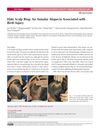 2 citations
,
January 2023 in “Annals of Dermatology”
2 citations
,
January 2023 in “Annals of Dermatology” A hairless patch on a boy's scalp from birth injury improved with minoxidil treatment.
8 citations
,
April 2023 in “Dermatology Practical & Conceptual” Certain blood markers, especially MLR, can help diagnose alopecia areata.

Teledermatology effectively diagnoses and manages non-scarring alopecia remotely.
 18 citations
,
March 2009 in “Medical Hypotheses”
18 citations
,
March 2009 in “Medical Hypotheses” The document suggests that blocking sweat glands with antiperspirants might allow skin-generated hormones to be absorbed, possibly increasing breast and prostate cancer risk.
28 citations
,
June 1998 in “Clinical Genetics” Ambras syndrome's genetic cause is unknown, as it isn't linked to androgen levels.
1 citations
,
January 2022 in “Dermatology Research and Practice” Androgenetic alopecia negatively affects self-esteem and daily stress, especially in young men.
 July 2023 in “The journal of sexual medicine”
 Anabolic-androgenic steroids harm male hormone levels, sperm, metabolism, and can cause acne, hair loss, and breast growth.
5 citations
,
March 2023 in “International Journal of Trichology” Alopecia areata patients may have higher cardiovascular risk factors, so screening for metabolic syndrome components is suggested.
 January 2025 in “International Journal of Dermatology Research”
 Higher MPV and CRP levels may indicate more severe alopecia areata.
 August 2023 in “The American Journal of the Medical Sciences”
 Men with male pattern baldness have higher uric acid levels, which can decrease with finasteride treatment.

Cross-section trichometry is an accurate method to measure hair loss and growth.

The study looked at how common male pattern baldness is in young men in a heart care unit but didn't give specific results.
9 citations
,
April 2016 in “Clinical Endocrinology” Scalp hair 17-OHP and androstenedione levels can help monitor treatment in CAH patients.
November 2024 in “IP Indian Journal of Clinical and Experimental Dermatology” Alopecia areata greatly affects quality of life, needing psychological support.
 December 2025 in “Zenodo (CERN European Organization for Nuclear Research)”
 Hair loss is caused by mechanical, thermal, and metabolic factors, not just hormones.
 2 citations
,
January 2023 in “Dermatology Practical & Conceptual”
2 citations
,
January 2023 in “Dermatology Practical & Conceptual” AB+ blood group is more common in alopecia areata patients.