10 citations
,
January 2004 in “PubMed” Radiation increases cell death in hair follicles, but certain treatments can protect against this effect.
1 citations
,
November 2022 in “International journal of trichology” A girl with a rare skin condition improved after one month of treatment with acitretin.
November 2024 in “International Journal of Dermatology” July 2023 in “Panacea Journal of Medical Sciences” Chemotherapy often causes skin, hair, and nail problems in cancer patients.
48 citations
,
June 2003 in “Journal of Investigative Dermatology Symposium Proceedings” Contact sensitizers like DCP and SADBE are the most effective treatments for alopecia areata.
 9 citations
,
June 1959 in “Archives of dermatology”
9 citations
,
June 1959 in “Archives of dermatology” Hair can darken after inflammation and then return to its original color.
 January 2017 in “Nihon Keshouhin Gijutsushakaishi/Journal of S C C./Nihon Keshouhin Gijutsushakai kaishi”
 Sunlight and chemical treatments change hair's internal structure differently, needing specific care.
 March 2022 in “The Journal of Family Practice”
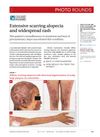
 Following treatment plans is crucial to prevent worsening skin and hair conditions.
 October 2014 in “Cancer Research”
 A new topical treatment may prevent hair loss from cancer therapy by adjusting cell death processes in hair follicles.
June 2023 in “British Journal of Dermatology” Facial lichen planopilaris may be triggered by shaving and mustard oil, and early detection is crucial for better treatment outcomes.
January 2025 in “Dermatology Online Journal” The man's hair loss and skin papules were diagnosed as atrichia with papular lesions, not alopecia areata universalis.

Brunsting-Perry pemphigoid can cause scarring hair loss and may be underdiagnosed.
2 citations
,
January 2024 in “Journal of the American Academy of Dermatology” Treating primary cicatricial alopecia is difficult and requires evidence-based methods.
 January 2022 in “Clinical Cases in Dermatology”
 A condition called Central Centrifugal Cicatricial Alopecia causes hair loss and scalp burning in middle-aged African women, and it's treated with various medications, hair transplants, and non-drug methods like wigs.
14 citations
,
June 2021 in “Archives of Dermatological Research” Combining stem cell media with laser or microneedling can effectively regrow hair in alopecia areata.
34 citations
,
December 2009 in “Journal of the American Academy of Dermatology” Improper use of ceramic flat irons can cause severe hair damage.
18 citations
,
June 1993 in “Archives of Dermatological Research” Human hair follicles can be used to create skin-like tissue for wound healing and drug testing.
20 citations
,
December 2006 in “Archives of dermatology” 13 citations
,
August 1991 in “The Journal of the American Osteopathic Association” Inflammation may play a role in causing androgenetic alopecia.
 April 2017 in “Journal of Investigative Dermatology”
 The document concludes that various topical treatments show promise for skin conditions like atopic dermatitis, psoriasis, and hair loss.
June 2023 in “Revista de Ciências Médicas e Biológicas” Proper management of skin and hair side effects from chemotherapy improves patients' quality of life.
 September 2007 in “Journal of Investigative Dermatology”
 ANp63 is crucial for skin integrity, new filaggrin gene mutations link to eczema, hair can regrow from non-stem cells, sunburns are increasing, and glucocorticoids help treat skin allergies by affecting immune cells.
 14 citations
,
December 2013 in “Anais Brasileiros De Dermatologia”
14 citations
,
December 2013 in “Anais Brasileiros De Dermatologia” A woman with long-term scalp psoriasis developed rare scarring hair loss that didn't fully respond to treatments.
Spiny keratoderma is a rare skin condition with small spines on palms and soles, possibly linked to abnormal hair formation.
 November 2024 in “PubMed”
 Terbinafine can cause skin reactions when exposed to sunlight, so sun exposure should be avoided during treatment.
 July 1976 in “Archives of Dermatology”
 Some people may naturally have beaded lines on their skin that are more visible with certain treatments, and hair loss similar to post-pregnancy can occur after specific diet and therapy.
April 2005 in “Journal of Investigative Dermatology” Vitamin D helps protect skin, PSORS1 gene's risk interval for psoriasis is expanded, hair follicles can be generated from mouse cells, and interferon-γ may cause pigmented skin lesions.
December 2025 in “Cosmetics” Nanocarriers can improve skin treatments after cancer therapy by enhancing antioxidant delivery and effectiveness.
May 2026 in “International Journal of Cosmetic Science” UV radiation damages hair similar to bleaching, but double bleaching causes more severe protein degradation.
July 2025 in “Journal of Investigative Dermatology”