 41 citations
,
August 2015 in “The FASEB Journal”
41 citations
,
August 2015 in “The FASEB Journal” Blocking the Wnt/β‐catenin pathway can speed up wound healing, reduce scarring, and improve cartilage repair.
Arabidopsis Formin 2 stabilizes actin filaments, affecting cell-to-cell movement and virus susceptibility.
28 citations
,
January 2015 in “Journal of Cell Science” PINCH-1 is crucial for skin cell adhesion and movement, working with EPLIN and ILK.
 April 2018 in “Journal of Investigative Dermatology”
 Ovol2 is important for proper skin healing and hair growth.
293 citations
,
September 2004 in “Development” WNT signaling is crucial for starting mammary gland development.
2 citations
,
January 2020 in “bioRxiv (Cold Spring Harbor Laboratory)” Androgen signaling reduces Wnt activity, affecting prostate stem cell growth.
 September 2016 in “Journal of dermatological science”
 The OVOL1-OVOL2 axis is important for hair follicle differentiation and can help diagnose certain hair-related tumors.
 4 citations
,
March 2014 in “The FASEB Journal”
4 citations
,
March 2014 in “The FASEB Journal” The HIF-2α/ARNT complex is important for hair follicle development by controlling cell growth.
 August 1994 in “Molecular Endocrinology”
 Changing protein kinase levels in pituitary cells affects calcium flow and beta-endorphin release.
 April 2016 in “Chinese Journal of Dermatology”
 Wnt10b can help regenerate hair follicles.
 28 citations
,
December 2018 in “Plant, cell & environment/Plant, cell and environment”
28 citations
,
December 2018 in “Plant, cell & environment/Plant, cell and environment” A protein called PLC2 is important for the growth and development of plant roots influenced by auxin.
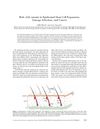 61 citations
,
January 2008 in “Cold Spring Harbor Symposia on Quantitative Biology”
61 citations
,
January 2008 in “Cold Spring Harbor Symposia on Quantitative Biology” Beta-catenin is crucial for skin cell growth, development, and cancer formation.
 122 citations
,
May 2010 in “Plant Physiology”
122 citations
,
May 2010 in “Plant Physiology” Different PIN proteins affect plant root hair growth by changing how auxin is transported.
 July 2023 in “Current Issues in Molecular Biology”
 Escin may help treat hair loss by boosting a specific cell growth pathway.
 December 2023 in “bioRxiv (Cold Spring Harbor Laboratory)”
 Abnormal contraction of connective tissue in hair follicles causes hair loss by killing off important cells, and treating this could improve hair growth.
 4 citations
,
April 2015 in “Experimental Dermatology”
4 citations
,
April 2015 in “Experimental Dermatology” Certain genes controlled by OVOL1 are crucial for creating new hair follicles.
 384 citations
,
June 2005 in “Genes & development”
384 citations
,
June 2005 in “Genes & development” β-catenin is essential for stem cell activation and proliferation in hair follicles.
 February 2025 in “Science Advances”
 Wnt signaling helps regenerate hair follicles by affecting how skin cells sense and respond to mechanical forces.
 17 citations
,
February 2015 in “Cell Death and Disease”
17 citations
,
February 2015 in “Cell Death and Disease” Inhibiting AP1 in mice skin causes structural changes and weakens the skin barrier.
 7 citations
,
October 2018 in “BMC genomics”
7 citations
,
October 2018 in “BMC genomics” Key genes can rewire networks, changing skin appendage types.
4 citations
,
May 2022 in “Genes & Diseases”  March 2026 in “Communications Biology”
 Certain compounds can boost hair and nail growth.
 1 citations
,
January 2022 in “BMC Genomic Data”
1 citations
,
January 2022 in “BMC Genomic Data” The study found that androgen receptors in skin cells mainly affect the focal adhesion pathway and control the caveolin-1 gene, with implications for new treatments for related diseases.
321 citations
,
January 2012 in “Cell stem cell” TGF-β2 helps activate hair follicle stem cells by counteracting BMP signals.
February 2010 in “Journal of the American Academy of Dermatology” Activating cAMP and ATP improves hair growth and strength.
 May 2018 in “Journal of Investigative Dermatology”
 Activating Wnt in skin cells controls the number of hair follicles by directing cell movement and fate.
 54 citations
,
July 2017 in “Scientific Reports”
54 citations
,
July 2017 in “Scientific Reports” JMJD3 and NF-κB activate Notch1, which is essential for skin cell movement and wound healing.
ISX9 helps regrow hair by activating a specific cell signaling pathway.
 April 2024 in “JEADV. Journal of the European Academy of Dermatology and Venereology/Journal of the European Academy of Dermatology and Venereology”
 Retinoic acid helps activate hair growth in people with common hair loss by working on a specific cell growth pathway.
May 2013 in “Faculty Opinions – Post-Publication Peer Review of the Biomedical Literature” A balance between BMP and Wnt signals is crucial for hair follicle stem cell function and hair growth.