 19 citations
,
March 1997 in “Journal of Cutaneous Pathology”
19 citations
,
March 1997 in “Journal of Cutaneous Pathology” Alopecia areata involves specific T-cells, unlike androgenetic alopecia.
 10 citations
,
April 2013 in “Veterinary dermatology”
10 citations
,
April 2013 in “Veterinary dermatology” A new skin disease in four Labrador retrievers responded well to immunosuppressive treatment.
 48 citations
,
February 2013 in “Molecular and Cellular Endocrinology”
48 citations
,
February 2013 in “Molecular and Cellular Endocrinology” The protein StAR is found in 17 different organs and can affect hair loss and brain functions, but its full role is not yet fully understood.
 January 2025 in “International Journal of Dermatology Research”
 Higher MPV and CRP levels may indicate more severe alopecia areata.
 June 2022 in “bioRxiv (Cold Spring Harbor Laboratory)”
 ILC1-like cells can cause alopecia areata by attacking hair follicles.
 27 citations
,
August 1984 in “Experimental and Molecular Pathology”
27 citations
,
August 1984 in “Experimental and Molecular Pathology”  1 citations
,
November 2025 in “Wiener Medizinische Wochenschrift”
1 citations
,
November 2025 in “Wiener Medizinische Wochenschrift” Infectious cerebral vasculitis can be a severe complication of meningoencephalitis, regardless of the pathogen.
 11 citations
,
November 2020 in “Movement Disorders Clinical Practice”
11 citations
,
November 2020 in “Movement Disorders Clinical Practice” A man developed neurological issues from SARS-CoV-2 without severe breathing problems, worsening to death.
 3 citations
,
August 2024
3 citations
,
August 2024 Deep skin fibroblasts help recruit immune cells for better wound healing.
 5 citations
,
September 2024 in “Stem Cell Research & Therapy”
5 citations
,
September 2024 in “Stem Cell Research & Therapy” Sertoli cell transplants can reduce inflammation and improve sperm quality.
 1 citations
,
March 2004 in “Military Medicine”
1 citations
,
March 2004 in “Military Medicine” The retired colonel's ankle swelling was caused by a reaction to the antibiotic levofloxacin.
 23 citations
,
January 2005 in “Nihon Ishinkin Gakkai zasshi”
23 citations
,
January 2005 in “Nihon Ishinkin Gakkai zasshi” Nested PCR can reliably identify fungal infections when traditional methods fail.
 April 2026 in “International Journal of Advanced Biochemistry Research”
 Aegle marmelos fruit extract can protect against arsenic toxicity in mice.
 42 citations
,
November 2004 in “Paediatric Respiratory Reviews”
42 citations
,
November 2004 in “Paediatric Respiratory Reviews” Children generally have milder SARS symptoms than adults, with good outcomes and no deaths reported, but long-term effects are unclear.
 May 2020 in “Research Square (Research Square)”
 Bone marrow stem cells help heal intestines and reduce death in liver failure.
 8 citations
,
June 2012 in “Australasian Journal of Dermatology”
8 citations
,
June 2012 in “Australasian Journal of Dermatology” A rare form of alopecia causes hair thinning without bald spots and may be more common than thought, responding well to steroid treatment.
 3 citations
,
October 2019 in “JAAD Case Reports”
3 citations
,
October 2019 in “JAAD Case Reports” Two patients with lupus had an unusual type of hair loss not typical for the disease but improved with treatment.
 1 citations
,
September 2013 in “The Journal of Dermatology”
1 citations
,
September 2013 in “The Journal of Dermatology” An 8-year-old girl developed a rare skin condition in a linear pattern on one side of her body after a lung infection, which improved with treatment.
 19 citations
,
September 2014 in “JAMA Dermatology”
19 citations
,
September 2014 in “JAMA Dermatology” Eosinophilic infiltrate is not a reliable indicator for diagnosing chronic alopecia areata.
 19 citations
,
December 2008 in “Journal of The American Academy of Dermatology”
19 citations
,
December 2008 in “Journal of The American Academy of Dermatology” The authors suggest that a new type of hair loss exists, which is different from alopecia areata.
 3 citations
,
January 2015 in “Nasza Dermatologia Online”
3 citations
,
January 2015 in “Nasza Dermatologia Online” Some treatments for autoimmune hair loss work, but JAK inhibitors like tofacitinib are promising for regrowth.
 2 citations
,
July 2013 in “InTech eBooks”
2 citations
,
July 2013 in “InTech eBooks” Scalp biopsy helps tell apart permanent and temporary hair loss types and guides treatment.
 August 2019 in “Blucher Medical Proceedings”
 Lupus Panniculitis can be an early sign of Systemic Lupus Erythematosus.
 January 2015 in “Indian Dermatology Online Journal”
 The patient's hair loss is most likely due to diffuse alopecia areata.
 January 2025 in “Revista del Centro Dermatológico Pascua”
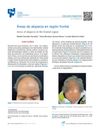
 Early diagnosis and treatment can help manage fibrosing alopecia in older women.
 144 citations
,
September 2006 in “Clinics in Dermatology”
144 citations
,
September 2006 in “Clinics in Dermatology” Lupus affects the body and skin, causing joint pain and skin issues that can be treated with steroids and antimalarial drugs.
 19 citations
,
February 2015 in “Contact dermatitis”
19 citations
,
February 2015 in “Contact dermatitis” Avoiding certain fragrances improved the man's skin condition.
January 2019 in “Lung India” A 68-year-old woman with lupus and blood disorders improved after increased steroids and immunoglobulin treatment.

Hair loss can happen after severe H1N1 flu but usually grows back in 4 months.
 August 2016 in “Journal of Investigative Dermatology”
 Blocking the CCR5 receptor may be a new way to treat hair loss from alopecia areata.