 24 citations
,
September 1997 in “PubMed”
24 citations
,
September 1997 in “PubMed” Loose anagen hair can appear at any age and may improve over time.
 7 citations
,
January 2014 in “Case reports in endocrinology”
7 citations
,
January 2014 in “Case reports in endocrinology” A woman's excessive hair growth was caused by a rare benign tumor in her adrenal gland, which was successfully removed.
 1 citations
,
February 2022 in “Experimental Dermatology”
1 citations
,
February 2022 in “Experimental Dermatology” Certain proteins are found at higher levels in balding areas compared to non-balding areas, suggesting a link to hair loss. This could be useful for diagnosing and treating hair loss.
 38 citations
,
July 1989 in “Archives of dermatological research”
38 citations
,
July 1989 in “Archives of dermatological research” Testosterone causes hair loss in AGA mice, which are good for testing baldness treatments, and both minoxidil and cyproterone acetate can prevent this hair loss.
January 2026 in “Materialia” Porcine ADM scaffold helps hair growth in mice.
 February 2025 in “European Journal of Dermatology”
 Androgenetic alopecia is complex and needs more research for better treatments.
 2 citations
,
March 2009 in “Hair transplant forum international”
2 citations
,
March 2009 in “Hair transplant forum international” Hair loss at the site where hair was taken for a transplant can be due to the normal hair growth cycle.
June 2025 in “Journal of Photochemistry and Photobiology B Biology” UVA exposure worsens hair loss by activating a specific cell pathway.
 32 citations
,
January 2010 in “Journal of Korean Medical Science”
32 citations
,
January 2010 in “Journal of Korean Medical Science” A rare adrenal tumor in a 14-year-old girl caused male-like symptoms and was successfully removed.
 7 citations
,
January 2015 in “Case reports in endocrinology”
7 citations
,
January 2015 in “Case reports in endocrinology” The document concludes that HAIR-AN syndrome should be considered when a patient shows severe hyperandrogenism and insulin resistance after excluding tumors.
10 citations
,
January 2015 in “PubMed”  October 2024 in “Journal of the Endocrine Society”
 Rare ovarian tumors can cause hyperandrogenism, even if imaging appears normal.
6 citations
,
July 2018 in “DOAJ (DOAJ: Directory of Open Access Journals)” A woman had a rare liver tumor causing male-like physical changes, highlighting the need for thorough checks when such symptoms appear.
 April 2018 in “The journal of investigative dermatology/Journal of investigative dermatology”
 Removing Lrig1-positive stem cells in mice causes temporary loss of sebaceous glands.
April 2016 in “The journal of investigative dermatology/Journal of investigative dermatology” Neoplasms hide in hair follicles to avoid the immune system.
 12 citations
,
May 2003 in “Journal of dermatological science”
12 citations
,
May 2003 in “Journal of dermatological science” Hsc70 protein may influence hair growth by responding to androgens.
 February 2026 in “Journal of Drugs in Dermatology”
 Dutasteride mesotherapy for hair loss can cause lasting bald patches.
 184 citations
,
September 2006 in “PLoS Genetics”
184 citations
,
September 2006 in “PLoS Genetics” The Apc gene is crucial for normal skin and thymus development.
 32 citations
,
April 1994 in “Journal of the American Academy of Dermatology”
32 citations
,
April 1994 in “Journal of the American Academy of Dermatology” High androgen levels and genetic factors likely cause Becker's nevus and related symptoms.
 12 citations
,
February 2010 in “Journal of the European Academy of Dermatology and Venereology”
12 citations
,
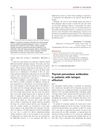
February 2010 in “Journal of the European Academy of Dermatology and Venereology” Some people with chronic hair loss may have thyroid autoimmunity.
July 2025 in “Clinical and Experimental Dermatology” Hair loss (telogen effluvium) happens before male pattern baldness.

The text is about acne, excessive hair growth, and hair loss due to hormones.
 August 2016 in “Journal of Investigative Dermatology”
 The enzyme CD73 helps control human hair growth and could be targeted to treat hair growth disorders.
 87 citations
,
April 2018 in “Biochemical and Biophysical Research Communications”
87 citations
,
April 2018 in “Biochemical and Biophysical Research Communications” Exosomes from dermal papilla cells can help grow hair and might treat hair loss.
 April 2023 in “The journal of investigative dermatology/Journal of investigative dermatology”
 EGFR deficiency causes significant changes in skin cells and hair follicles.
130 citations
,
December 1998 in “The journal of investigative dermatology/Journal of investigative dermatology” Hair follicle melanocytes die during hair regression.
![Discovery of (2S)-N-(6-Cyano-5-(Trifluoromethyl)Pyridin-3-Yl)-3-(6-(4-Cyanophenyl)-3,6-Diazabicyclo[3.1.1]Heptan-3-Yl)-2-Hydroxy-2-Methylpropanamide as a Highly Potent and Selective Topical Androgen Receptor Antagonist for Androgenetic Alopecia Treatment](/images/assets/693e7bf6-2325-4ddc-a20f-3470db9f4516/small/25627.jpg) December 2023 in “Journal of Medicinal Chemistry”
December 2023 in “Journal of Medicinal Chemistry” A new topical treatment for hair loss shows strong hair growth effects with low toxicity.
2 citations
,
April 2019 in “Journal of Investigative Dermatology” Gasdermin A3 causes hair follicle stem cells to activate too early, leading to hair loss.
TGF-β1 and 2 in hair follicles may be linked to hair loss in AGA.