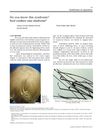
The document concludes that Loose Anagen Hair Syndrome is a benign condition where hair is thin and easily pulled out, often improving with age.
January 2015 in “Faculty of 1000 Research Ltd” Androgenetic alopecia may be irreversible due to the detachment of a muscle from hair follicles.
January 2026 in “OSF Preprints (OSF Preprints)” A new treatment plan for hair loss combines targeted therapies and regenerative strategies to stabilize, reverse, and maintain hair growth.
 54 citations
,
July 2002 in “Clinical and Experimental Dermatology”
54 citations
,
July 2002 in “Clinical and Experimental Dermatology” DHT, a testosterone byproduct, causes male pattern baldness.
 October 2021 in “Acta Scientific Medical Sciences”
 A woman was diagnosed with a rare adrenal gland cancer that did not show usual hormone-related symptoms.
 5 citations
,
September 2012 in “The Journal of Urology”
5 citations
,
September 2012 in “The Journal of Urology” Early hair loss may indicate future prostate issues.
34 citations
,
January 1983 in “Journal of Investigative Dermatology”  July 2015 in “Cambridge University Press eBooks”
 Androgens like testosterone affect skin health and can lead to conditions such as acne and hair loss, with various treatments available.
 10 citations
,
May 2010 in “Journal of The American Academy of Dermatology”
10 citations
,
May 2010 in “Journal of The American Academy of Dermatology” A 38-year-old African American woman has a rare condition that prevents her from growing long hair.
The arrector pili muscle plays a key role in hair loss in androgenetic alopecia.
19 citations
,
October 1996 in “International Journal of Dermatology” Pseudopelade is a rare inherited hair loss condition with a genetic cause.
September 2024 in “Dermatology Reports” Sonidegib often causes hair loss, and LC-OCT helps identify early signs.
Antiandrogen treatment helps reduce hair follicles and sebaceous glands in hirsute women.
 April 2018 in “Journal of Investigative Dermatology”
 Higher levels of nidogen1 and type IV collagen are found in basal cell carcinoma compared to normal skin.
 51 citations
,
December 2003 in “The FASEB Journal”
51 citations
,
December 2003 in “The FASEB Journal” The substance AS101 can help hair grow by slowing down hair cell aging and boosting a hair growth protein.
 61 citations
,
January 2013 in “Indian Journal of Dermatology, Venereology and Leprology”
61 citations
,
January 2013 in “Indian Journal of Dermatology, Venereology and Leprology” Hair usually grows back 1-3 months after treatment for anagen effluvium, and children with Loose Anagen Hair Syndrome often improve by adolescence.
January 2026 in “JCEM Case Reports” Benign conditions can mimic serious ones in postmenopausal hyperandrogenism, requiring careful diagnosis.
 13 citations
,
December 2020 in “Dermatologic Therapy”
13 citations
,
December 2020 in “Dermatologic Therapy” Sebaceous glands in our skin, developing during pregnancy and active in puberty, produce sebum for skin lubrication, temperature control, and fighting germs, also help in hormone regulation, and their dysfunction can cause conditions like acne and hair loss.
 April 2019 in “Journal of Investigative Dermatology”
 Increasing COX-2 in mouse skin causes bigger sebaceous glands and thinner hair, but stopping COX-2 can reverse hair thinning.
July 2024 in “Journal of Investigative Dermatology” Inhibiting PDE8A may help treat hair loss by boosting fat cell growth and hair regeneration.
 2 citations
,
November 2018 in “Clinical and Experimental Dermatology”
2 citations
,
November 2018 in “Clinical and Experimental Dermatology” Acne is more common in men with male pattern baldness due to increased hormone levels.
23 citations
,
November 2007 in “Actas Dermo-Sifiliográficas” Thyroid hormone (T3) may reverse gray hair by stimulating hair growth.
 15 citations
,
June 2020 in “Experimental Dermatology”
15 citations
,
June 2020 in “Experimental Dermatology” Hormones and genes affect hair growth and male baldness.
 6 citations
,
January 2010 in “Springer eBooks”
6 citations
,
January 2010 in “Springer eBooks” SA linked to mitochondrial issues and oxidative stress, while AGA involves disrupted hair growth genes.
 June 2022 in “IP Indian journal of clinical and experimental dermatology”
 A woman had a rare, non-cancerous skin growth on her face, which was removed and did not come back after a year.
 6 citations
,
August 2006 in “Journal of Cutaneous Pathology”
6 citations
,
August 2006 in “Journal of Cutaneous Pathology” Two teenage brothers had a rare, treatment-resistant form of female-pattern hair loss with unusual scalp changes.
 29 citations
,
March 2010 in “Journal of Dermatological Science”
29 citations
,
March 2010 in “Journal of Dermatological Science” Wnt3a activates certain genes in hair follicle cells, including a newly discovered one, EP2, which may affect hair growth.
 111 citations
,
January 2007 in “Seminars in cell & developmental biology”
111 citations
,
January 2007 in “Seminars in cell & developmental biology” Hair, teeth, and mammary glands develop similarly at first but use different genes later.
September 2021 in “Dermatologic Surgery”