 4 citations
,
June 2025 in “Medeniyet Medical Journal”
4 citations
,
June 2025 in “Medeniyet Medical Journal” TMPRSS2 is crucial for COVID-19 infection and is a potential target for treatment.

The extract from the plant Adiantum capillus-veneris might be used to treat COVID-19.
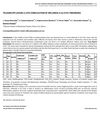
Hair loss can happen after severe H1N1 flu but usually grows back in 4 months.
 1 citations
,
November 2021 in “World Family Medicine Journal /Middle East Journal of Family Medicine”
1 citations
,
November 2021 in “World Family Medicine Journal /Middle East Journal of Family Medicine” Covid-19 affected asthmatic patients in Western Saudi Arabia.
 6 citations
,
January 2011 in “Journal of pediatric endocrinology & metabolism/Journal of pediatric endocrinology and metabolism”
6 citations
,
January 2011 in “Journal of pediatric endocrinology & metabolism/Journal of pediatric endocrinology and metabolism” An 11-year-old Greek girl was diagnosed with a rare genetic disorder, highlighting the importance of genetic testing and family history.
January 2026 in “Pediatrics International” Live vaccines can be safely given to infants with a FOXN1 variant if their immune function improves over time.
42 citations
,
April 2021 in “Pharmaceuticals” Five FDA-approved drugs may help block COVID-19 virus entry.
5 citations
,
May 2022 in “Bionatura” Asthma and high testosterone increase Covid-19 severity, while progesterone protects young women.
286 citations
,
June 2012 in “Nature Immunology” Hair follicles help attract immune cells to the skin during stress.
160 citations
,
June 2008 in “American Journal Of Pathology” EGFR signaling is crucial for skin and hair health, and targeting it could help treat skin diseases and cancer.
87 citations
,
September 2006 in “Clinical Cancer Research” Protein Kinase C shows promise for cancer treatment, but more research is needed to develop effective inhibitors.
 79 citations
,
January 2018 in “Wiley Interdisciplinary Reviews-Developmental Biology”
79 citations
,
January 2018 in “Wiley Interdisciplinary Reviews-Developmental Biology” Understanding how baby skin heals without scars could help develop treatments for adults to heal wounds without leaving scars.
77 citations
,
November 2018 in “Cell” Lung immune cells can be trained to better fight infections after a virus.
49 citations
,
November 2019 in “Archives of Dermatological Research” 29 citations
,
September 2018 in “Journal of the American Heart Association” EP 2 receptor is essential for heart repair by helping macrophages work properly.
23 citations
,
November 2018 in “International Journal of Molecular Sciences” Deoxyshikonin helps wounds heal faster in diabetic mice.
16 citations
,
September 2020 in “Animals” circRNA-1926 helps goat stem cells turn into hair follicles by affecting miR-148a/b-3p and CDK19.
13 citations
,
February 2023 in “Biology” Cell extracts may effectively and safely repair radiation-damaged salivary glands.
12 citations
,
May 2024 in “International Journal of Nanomedicine” Stem cell-derived vesicles show promise for healing diabetic wounds.
 10 citations
,
August 2022 in “International Journal of Molecular Sciences”
10 citations
,
August 2022 in “International Journal of Molecular Sciences” Leptin-deficient mice, used as a model for Type 2 Diabetes, have delayed wound healing due to impaired contraction and other dysfunctional cellular responses.
9 citations
,
March 2018 in “International journal of molecular sciences” Allopregnanolone changes gene expression in glioblastoma cells.
8 citations
,
July 2024 in “European journal of medical research” Alopecia areata after COVID-19 vaccination is rare but important to recognize for timely treatment.
 8 citations
,
October 2022 in “International Journal of Molecular Sciences”
8 citations
,
October 2022 in “International Journal of Molecular Sciences” Self-amplifying RNA could be a better option for protein replacement therapy with lower doses and lasting effects, but delivering it into cells is still challenging.
8 citations
,
February 2022 in “Frontiers in Medicine” COVID-19 may trigger severe skin flare-ups in people with autoimmune conditions like lupus.
 8 citations
,
September 2017 in “Scientific Reports”
8 citations
,
September 2017 in “Scientific Reports” MAD2B slows down the growth of skin cells that are important for hair development by interacting with TCF4.
2 citations
,
November 2025 in “International Journal of Molecular Sciences” Balancing good and harmful microbes is key to healing chronic wounds.
2 citations
,
July 2025 in “Frontiers in Veterinary Science” MicroRNAs and AI can improve cashmere goat hair quality and aid in hair disorder diagnosis.
 2 citations
,
August 2022 in “JAAD case reports”
2 citations
,
August 2022 in “JAAD case reports” COVID-19 vaccines may rarely worsen hair loss in people with severe alopecia, but the benefits of vaccination still outweigh this risk.
 1 citations
,
April 2023 in “International Journal of Molecular Sciences”
1 citations
,
April 2023 in “International Journal of Molecular Sciences” New CRISPR/Cas9 variants and nanotechnology-based delivery methods are improving cancer treatment, but choosing the best variant and overcoming certain limitations remain challenges.
 1 citations
,
December 2022 in “Archives of Dermatological Research”
1 citations
,
December 2022 in “Archives of Dermatological Research” Acne treatment with isotretinoin increases the presence of p53, a protein, in skin and oil glands, which may help reduce acne severity.