21 citations
,
April 2008 in “Toxicologic Pathology” CI-1033 causes skin lesions in rats, similar to humans, due to EGF receptor inhibition.
June 2018 in “Journal of the American Veterinary Medical Association” Three related Persian cats have a rare, likely hereditary skin condition causing hair loss and poor coat quality, with limited treatment options.
 1 citations
,
September 2017 in “Journal of Investigative Dermatology”
1 citations
,
September 2017 in “Journal of Investigative Dermatology” Blocking a specific enzyme can reduce the negative impact of stress hormones on hair growth cells.
 September 2017 in “Journal of Investigative Dermatology”
 The Siah1 and Siah2 genes are active in mouse skin development and hair growth, especially right after birth.
 September 2017 in “Journal of Investigative Dermatology”
 The study found that sweat glands normally suppress immune responses, but this is disrupted in certain skin diseases, possibly contributing to their development.
 September 2017 in “Journal of Investigative Dermatology”
 Researchers created human cells that can turn into sebocytes, which may help study and treat skin conditions like acne.
 September 2017 in “Journal of Investigative Dermatology”
 Certain miRNAs might be involved in a hair loss condition called frontal fibrosing alopecia and could possibly help in its diagnosis.
 September 2017 in “Journal of Investigative Dermatology”
 Finasteride helps female-pattern hair loss.
Different connective tissue disorders have unique symptoms and treatments, with varying outcomes and often require ongoing care from a specialist.
 1 citations
,
January 1999 in “Journal of the European Academy of Dermatology and Venereology”
1 citations
,
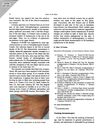
January 1999 in “Journal of the European Academy of Dermatology and Venereology” Dermatology residents need thorough training in dermatosurgery for better patient outcomes.
 March 2024 in “IP Indian journal of clinical and experimental dermatology”
 Giant solitary trichoepithelioma is a rare, usually non-cancerous hair follicle tumor that can sometimes turn into skin cancer.
 20 citations
,
July 2008 in “Dermatologic Therapy”
20 citations
,
July 2008 in “Dermatologic Therapy” The document says that treating the root cause of hair follicle damage is crucial to prevent permanent hair loss, and treatment options vary.
 15 citations
,
May 2014 in “Journal of dermatology”
15 citations
,
May 2014 in “Journal of dermatology” Zouboulis syndrome is a rare condition that helps diagnose monosomy 18p early.
 9 citations
,
June 2017 in “Journal of Cutaneous Pathology”
9 citations
,
June 2017 in “Journal of Cutaneous Pathology” People with pemphigus vulgaris and pemphigus foliaceus often have smaller sebaceous glands on their scalp.
 8 citations
,
March 2015 in “Neuromuscular Disorders”
8 citations
,
March 2015 in “Neuromuscular Disorders” People with Myotonic Dystrophy type 1 are more likely to have certain skin conditions, but not more likely to get skin cancer.
 6 citations
,
July 2015 in “International Journal of Dermatology”
6 citations
,
July 2015 in “International Journal of Dermatology” Trichoepitheliomas can be hard to distinguish from other skin conditions and often start in teenage years.
 2 citations
,
December 2004 in “Medicine”
2 citations
,
December 2004 in “Medicine” Different hair and scalp disorders cause hair loss or excess hair growth, with various treatments available depending on the specific condition.
 1 citations
,
September 2015 in “Serbian Journal of Dermatology and Venereology/Serbian Journal of Dermatology and Venerology”
1 citations
,
September 2015 in “Serbian Journal of Dermatology and Venereology/Serbian Journal of Dermatology and Venerology” A 19-year-old male had two rare skin conditions causing scarring and permanent hair loss.
 February 2026 in “American Journal of Clinical Dermatology”
 Radiotherapy can cause skin fibrosis, which is often overlooked and needs better treatment and evaluation.
 February 2024 in “Cureus”
 Pilomatrixoma should be considered for nodular lesions in adults.
 November 2019 in “Harper's Textbook of Pediatric Dermatology”
 The document is a detailed medical reference on skin and genetic disorders.
 7 citations
,
March 2017 in “Journal of dermatology”
7 citations
,
March 2017 in “Journal of dermatology” The conclusion is that accurately identifying folliculosebaceous tumors requires understanding their clinical signs and microscopic features.
 1 citations
,
January 2006 in “Elsevier eBooks”
1 citations
,
January 2006 in “Elsevier eBooks” The conclusion is that different types of hair loss in dogs and cats can be cosmetic or serious, and affected animals should not be bred.
 June 2026 in “Romanian Journal of Medical Practice”
 Surgery resolved hormone imbalance and symptoms in a rare ovarian tumor case in an elderly woman.
 October 2022 in “Veterinária notícias/Veterinária Notícias”
 A 5-year-old Akita with a rare skin condition improved significantly after treatment.
 September 2016 in “Elsevier eBooks”
 Different types of hair loss in dogs and cats have various causes and treatments, with outcomes ranging from good to uncertain.
 January 2011 in “Elsevier eBooks”
 Alopecia in animals can be hereditary, congenital, or acquired, with treatments and outcomes varying widely.
 252 citations
,
January 2008 in “Trends in Endocrinology and Metabolism”
252 citations
,
January 2008 in “Trends in Endocrinology and Metabolism” Melatonin in the skin helps protect against damage from stress and UV rays, and could be used to treat certain skin conditions.
 138 citations
,
February 2007 in “European journal of cancer”
138 citations
,
February 2007 in “European journal of cancer” EGFR inhibitors often cause skin problems and other side effects, but these are usually reversible and can be managed to keep patients comfortable.
 129 citations
,
May 2015 in “Cell Stem Cell”
129 citations
,
May 2015 in “Cell Stem Cell” Different types of stem cells exist within individual skin layers, and they can adapt to damage, transplantation, or tumor growth. These cells are regulated by their environment and genetic factors. Tumor growth is driven by expanding, genetically altered cells, not long-lived mutant stem cells. There's evidence of cancer stem cells in skin tumors. Other cells, bacteria, and genetic factors help maintain balance and contribute to disease progression. A method for growing mini organs from single cells has been developed.