 April 2019 in “Journal of Investigative Dermatology”
 Non-coding RNA boosts retinoic acid production and signaling, aiding regeneration.
 6 citations
,
January 2017 in “Dermato-endocrinology”
6 citations
,
January 2017 in “Dermato-endocrinology” ADT-G may be a useful indicator of increased androgen levels in women with acne and can be lowered with certain birth control pills.
13 citations
,
August 2015 in “Oncology Reports” Stem cells slowed lung tumor growth but increased colon tumor growth in mice.
11 citations
,
May 2022 in “JEADV. Journal of the European Academy of Dermatology and Venereology/Journal of the European Academy of Dermatology and Venereology” Most cutaneous adnexal tumors examined were benign and resembled common skin tumors.
 June 2025 in “International Journal of Dermatology”
 Exosomes could transform skin treatments but face technical and regulatory hurdles.
January 2022 in “Figshare” Exosomes from dermal papilla cells help hair stem cells grow through a specific signaling pathway.
April 2024 in “JEADV Clinical Practice” Guidelines for full-body skin exams, including hidden areas, are needed to guide doctors and inform patients.
 January 2026 in “Journal of Materials Chemistry B”
 TA-Ado effectively promotes hair growth and reduces hair loss.
1 citations
,
January 2025 in “Advances in Wound Care” Dermal sheath cells help heal wounds by showing both skin and connective tissue traits.
4 citations
,
March 2023 in “IP International Journal of Comprehensive and Advanced Pharmacology” The new drug delivery system improves exemestane's absorption and effectiveness.
8 citations
,
January 2019 in “JAAD Case Reports” EPDS can cause recurring scalp sores and hair loss if not treated.
 9 citations
,
August 1952 in “The Journal of Clinical Endocrinology & Metabolism”
9 citations
,
August 1952 in “The Journal of Clinical Endocrinology & Metabolism” A 17-year-old female with adrenogenital syndrome produces very high levels of androgens, which prevent complete feminization despite high estrogen doses.
10 citations
,
June 2022 in “Biomedicine & Pharmacotherapy” ARTS helps stop tumors by promoting cell death.
 87 citations
,
September 2019 in “Nature Communications”
87 citations
,
September 2019 in “Nature Communications” SOX11 and SOX4 help skin cells act like embryonic cells to heal wounds in mice.
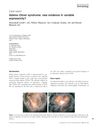 December 2013 in “International Journal of Dermatology”
 The clinical signs of Adams-Oliver syndrome can vary greatly, even among family members.
 November 2019 in “Клітинна та органна трансплантологія”
 Adipose-derived stem cells are useful in aesthetic medicine and dermatology for improving skin and tissue appearance.
 56 citations
,
December 2011 in “The Plant Journal”
56 citations
,
December 2011 in “The Plant Journal” AGD1 is important for root hair development in Arabidopsis, working with phosphoinositide signaling and the actin cytoskeleton.
 17 citations
,
December 2006 in “Gene Expression Patterns”
17 citations
,
December 2006 in “Gene Expression Patterns” Scube3 gene affects mouse embryo growth in multiple areas, but needs more research.
305 citations
,
March 2008 in “AJP Endocrinology and Metabolism” SSAT is a key enzyme affecting cell growth and metabolism, with potential but risky use in disease treatment.
 April 2025 in “International Journal of Molecular Sciences”
 Iris-exosomes may help treat hair loss by activating hair growth pathways.
July 2026 in “bioRxiv (Cold Spring Harbor Laboratory)” TCDD exposure causes sebaceous glands to differentiate and produce more lipids before shrinking.
July 2025 in “Genome biology” HT-scCAT-seq helps understand gene regulation in embryonic skin development.
November 2006 in “評価・診断に関するシンポジウム講演論文集” KSR1 is crucial for certain skin tumor formation and could be a cancer therapy target.
 April 2026 in “Microsystems & Nanoengineering”
 HA-gel-dex hydrogels help heal wounds and regenerate tissue effectively.
 15 citations
,
January 2018 in “Biomedical Reports”
15 citations
,
January 2018 in “Biomedical Reports” Exosomes are important for skin health and could help diagnose and treat skin diseases.
February 2025 in “Experimental Cell Research” Combining specific proteins and cell-derived particles may help treat hair loss.
November 2025 in “Journal of Investigative Dermatology” Certain immune cells in atopic dermatitis skin could be targeted for treatment.
88 citations
,
August 2014 in “PLOS genetics” Syndecan-1 is essential for maintaining skin fat and preventing cold stress.
3 citations
,
April 2012 in “Cancer research” Mouse skin cancer progression involves a unique group of cells marked by ABCG2 and MTS24.
 11 citations
,
August 2018 in “Facial Plastic Surgery Clinics of North America”
11 citations
,
August 2018 in “Facial Plastic Surgery Clinics of North America” Adipose-derived stem cells show potential for skin rejuvenation and wound healing but require more research to overcome challenges and ensure safety.