 48 citations
,
January 2012 in “The journal of investigative dermatology/Journal of investigative dermatology”
48 citations
,
January 2012 in “The journal of investigative dermatology/Journal of investigative dermatology” Chemokine signaling is important for hair development.
3 citations
,
June 2004 in “Työväentutkimus Vuosikirja” Ectodermal dysplasia syndromes are caused by disruptions in key signaling pathways affecting tooth and hair development.
 September 2017 in “Pediatric Dermatology”
 The document concludes that an experimental drug may help wound healing in Epidermolysis Bullosa, links Hydroa vacciniforme to EBV, discusses diagnosing hair loss disorders, finds many children with eczema have allergies, reviews the safety of a skin medication in children, notes side effects of a Duchenne's treatment, and identifies a marker for pediatric mastocytosis.
9 citations
,
October 1995 in “Clinical Dysmorphology” The family has a unique form of ectodermal dysplasia similar to Clouston syndrome but with different hair and skin symptoms.
December 2025 in “Journal of Human Immunity” JAK inhibitors may help improve symptoms in adults with APECED.
74 citations
,
October 2012 in “The American Journal of Human Genetics” Mutations in the HOXC13 gene cause hair and nail development issues.
October 2025 in “Indian Journal of Paediatric Dermatology” Zinc treatment improved skin and hair issues in a boy with a zinc-related condition.
 5 citations
,
January 2018 in “Acta Dermatovenerologica Alpina Pannonica et Adriatica”
5 citations
,
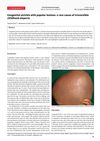
January 2018 in “Acta Dermatovenerologica Alpina Pannonica et Adriatica” Congenital atrichia with papular lesions causes permanent hair loss in children.
3 citations
,
March 2019 in “European Journal of Dermatology” A specific gene mutation (Y449H in K10) was found in a patient with severe skin disorder.
RNA-based treatments show promise for managing Hutchinson-Gilford Progeria Syndrome.
April 2025 in “Indian Journal of Paediatric Dermatology” Zinc supplements improved the girl's skin and hair condition.
November 2025 in “American Journal of Case Reports” Genetic testing is crucial for diagnosing and treating acrodermatitis enteropathica effectively.
2 citations
,
May 2020 in “The journal of investigative dermatology/Journal of investigative dermatology” A TP63 gene mutation causes significant hair loss and mild skin, nail, and tooth abnormalities.
25 citations
,
April 2008 in “Clinical and experimental dermatology” EFFC might be common but underreported.
October 2025 in “OPAL (Open@LaTrobe) (La Trobe University)” Early genetic testing and zinc therapy are crucial for managing acrodermatitis enteropathica in infants.
2 citations
,
January 2024 in “Revista Paulista de Pediatria” A rare genetic mutation caused severe symptoms in a 6-year-old girl with mandibuloacral dysplasia type A.
 19 citations
,
December 2015 in “European Journal of Human Genetics”
19 citations
,
December 2015 in “European Journal of Human Genetics” A rare ITGB6 gene variant causes intellectual disability, hair loss, and dental issues.
 109 citations
,
October 2007 in “American Journal of Human Genetics”
109 citations
,
October 2007 in “American Journal of Human Genetics” Giving a special protein to dogs with a certain genetic disease improved their symptoms but didn't help with hair growth.
22 citations
,
March 2023 in “Bioengineering” Stem cell therapies may help improve symptoms and quality of life for people with epidermolysis bullosa.
 197 citations
,
June 2009 in “American journal of human genetics”
197 citations
,
June 2009 in “American journal of human genetics” WNT10A mutations often cause ectodermal dysplasias, with males showing more tooth issues than females.
4 citations
,
August 2018 in “Journal of pediatric neurology” Becker's Nevus Syndrome is a rare condition with a skin patch and possible bone and muscle abnormalities, treated mainly for appearance.
February 2026 in “Journal of Chittagong Medical College Teachers Association” A 17-year-old girl with Kartagener's syndrome also has unusual skin, hair, and nail issues.
12 citations
,
December 2022 in “Frontiers in Bioscience-Landmark” The role of certain genes in skin cell development may be linked to psoriasis, but the connection is unclear.
 May 2023 in “The journal of investigative dermatology/Journal of investigative dermatology”
 EAAT4 decreases with age, harming skin function and calcium balance.
 January 2024 in “Genetics in Medicine Open”
 A new IL6ST gene variant may cause a unique form of hyper-IgE syndrome with skin abscesses and high IgE levels.
 4 citations
,
July 2020 in “Biochemical and Biophysical Research Communications”
4 citations
,
July 2020 in “Biochemical and Biophysical Research Communications” A protein called ectodysplasin-A2 increases a hair growth inhibitor in balding cells, which could be a target for hair loss treatment.
 18 citations
,
August 2015 in “Biochemical and Biophysical Research Communications”
18 citations
,
August 2015 in “Biochemical and Biophysical Research Communications” XEDAR triggers a specific signaling pathway in cells.
June 2023 in “Zenodo (CERN European Organization for Nuclear Research)” Hutchinson-Gilford Progeria Syndrome causes rapid aging due to a gene mutation, with no cure yet, but research may lead to better treatments.
66 citations
,
December 1999 in “Journal of Investigative Dermatology” New mutations in the hairless gene may cause hair loss and affect bone development.
 4 citations
,
October 2011 in “International Journal of Dermatology”
4 citations
,
October 2011 in “International Journal of Dermatology” Bardet-Biedl syndrome may include under-recognized skin problems related to its metabolic disturbances.