 9 citations
,
February 2018 in “The Journal of Dermatology”
9 citations
,
February 2018 in “The Journal of Dermatology” A new mutation in the LIPH gene was found to cause a rare hair disorder in a Japanese boy.
5 citations
,
December 2014 in “Molecular cytogenetics” A specific genetic change is linked to mental disorders, intellectual disability, and possibly autoimmune disease in a family.
323 citations
,
November 1984 in “Journal of Investigative Dermatology” 2 citations
,
November 2023 in “Skin Appendage Disorders” Lipedematous scalp may have a genetic link and could be associated with psychiatric conditions.
 November 2022 in “Journal of Investigative Dermatology”
 Scientists found a new type of skin cell that could help with skin repair and these cells work better with a certain protein.
 6 citations
,
June 2021 in “Developmental biology”
6 citations
,
June 2021 in “Developmental biology” Dermal EZH2 controls skin cell development and hair growth in mice.
A specific gene change in APCDD1 increases the risk of hair loss.
December 1987 in “Pediatric Dermatology” Hair bands are a new symptom of facio-genito-popliteal syndrome.
5 citations
,
September 2013 in “BMB Reports” BMPR1a-ECD reduces wrinkles much more effectively than retinoic acid.
 September 2024 in “Egyptian Journal of Medical Human Genetics”
 Consider NF1 in newborns with rare congenital anomalies.
23 citations
,
July 2016 in “JAMA Ophthalmology” CDH3-related disease causes worsening eye and hair issues.
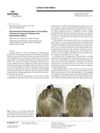
June 2025 in “British Journal of Dermatology” Lichen planopilaris may have a genetic link.
 5 citations
,
January 2015 in “Skin appendage disorders”
5 citations
,
January 2015 in “Skin appendage disorders” Colored hair-thickening fibers can help hide hair loss in some people with Epidermolysis Bullosa but may cause scalp irritation.
4 citations
,
January 2019 in “Indian Dermatology Online Journal” The term "Porokeratotic Adnexal Ostial Nevus" is suggested as a more appropriate name.
3 citations
,
June 2025 in “Frontiers in Nutrition” Zinc effectively treats most children with acrodermatitis enteropathica, but underlying metabolic issues may require additional management.
20 citations
,
December 2019 in “International Journal of Molecular Sciences” HB-EGF boosts the hair growth ability of stem cells, making it a potential hair loss treatment.
42 citations
,
February 2000 in “Journal of Investigative Dermatology” Type VII collagen absence helps skin development by allowing tissue remodeling.
September 2025 in “British Journal of Hospital Medicine” Higher levels of certain plasma protein ratios may increase the risk of alopecia areata.
12 citations
,
June 2016 in “Clinical and experimental dermatology” A new genetic mutation in the TRPV3 gene causes Olmsted-like syndrome in a Mongolian family.
 1 citations
,
December 2022 in “Life”
1 citations
,
December 2022 in “Life” Topical corticosteroids are the main treatment for Erosive Pustular Dermatosis, but recurrence is common after stopping treatment.
 January 2016 in “SpringerBriefs in bioengineering”
 Genetic defects and UV radiation cause skin damage and aging.
175 citations
,
September 1998 in “British Journal of Dermatology” Keratin 17 gene mutations cause both steatocystoma multiplex and pachyonychia congenita type 2.
 January 2023 in “Indian dermatology online journal”
 A boy with Pachyonychia congenita has a confirmed gene mutation, highlighting the need for a local genetic database in India.
114 citations
,
September 1985 in “Journal of Investigative Dermatology” 1 citations
,
October 2023 in “PROTOPLASMA” 2 citations
,
May 2020 in “Journal of the American Academy of Dermatology” Hair shaft changes may be linked to CCCA, but their role is unclear.
 1 citations
,
January 2019 in “International Journal of Medical Reviews and Case Reports”
1 citations
,
January 2019 in “International Journal of Medical Reviews and Case Reports” Treatment with moisturizers improved the skin condition of a girl with a rare genetic skin disorder.
September 2012 in “Annals of saudi medicine/Annals of Saudi medicine” The twins' condition is unique and doesn't match any known syndromes.
3 citations
,
February 2001 in “British journal of ophthalmology” An Australian with rare hair loss and eye conditions had a gene linked to both, not seen together before.
January 2021 in “Dermatology online journal” One twin girl has Loose anagen syndrome with poorly anchored hair, diagnosed with a simple hair pull test, while her identical twin does not have the condition.