 November 2023 in “BMC genomics”
 The study concluded that the arachidonic acid pathway and the protein KRT79 play a role in determining the fineness of cashmere.
Researchers created a new mouse model, G4, that mimics human PCOS symptoms and links the condition to a specific gene.
43 citations
,
May 1999 in “Journal of Biological Chemistry” Agouti protein affects melanocortin receptors through competitive antagonism and receptor down-regulation.
 6 citations
,
March 2019 in “Dermatologic surgery”
6 citations
,
March 2019 in “Dermatologic surgery” Chilled ATPv-supplemented saline best preserves hair grafts' key genes.
8 citations
,
June 1981 in “Clinica Chimica Acta”  April 2026 in “Zenodo (CERN European Organization for Nuclear Research)”
 The study explores miRNA changes in female hair loss.
 April 2026 in “Zenodo (CERN European Organization for Nuclear Research)”
 The study explores miRNA changes in female hair loss.
 17 citations
,
August 2012 in “Journal of Medical Genetics”
17 citations
,
August 2012 in “Journal of Medical Genetics” A new mutation in the XEDAR gene might cause a rare skin condition called hypohidrotic ectodermal dysplasia.
August 2025 in “Skin Research and Technology” The article's correction clarifies scientific and methodological concerns about miR-200c-3p's role in alopecia areata.
 14 citations
,
July 2001 in “American Journal of Human Genetics”
14 citations
,
July 2001 in “American Journal of Human Genetics” Haplogroup X found in Altaian population supports Amerindian origin.
 November 2020 in “Journal of The American Academy of Dermatology”
 The conclusion is that many small genetic variations influence claw disorders in cows, and using genomic selection could help reduce these disorders.
 17 citations
,
December 2006 in “Gene Expression Patterns”
17 citations
,
December 2006 in “Gene Expression Patterns” Scube3 gene affects mouse embryo growth in multiple areas, but needs more research.
 7 citations
,
July 2018 in “Journal of Investigative Dermatology”
7 citations
,
July 2018 in “Journal of Investigative Dermatology” Gene differences found in hair follicles linked to male baldness.
July 2005 in “The American Journal of Human Genetics” The AR gene is linked to male-pattern baldness, TNFSF4 to heart disease, SLC19A3 to BBGD, MCT8 to a syndrome, and segmental duplications to genetic variation.

The KRTAP36-1 gene affects wool quality in Chinese Tan lambs.
26 citations
,
May 2020 in “JCI Insight” Alopecia areata involves specific immune cells, offering potential treatment targets.
January 2009 in “China Practical Medicine” Certain genes help dermal papillae cells in hair follicles grow and group together.
 January 2026 in “MDPI (MDPI AG)”
 The hairy ear mutation in mice is linked to changes in gene expression affecting hair growth.
 24 citations
,
July 1994 in “Molecular Endocrinology”
24 citations
,
July 1994 in “Molecular Endocrinology” Researchers found an RNA transcript that might help control a growth factor linked to tumor development.
 February 2022 in “Research Square (Research Square)”
 High TSPEAR levels in colorectal cancer predict worse outcomes.
January 2020 in “bioRxiv (Cold Spring Harbor Laboratory)” DNA methylation controls hair follicle gene expression in cashmere goats.
 8 citations
,
March 2017 in “Experimental Dermatology”
8 citations
,
March 2017 in “Experimental Dermatology” Finasteride helps female-pattern hair loss.
26 citations
,
April 1996 in “Journal of Investigative Dermatology” 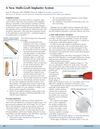 2 citations
,
May 2018 in “International Society of Hair Restoration Surgery”
2 citations
,
May 2018 in “International Society of Hair Restoration Surgery” The new system makes hair transplants faster and more precise.
1 citations
,
June 2022 in “Journal of Cosmetic Dermatology” Two specific genetic markers increase the risk of hair loss in Asian populations.
 January 2016 in “International journal of reproduction, contraception, obstetrics and gynecology”
 A certain gene variation is linked to a higher risk of polycystic ovarian syndrome in South Indian women.
 April 2026 in “Experimental & Molecular Medicine”
 Mouse and human skin development share similar fibroblast timelines.
January 2011 in “China Animal Husbandry & Veterinary Medicine” Constant-release melatonin reduces SOX21 gene expression in goats during the hair follicle resting phase.
 January 2022 in “Research Square (Research Square)”
 High TSPEAR levels in colorectal cancer predict worse outcomes.
10 citations
,
December 2023 in “International Journal of Nanomedicine” Cell membrane-coated nanoparticles could improve gene therapy by enhancing delivery and targeting of nucleic acids.