 4 citations
,
April 2015 in “Experimental Dermatology”
4 citations
,
April 2015 in “Experimental Dermatology” Certain genes controlled by OVOL1 are crucial for creating new hair follicles.
May 2023 in “Blood cancer discovery” Finasteride reduces AML cell growth by inhibiting androgen receptors.
 26 citations
,
May 2000 in “Journal of The American Academy of Dermatology”
26 citations
,
May 2000 in “Journal of The American Academy of Dermatology” Finasteride improves hair growth.
 January 2022 in “Journal of Cosmetic Dermatology”
 Using basic fibroblast growth factor with minoxidil improves hair growth and patient satisfaction more than using minoxidil alone.
1 citations
,
December 2022 in “Pharmaceutics” Finasteride-loaded microemulsions can effectively enhance skin delivery for treating hair loss.
 1 citations
,
March 2016 in “Journal of The American Academy of Dermatology”
1 citations
,
March 2016 in “Journal of The American Academy of Dermatology” More research needed to confirm finasteride as standard treatment for FFA.
 November 2023 in “The journal of investigative dermatology/Journal of investigative dermatology”
 Early treatment and multidisciplinary care are key to managing Frontal Fibrosing Alopecia and preventing further hair loss.
July 2022 in “Journal of Cosmetic Dermatology” Isotretinoin with tacrolimus may be more effective short-term for treating frontal fibrosing alopecia than finasteride with tacrolimus.
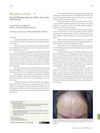 May 2019 in “Anais brasileiros de dermatologia/Anais Brasileiros de Dermatologia”
 Frontal fibrosing alopecia mostly affects postmenopausal women, with diagnosis often delayed by 3 years.
 35 citations
,
February 1994 in “Fundamental and applied toxicology”
35 citations
,
February 1994 in “Fundamental and applied toxicology” High doses of finasteride cause cell growth and tumors in mice.
 102 citations
,
April 2014 in “International Journal of Dermatology”
102 citations
,
April 2014 in “International Journal of Dermatology” The treatment helped reduce symptoms and stabilize the hairline in most patients with Frontal Fibrosing Alopecia, but hair regrowth was limited.
2 citations
,
January 2010 in “PubMed” Current treatments for postmenopausal frontal fibrosing alopecia stop hair loss but don't regrow hair.
 3 citations
,
August 2013 in “Tropical Journal of Pharmaceutical Research”
3 citations
,
August 2013 in “Tropical Journal of Pharmaceutical Research” Finasteride nano-emulsion optimized using chemometric approach.
Finasteride and luteolin may help promote hair growth.
2 citations
,
December 2004 in “PubMed” 51 citations
,
August 2010 in “British journal of dermatology/British journal of dermatology, Supplement” Intralesional triamcinolone acetonide helps regrow eyebrows in patients with frontal fibrosing alopecia.
 22 citations
,
December 2010 in “Journal of Cosmetic Dermatology”
22 citations
,
December 2010 in “Journal of Cosmetic Dermatology” Finasteride may increase depression by reducing brain cell growth.
April 2010 in “Nature Reviews Urology” December 2025 in “Actas Dermo-Sifiliográficas” Use a combination of oral dutasteride, topical treatments, and hydroxychloroquine to manage frontal fibrosing alopecia.
 August 2024 in “JEADV Clinical Practice”
 Mesotherapy with dutasteride improves hair growth and reduces symptoms in frontal fibrosing alopecia.
 2 citations
,
October 2017 in “Journal of The American Academy of Dermatology”
2 citations
,
October 2017 in “Journal of The American Academy of Dermatology” Focal atrichia helps diagnose female pattern hair loss.
20 citations
,
December 1994 in “Fertility and sterility” Flutamide combined with a low-dose birth control pill effectively reduces excessive hair growth in women with polycystic ovarian disease.
 November 2022 in “Medicina Estética Revista Científica de la Sociedad Española de Medicina Estética (SEME)”
 The conditioner with Serenoa serrulata and tocoferol helps reduce hair loss.
 January 2025 in “Clinical Dermatology Review”
 Finasteride 5 mg and topical minoxidil 5% effectively increase hair density in women, with finasteride 5 mg having the highest satisfaction.
Linalool in personal care products may worsen frontal fibrosing alopecia by damaging hair follicle stem cells and triggering harmful immune responses.
 March 2025 in “International Journal of Trichology”
 FAPD in children may not depend on androgens and should be treated with anti-inflammatory measures and minoxidil.