
Female rats showed more panic-related behavior than males, influenced by hormonal cycles and certain drugs.
7 citations
,
August 1996 in “The Journal of Clinical Endocrinology and Metabolism”  July 2025 in “SKIN The Journal of Cutaneous Medicine”
 Ritlecitinib is generally safe for alopecia areata patients over 72 months.
 6 citations
,
January 2017 in “British Journal of Dermatology”
6 citations
,
January 2017 in “British Journal of Dermatology” Frontal fibrosing alopecia is a scarring hair loss condition mainly affecting older women, with no known cause and treatments that may help stabilize hair loss.
 6 citations
,
September 2017 in “Multiple Sclerosis and Related Disorders”
6 citations
,
September 2017 in “Multiple Sclerosis and Related Disorders” Nail loss may be a side effect of the MS drug teriflunomide.
June 2025 in “British Journal of Dermatology” Tofacitinib is more effective than methotrexate for treating moderate-to-severe alopecia areata.
 2 citations
,
June 2020 in “BMC Health Services Research”
2 citations
,
June 2020 in “BMC Health Services Research” Health warnings and public health actions led to a significant drop in flutamide prescriptions for women, but off-label use still continues.
 4 citations
,
August 2010 in “Acta Biologica Hungarica”
4 citations
,
August 2010 in “Acta Biologica Hungarica” New steroidal compounds moderately block an enzyme related to testosterone conversion, less effectively than finasteride.
 November 2023 in “Deleted Journal”
 Combining laser and corticosteroid is not better than corticosteroid alone for treating frontal fibrosing alopecia.
3 citations
,
June 2018 in “Bioorganic & medicinal chemistry” Compounds 4, 4b, and 4c effectively inhibit an enzyme linked to testosterone conversion without significant toxicity.
 3 citations
,
November 2020 in “Clinical, Cosmetic and Investigational Dermatology”
3 citations
,
November 2020 in “Clinical, Cosmetic and Investigational Dermatology” Early diagnosis and combination therapy, especially with finasteride and dutasteride, are key to managing Frontal Fibrosing Alopecia effectively.
 March 2024 in “Organic letters”
 A new method efficiently modifies alkenes to create useful medicinal compounds.
June 2026 in “Khyber Journal Of Medical Sciences” Tofacitinib works better than methotrexate for severe alopecia in the short term.
November 2025 in “SKIN The Journal of Cutaneous Medicine” Ritlecitinib is generally safe for adolescents with alopecia areata over 5 years.
Farudodstat may effectively treat alopecia areata by protecting hair follicles without harmful effects.
 88 citations
,
February 2008 in “Journal of Medicinal Chemistry”
88 citations
,
February 2008 in “Journal of Medicinal Chemistry” Scientists made the first metal-based compounds from a nonsteroidal antiandrogen drug, which showed potential in fighting both hormone-dependent and independent prostate cancer cells.
 1 citations
,
February 2025 in “Notulae Scientia Biologicae”
1 citations
,
February 2025 in “Notulae Scientia Biologicae” Optimized emulgels with Levofloxacin effectively treat eye infections with prolonged drug release and safety.
 19 citations
,
September 2009 in “Journal of Chemical & Engineering Data”
19 citations
,
September 2009 in “Journal of Chemical & Engineering Data” Flutamide, dutasteride, and finasteride dissolve differently in supercritical carbon dioxide, with dutasteride dissolving the least.
July 2024 in “Reactions Weekly”  June 2019 in “Reactions Weekly” 1 citations
,
February 2023 in “Russian Journal of Bioorganic Chemistry”
June 2019 in “Reactions Weekly” 1 citations
,
February 2023 in “Russian Journal of Bioorganic Chemistry” The new compound may be a safer alternative to finasteride for prostate protection.
 December 2025 in “PubMed”
 The minoxidil and finasteride foam remains stable and effective for 180 days at room temperature.
 13 citations
,
August 1997 in “Steroids”
13 citations
,
August 1997 in “Steroids” Finasteride effectively lowers specific hormone levels, helping monitor treatment progress.
 13 citations
,
January 2018 in “International Journal of Dermatology”
13 citations
,
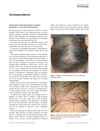
January 2018 in “International Journal of Dermatology” The study found that treatment improved hair condition in patients with Fibrosing Alopecia in a Pattern Distribution in Chile.
 102 citations
,
April 2014 in “International Journal of Dermatology”
102 citations
,
April 2014 in “International Journal of Dermatology” The treatment helped reduce symptoms and stabilize the hairline in most patients with Frontal Fibrosing Alopecia, but hair regrowth was limited.
 August 2024 in “Journal of Personalized Medicine”
 Tamsulosin increases the risk of floppy iris during eye surgery.
7 citations
,
January 2023 in “Anti-Cancer Drugs” Early diagnosis and treatment of EGFR inhibitor-induced folliculitis decalvans can prevent permanent hair loss.
 April 2012 in “Informa Healthcare eBooks”
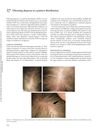
 Fibrosing alopecia in a pattern distribution is a unique hair loss condition with inflammation and scarring, resembling but distinct from common balding.
 8 citations
,
December 2008 in “Journal of The American Academy of Dermatology”
8 citations
,
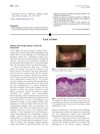
December 2008 in “Journal of The American Academy of Dermatology” Finasteride can cause a unique skin reaction on the penile shaft.