 58 citations
,
December 2020 in “Mayo Clinic Proceedings”
58 citations
,
December 2020 in “Mayo Clinic Proceedings” The conclusion is that individual differences in COVID-19 severity are influenced by factors like age, sex, race, and genetics, which are important for personalized medicine.
 41 citations
,
January 2009 in “International Journal of Trichology”
41 citations
,
January 2009 in “International Journal of Trichology” 58% of men aged 30-50 have hair loss, with severity increasing with age.
 28 citations
,
September 2014 in “Journal of Clinical Oncology”
28 citations
,
September 2014 in “Journal of Clinical Oncology” Men with baldness at the front and top of their head at age 45 may have a higher risk of aggressive prostate cancer.
 27 citations
,
August 2015 in “Journal of Investigative Dermatology”
27 citations
,
August 2015 in “Journal of Investigative Dermatology” The document concludes that there is a significant lack of reporting on the sex and age of cells in skin research, which could affect clinical trials and treatments.
 11 citations
,
June 2016 in “npj Regenerative Medicine”
11 citations
,
June 2016 in “npj Regenerative Medicine” The symposium concluded that understanding how different species repair tissue and how this changes with age can help advance regenerative medicine.
 3 citations
,
January 2019 in “Dermatology and therapy”
3 citations
,
January 2019 in “Dermatology and therapy” Scalp massages may help stabilize or regrow hair in people suffering from hair loss, regardless of age, gender, or use of other treatments.
 1 citations
,
April 2016 in “Journal of The American Academy of Dermatology”
1 citations
,
April 2016 in “Journal of The American Academy of Dermatology” The study concludes that Loose Anagen Hair Syndrome is a benign condition that usually improves with age but can be hard to diagnose and stressful for the family.
 September 2014 in “Springer eBooks”
 Men and women experience skin aging differently due to changes in sex hormone levels with age.
 April 2012 in “The Journal of Urology”
 Different prostate cancer treatments have similar risks of secondary cancers and related mortality when considering patient age and smoking history.
 295 citations
,
September 2006 in “Cell Cycle”
295 citations
,
September 2006 in “Cell Cycle” The conclusion is that using drugs to block the TOR pathway might slow aging and prevent age-related diseases.
 101 citations
,
January 2012 in “Annals of Dermatology”
101 citations
,
January 2012 in “Annals of Dermatology” Men with hair loss experience lower quality of life, worsened by factors like age, severity, and treatment history.
 83 citations
,
January 2001 in “American journal of clinical dermatology”
83 citations
,
January 2001 in “American journal of clinical dermatology” Clomipramine may significantly reduce hair-pulling in Trichotillomania, but more research is needed on treatments and early onset cases.
 53 citations
,
February 2022 in “The Journal of clinical endocrinology and metabolism/Journal of clinical endocrinology & metabolism”
53 citations
,
February 2022 in “The Journal of clinical endocrinology and metabolism/Journal of clinical endocrinology & metabolism” AMH helps estimate ovarian reserve but doesn't predict pregnancy chances; age is more important.
 40 citations
,
December 2011 in “British Journal of Dermatology”
40 citations
,
December 2011 in “British Journal of Dermatology” Women's hair generally gets thinner and less dense starting in their mid-thirties, with hair loss becoming more common as they age due to both genetics and environment.
 39 citations
,
October 1967 in “British Journal of Dermatology”
39 citations
,
October 1967 in “British Journal of Dermatology” Hair loss in women often doesn't follow a pattern, isn't linked to age, may be genetic, and can be related to thyroid issues or other health factors.
 30 citations
,
July 2004 in “Fertility and Sterility”
30 citations
,
July 2004 in “Fertility and Sterility” Amenorrhea is when a woman doesn't have periods, with primary amenorrhea starting by age 15 or within five years of breast development, and secondary amenorrhea when periods stop for three months. It affects 3-4% of women not pregnant, breastfeeding, or in menopause, mainly due to polycystic ovary syndrome, hypothalamic amenorrhea, hyperprolactinemia, and ovarian failure.
 20 citations
,
January 2015 in “Current problems in dermatology”
20 citations
,
January 2015 in “Current problems in dermatology” Hair gets thinner, grayer, and changes texture with age due to genetics, environment, and cellular changes, affecting the growth cycle.
 18 citations
,
June 2008 in “Archives of Dermatology”
18 citations
,
June 2008 in “Archives of Dermatology” Men typically shed about 10 hairs in 60 seconds, and this amount doesn't increase with age.
 17 citations
,
October 2013 in “Plastic and reconstructive surgery. Global open”
17 citations
,
October 2013 in “Plastic and reconstructive surgery. Global open” Male pattern baldness may be caused by scalp pressure on hair follicles, which increases with age and leads to a cycle of hair loss. This process is not directly determined by genes.
 10 citations
,
September 2018 in “Regenerative Medicine”
10 citations
,
September 2018 in “Regenerative Medicine” New hair can grow from large wounds in mice, but less so as they age, involving reprogramming of skin cells and specific molecular pathways.
 9 citations
,
January 2016 in “Skin Pharmacology and Physiology”
9 citations
,
January 2016 in “Skin Pharmacology and Physiology” The study concluded that both estrogen and androgen receptors, which decrease with age, are linked to skin aging and may be hormonally regulated.
 8 citations
,
May 2022 in “Journal of medicine and life”
8 citations
,
May 2022 in “Journal of medicine and life” COVID-19 patients may experience hair loss, but it's not linked to their age or sex.
 6 citations
,
October 2024 in “npj Digital Medicine”
6 citations
,
October 2024 in “npj Digital Medicine” Long-COVID causes more health issues after COVID-19, varying by age, sex, and infection wave.
 4 citations
,
May 2011 in “Movement Disorders”
4 citations
,
May 2011 in “Movement Disorders” A woman's unique dementia was misdiagnosed, a genetic mutation increases Parkinson's risk with age, and finasteride may help with Tourette syndrome.
 1 citations
,
May 2016 in “Current Opinion in Pediatrics”
1 citations
,
May 2016 in “Current Opinion in Pediatrics” Children's hair loss can be caused by various factors and should be treated with appropriate, age-specific methods and psychological support.
 September 2024 in “Electronic Journal of General Medicine”
 Diagnosing Sertoli-Leydig cell tumors is challenging due to their unusual symptoms and can occur at any age.
 January 2024 in “International Journal of Biology Sciences”
 Targeted interventions based on gender, education, and age can improve COVID-19 healthcare responses.
 January 2024 in “Pediatria Polska”
 Long-COVID symptoms in children after MIS-C are similar across different COVID-19 variants, with older age being a key factor.
 January 2021 in “bioRxiv (Cold Spring Harbor Laboratory)”
 Mothers have more hair proteins than their children, with age-related differences in protein patterns, and some proteins in hair could indicate early childhood development.
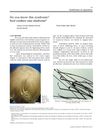
The document concludes that Loose Anagen Hair Syndrome is a benign condition where hair is thin and easily pulled out, often improving with age.