 June 2023 in “Drugs & Therapy Perspectives”
 New treatments for male pattern hair loss look promising, but established treatments are still the main option.
 8 citations
,
December 2017 in “Skin appendage disorders”
8 citations
,
December 2017 in “Skin appendage disorders” WNT7A gene expression is higher in early stages of androgenetic alopecia, showing the role of WNT pathway, apoptosis, and inflammation in the disorder.
 March 2024 in “INTERNATIONAL JOURNAL OF SCIENTIFIC RESEARCH”
 PRP can effectively treat hair loss, especially with optimal platelet count.
 7 citations
,
June 2019 in “Australasian Journal of Dermatology”
7 citations
,
June 2019 in “Australasian Journal of Dermatology” AGA in children needs careful diagnosis due to low androgen levels and possible other causes.
 87 citations
,
July 2018 in “Biochimica et Biophysica Acta (BBA) - Molecular Cell Research”
87 citations
,
July 2018 in “Biochimica et Biophysica Acta (BBA) - Molecular Cell Research” Mice studies show that Protein Phosphatase 2A is crucial for cell growth, development, and disease prevention.
 June 2024 in “Computational and Structural Biotechnology Journal”
 Multi-omics techniques help understand the molecular causes of androgenetic alopecia.
1 citations
,
September 2024 in “Benha Journal of Applied Sciences” Androgenetic alopecia causes hair loss, and early, ongoing treatment is key for best results.
 37 citations
,
February 2014 in “Journal of Dermatology”
37 citations
,
February 2014 in “Journal of Dermatology” Valproic acid increases hair count in men with hair loss.
Blocking GPR91 can help prevent and reverse hair loss in androgenetic alopecia.
 3 citations
,
February 2020 in “Dermatologic Therapy”
3 citations
,
February 2020 in “Dermatologic Therapy” Reducing micro-inflammation didn't change hair growth patterns in AGA.

Androgenetic alopecia, or hair loss, is caused by a mix of genetics, hormones, and environment, where testosterone affects hair growth and causes hair to become smaller and grow for a shorter time.
 November 2021 in “CRC Press eBooks”
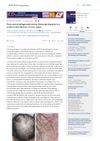
 Fibrosing alopecia in a pattern distribution is a new type of scarring hair loss that resembles common baldness and an autoimmune skin disease.
 March 2023 in “Journal of Cosmetic Dermatology”
 A woman's progressive hair loss was correctly diagnosed as a rare condition called fibrosing alopecia in a pattern distribution after initially being mistaken for a more common type.
January 2021 in “Menoufia Medical Journal” People with early-onset androgenetic alopecia may have a higher risk of heart disease due to abnormal blood lipid levels.
 April 2024 in “MRIMS journal of health sciences”
 Using growth factor injections and minoxidil together can significantly improve hair growth in people with hair loss.
November 2021 in “International Journal of Trichology” Trichoscopy is effective for diagnosing and monitoring female pattern hair loss.
 58 citations
,
September 1991 in “British Journal of Dermatology”
58 citations
,
September 1991 in “British Journal of Dermatology” Women with AGA often face anxiety, depression, and low self-esteem; psychological support is important.
 78 citations
,
June 2003 in “Journal of Investigative Dermatology Symposium Proceedings”
78 citations
,
June 2003 in “Journal of Investigative Dermatology Symposium Proceedings” TGF-β1 from dermal papilla cells suppresses hair growth, and targeting it may help treat androgenetic alopecia.
 1 citations
,
April 2019 in “The journal of investigative dermatology/Journal of investigative dermatology”
1 citations
,
April 2019 in “The journal of investigative dermatology/Journal of investigative dermatology” Melanocyte-associated antigens may play a key role in alopecia areata and could be targets for new treatments.
November 2025 in “International Journal of Innovative Research and Scientific Studies” Regenera Activa AMT effectively improves hair growth and reduces hair loss in androgenetic alopecia.
January 2015 in “Hair transplant forum international” Female pattern hair loss is different from male pattern hair loss and has unclear genetic causes.

Platelet-rich plasma treatment significantly improved hair density and regrowth in both men and women suffering from pattern hair loss, with even better results when combined with certain medications.
 May 2023 in “International Journal of Trichology”
 PRP therapy for hair loss is safe but its effectiveness is doubtful.

AGA causes permanent hair loss; women use 2% minoxidil, men use 1 mg finasteride daily.
 November 2025 in “Molecular and Cellular Biomedical Sciences”
 There is no significant link between the MMP-1 rs1799750 polymorphism and androgenetic alopecia in the Indonesian population.
 16 citations
,
March 2020 in “Facial Plastic Surgery Clinics of North America”
16 citations
,
March 2020 in “Facial Plastic Surgery Clinics of North America” Platelet-Rich Plasma (PRP), a substance from a patient's own blood, can stimulate hair regrowth in people with Androgenetic Alopecia (AGA) who haven't had success with other treatments, but more research is needed to optimize its use.
 46 citations
,
May 2018 in “Dermatologic Surgery”
46 citations
,
May 2018 in “Dermatologic Surgery” PRP injections effectively treat hair loss, with positive results in both monthly and every three months treatments.
12 citations
,
January 2019 in “International Journal of Trichology” Trichoscopy is useful for detecting and monitoring androgenetic alopecia.
January 2004 in “DOAJ (DOAJ: Directory of Open Access Journals)” Finasteride is a safe and effective treatment for male hair loss.
 January 2021 in “Skinmed”
 Platelet-Rich Plasma injections can effectively reduce hair thinning and loss, especially in women.