26 citations
,
October 2002 in “Journal of Investigative Dermatology” A specific gene mutation causes congenital hair loss.
2 citations
,
January 2017 Hair movement can indicate hair quality and health.
 January 2025 in “International Journal of Dermatology Research”
 Anagen grow may effectively treat hair loss by blocking testosterone and reducing enzyme activity.
 October 2023 in “Siriraj Medical Journal”
 Acne and hair loss in women can greatly lower their quality of life, but having polycystic ovarian syndrome does not.
 78 citations
,
June 2013 in “Science”
78 citations
,
June 2013 in “Science” Mice without the Sept4/ARTS gene heal wounds better due to more stem cells that don't die easily.
41 citations
,
November 2019 in “Journal of Ultrasound in Medicine” Ultrasound can help detect early signs and severity of hidradenitis suppurativa.
 March 2025 in “Journal of Clinical Medicine”
 Frontal fibrosing alopecia in men is often misdiagnosed and needs better diagnostic criteria and treatment strategies.
October 2024 in “Journal of Pakistan Association of Dermatologists” Alopecia totalis (AT), a severe form of Alopecia Areata, often resists conventional treatments, but recent findings suggest that oral Janus kinase (JAK) inhibitors, like tofacitinib, may be effective. This case study highlights a 21-year-old male with AT who experienced complete hair regrowth after six months of tofacitinib treatment, with hair growth beginning by the fourth week and no recurrence observed. The treatment was well-tolerated with no significant adverse effects. While this suggests tofacitinib as a promising therapy for AT, further research is needed to assess its long-term efficacy.
2 citations
,
September 2024 in “Internal Medicine Journal” Upadacitinib helped regrow hair and maintain ulcerative colitis remission.
6 citations
,
April 2023 in “Current Issues in Molecular Biology” A specific gene variant may increase the risk of developing Alopecia Areata.
 March 2026 in “Dicle Medical Journal / Dicle Tip Dergisi”
 Blood groups are not linked to hidradenitis suppurativa.
April 2025 in “International Journal of Dermatology” JAK inhibitors effectively reduce alopecia areata symptoms in Black patients.
 April 2023 in “Dermatologic surgery”
 The new graft-holding solution is better at preserving hair grafts and reducing hair shedding after transplantation than the standard solution.
 March 2024 in “Journal of cosmetic dermatology”
 Isotretinoin can effectively reduce symptoms of frontal fibrosing alopecia.
 5 citations
,
August 2014 in “Journal of The American Academy of Dermatology”
5 citations
,
August 2014 in “Journal of The American Academy of Dermatology” Smoking doesn't cause or prevent Frontal Fibrosing Alopecia, hormonal imbalance may be involved, and a combination of antiandrogens and steroids can help stabilize the condition.

Understanding hair follicle signaling can improve hair disorder treatments.
 166 citations
,
April 2012 in “Journal of The American Academy of Dermatology”
166 citations
,
April 2012 in “Journal of The American Academy of Dermatology” Mostly postmenopausal Caucasian women get Frontal Fibrosing Alopecia, which often includes eyebrow loss and has limited treatment success.
June 2025 in “British Journal of Dermatology” Tofacitinib is more effective than methotrexate for treating moderate-to-severe alopecia areata.
 9 citations
,
February 2019 in “Journal of Clinical Research in Pediatric Endocrinology”
9 citations
,
February 2019 in “Journal of Clinical Research in Pediatric Endocrinology” Children with classic congenital adrenal hyperplasia have thicker heart fat and are at higher risk for heart problems and early atherosclerosis.
 16 citations
,
February 2010 in “Journal of the European Academy of Dermatology and Venereology”
16 citations
,
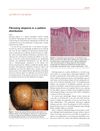
February 2010 in “Journal of the European Academy of Dermatology and Venereology” Fibrosing alopecia in a pattern distribution is a unique hair loss condition that may respond to antiandrogen therapy.
 139 citations
,
November 2016 in “Journal of the American Academy of Dermatology”
139 citations
,
November 2016 in “Journal of the American Academy of Dermatology” Tofacitinib helped regrow hair in most adolescents with alopecia areata, but more research is needed.
71 citations
,
January 2011 in “Orphanet Journal of Rare Diseases” IFAP syndrome is a rare genetic disorder causing skin, hair, and eye issues, with limited treatment options.

ARHGEF3 is essential for proper hair follicle development.
 August 2021 in “Revista Colombiana de Reumatología/Revista Colombiana de Reumatologia”
 Janus kinase inhibitors may effectively treat severe alopecia areata unresponsive to other treatments.
 December 2000 in “Journal of the Royal Society of Medicine”
 Antiandrogen therapy may help treat hidradenitis suppurativa.
 7 citations
,
April 2021 in “British Journal of Dermatology”
7 citations
,
April 2021 in “British Journal of Dermatology” Topical tofacitinib may effectively and safely regrow facial hair in some people with alopecia areata.
2 citations
,
January 2019 in “Skin appendage disorders” Early diagnosis and quick treatment improve life quality for FFA patients.
 September 2017 in “Journal of Investigative Dermatology”
 The research concluded that hyaluronic acid affects the formation and growth of hair follicle-like structures in a lab setting.
 June 2025 in “Journal of medical and dental science research.”
 i-PRF and A-PRF show promise in promoting hair regrowth and improving scalp health in androgenetic alopecia.
 October 2022 in “Benha Journal of Applied Sciences”
 Human Beta Defensin 1 levels do not predict the risk or severity of Alopecia Areata.