December 2025 in “Journal of health economics and outcomes research” Alopecia Areata in Saudi Arabia is costly, mainly due to lost work and medication expenses, needing better diagnosis, treatment, and care.
 4 citations
,
January 2021 in “Dermatologic Therapy”
4 citations
,
January 2021 in “Dermatologic Therapy” AI is effective in diagnosing and treating hair disorders, including detecting hair loss and scalp conditions with high accuracy, but it should supplement, not replace, doctor-patient interactions.
April 2023 in “Journal of Investigative Dermatology” A new image-based method improves accuracy in measuring hair loss in mice.

Baricitinib helps regrow hair in teens with severe alopecia areata.
July 2026 in “Journal of the American Academy of Dermatology” 3 citations
,
August 2017 in “Dermatologic therapy” UVA-1 phototherapy might help treat alopecia areata.
10 citations
,
January 2023 in “Skin Appendage Disorders” Alopecia areata is an autoimmune hair loss condition linked to genetic factors.
 47 citations
,
August 2000 in “Endocrine Reviews”
47 citations
,
August 2000 in “Endocrine Reviews” The document concludes that more research is needed to understand excessive hair growth in women with normal hormone levels and regular ovulation.
![Influence of FHIT on Benzo[a]pyrene-Induced Tumors and Alopecia in Mice: Chemoprevention by Budesonide and N-Acetylcysteine](/images/assets/f8f56777-f891-4879-8c45-c87d6aa82563/small/35499.jpg) 24 citations
,
May 2006 in “Proceedings of the National Academy of Sciences of the United States of America”
24 citations
,
May 2006 in “Proceedings of the National Academy of Sciences of the United States of America” Budesonide and N-acetylcysteine reduced tumors and alopecia in mice, regardless of FHIT gene status.
 6 citations
,
November 2022 in “Journal of autoimmunity”
6 citations
,
November 2022 in “Journal of autoimmunity” JAK inhibitors like tofacitinib may effectively treat Alopecia Areata.
 January 2026 in “DOAJ (DOAJ: Directory of Open Access Journals)”
 Early biopsy and targeting inflammation can improve treatment for hair loss in androgenetic alopecia.
 December 2024 in “Frontiers in Pediatrics”
 Baricitinib improved platelet counts and alopecia in a 16-year-old with chronic immune thrombocytopenia.
Upadacitinib effectively treated a patient with multiple inflammatory conditions.
 32 citations
,
December 2003 in “Planta”
32 citations
,
December 2003 in “Planta” Hypaphorine from a fungus changes the internal structure of Eucalyptus root hairs, stopping their growth.
 14 citations
,
January 2020 in “Advances in Dermatology and Allergology”
14 citations
,
January 2020 in “Advances in Dermatology and Allergology” Higher interleukin-15 levels are linked to more severe alopecia areata, but not to age or gender.
January 2026 in “Advances in Dermatology and Allergology” Alopecia areata may be linked to changes in small blood vessels.
July 2026 in “Journal of the American Academy of Dermatology” 7 citations
,
February 2011 in “Journal of dermatology” The 736T>A mutation in the LIPH gene is common in Japanese people with autosomal recessive woolly hair.
Higher PD-1 levels mean fewer CD8+ T cells in alopecia areata hair follicles.
12 citations
,
January 2024 in “Journal of the American Academy of Dermatology” April 2019 in “Journal of the Endocrine Society” A 12-year-old boy with PAIS successfully developed male characteristics using high-dose testosterone and anastrozole.
1 citations
,
May 2025 in “Australasian Journal of Dermatology” Caregivers of teens with alopecia areata face significant mental and work-related challenges.
January 2022 in “Clinical Cases in Dermatology” A 22-year-old man has alopecia areata, an autoimmune hair loss condition, with various treatments available.
 1 citations
,
September 2025 in “Clinical Cosmetic and Investigational Dermatology”
1 citations
,
September 2025 in “Clinical Cosmetic and Investigational Dermatology” Upadacitinib is effective and safe for treating severe Alopecia Areata in adolescents.
66 citations
,
July 2010 in “Journal of Proteome Research” Trichohyalin may trigger the immune response causing alopecia areata.
January 2025 in “Dermatologic Therapy” Alopecia areata patients don't have increased atherosclerosis risk, but may have higher cardiovascular risk due to smoking, blood sugar, and blood pressure.
5 citations
,
July 2024 in “Archives of Dermatological Research”  2 citations
,
February 2014 in “Hair therapy & transplantation”
2 citations
,
February 2014 in “Hair therapy & transplantation” Alopecia Areata is an autoimmune condition causing hair loss, influenced by genetics, environment, and possibly improved by anti-MIF therapy, with many patients experiencing regrowth within a year.
 48 citations
,
May 1999 in “International Journal of Dermatology”
48 citations
,
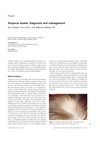
May 1999 in “International Journal of Dermatology” Alopecia areata is an unpredictable autoimmune hair loss condition, treated based on severity, with half of patients regrowing hair within a year without treatment.
 March 2012 in “Hair transplant forum international”
 The document's conclusion cannot be summarized because the content is not accessible.