 January 2026 in “Clinical Cosmetic and Investigational Dermatology”
 Early diagnosis and targeted anti-inflammatory treatments can improve outcomes in androgenetic alopecia with perifollicular inflammation and fibrosis.
 December 2023 in “Journal of Cosmetic Dermatology”
 Baricitinib effectively and safely improves hair growth in patients with severe alopecia areata.
 November 2025 in “SKIN The Journal of Cutaneous Medicine”
 Baricitinib works better in adolescents than adults for treating severe alopecia areata.
 41 citations
,
December 2017 in “Lasers in Medical Science”
41 citations
,
December 2017 in “Lasers in Medical Science” Low-Level Laser Therapy (LLLT) is a safe and effective treatment for common hair loss, but more research is needed to find the best power and wavelength for treatment.
 37 citations
,
January 2023 in “Ophthalmology and Therapy”
37 citations
,
January 2023 in “Ophthalmology and Therapy” Low-level red light therapy can shorten eye length in some myopic children.
 May 2025 in “The Journal of Rheumatology”
 Early recognition and a team approach are crucial for managing diffuse alveolar hemorrhage in antiphospholipid syndrome.
 1 citations
,
January 1996 in “Springer eBooks”
1 citations
,
January 1996 in “Springer eBooks” Androgenetic alopecia is a condition causing noticeable hair loss, especially in middle age, which is more severe than normal balding.
7 citations
,
March 2023 in “JEADV. Journal of the European Academy of Dermatology and Venereology/Journal of the European Academy of Dermatology and Venereology”  December 2022 in “International Journal of Women's Dermatology”
 The Sinclair Shedding Scale is effective for diagnosing Alopecia Areata Incognita and monitoring treatment success.
July 2026 in “Journal of the American Academy of Dermatology” 3 citations
,
February 2020 in “The Egyptian Rheumatologist” Recognizing LET and AITD can help diagnose SLE early for better treatment.
12 citations
,
July 2016 in “Journal of dermatology” Intramuscular triamcinolone acetonide is an effective treatment for severe alopecia areata, especially in males.
November 2025 in “SKIN The Journal of Cutaneous Medicine” Ritlecitinib is generally safe for adolescents with alopecia areata over 5 years.
August 2025 in “BMC Pharmacology and Toxicology” The LTF gene may help predict and manage nonspecific orbital inflammation.
 3 citations
,
March 2015 in “Journal of the European Academy of Dermatology and Venereology”
3 citations
,
March 2015 in “Journal of the European Academy of Dermatology and Venereology” Some people with primary cicatricial alopecia also have inflammatory bowel disease, suggesting a possible connection.
 August 2016 in “Journal of Investigative Dermatology”
 Researchers found a new genetic mutation linked to a hair condition in a Japanese boy.
181 citations
,
December 2017 in “Trends in immunology” Intestinal intraepithelial lymphocytes are crucial for gut immunity and maintaining the mucosal barrier.
 September 2022 in “Hair transplant forum international”
 JAK inhibitors like baricitinib are a new FDA-approved treatment for alopecia areata, but safety data is incomplete.
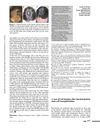 May 2018 in “European Journal of Dermatology”
 Adjusting the medication tacrolimus resolved a boy's red nail beds after a stem cell transplant.
 September 2023 in “Medicina Estética Revista Científica de la Sociedad Española de Medicina Estética (SEME)”
 The FDA approved Litfulo® for treating severe alopecia areata in people aged 12 and older.
July 2004 in “TSpace (University of Toronto)” A rare case showed alopecia areata and lichen planus occurring together in one person.
 6 citations
,
June 2018 in “PLOS ONE”
6 citations
,
June 2018 in “PLOS ONE” The Alopecia Areata Assessment Tool (ALTO) effectively identifies alopecia areata from other hair loss types but needs more validation.
 1 citations
,
January 2006
1 citations
,
January 2006 Diagonal earlobe and preauricular creases may indicate higher coronary artery disease risk in men.
3 citations
,
March 2024 in “iScience” Long-lived proteins may predict age-related diseases.
Baricitinib effectively treats alopecia areata, with over half of patients improving after 52 weeks.
 3 citations
,
August 2024 in “Cureus”
3 citations
,
August 2024 in “Cureus” Upadacitinib may cause hair loss.
1 citations
,
September 2023 in “Journal of the American Academy of Dermatology” Mini pulse corticosteroid therapy with oral dexamethasone is effective and has fewer side effects for treating extensive alopecia areata.
1 citations
,
October 2025 in “International Journal of Dermatology” Ritlecitinib improves emotional well-being and activity levels in alopecia areata patients.
 May 2022 in “Journal of The American Academy of Dermatology”
 Low-dose oral minoxidil often improves hair loss, and early treatment of traction alopecia is effective but harder if delayed.
 February 2025 in “PubMed”
 CS12192 effectively treats alopecia areata with better safety than current options.