 1 citations
,
December 2019 in “Journal of medicine and life science”
1 citations
,
December 2019 in “Journal of medicine and life science” Docosahexaenoic acid (DHA) may help hair growth by promoting dermal papilla cell proliferation.
 1 citations
,
April 2016 in “Journal of Investigative Dermatology”
1 citations
,
April 2016 in “Journal of Investigative Dermatology” UV photography can help identify people at higher risk for skin cancer, and male pattern baldness at age 45 is linked to a higher risk of certain skin cancers.
 1 citations
,
January 2015 in “Journal of clinical and investigative dermatology”
1 citations
,
January 2015 in “Journal of clinical and investigative dermatology” IGF-1 from human placenta helps hair grow.
 1 citations
,
January 2015 in “Der pharmacia lettre”
1 citations
,
January 2015 in “Der pharmacia lettre” Neurosteroids help protect the brain and improve behavior after a stroke in mice.
 June 2026 in “Scholarly review .”
 Endocrine-disrupting chemicals cause irreversible harm to children's development, increasing disease risk.

PROMETHEUS helps organize and evaluate causal claims from large language models.
 April 2026 in “Microsystems & Nanoengineering”
 HA-gel-dex hydrogels help heal wounds and regenerate tissue effectively.
 April 2026 in “Research Square”
 Dapagliflozin helps protect heart cells under stress by improving mitochondrial function and reducing cell damage.
 March 2026 in “Aging Research”
 Personalized anti-aging strategies are important, considering genetics and lifestyle.
 February 2026 in “International Journal of Web of Multidisciplinary Studies”
 Restoring microbial balance and using exosome therapies may help treat hair disorders like alopecia and acne.

Exosomes show promise for skin treatments but need more research and regulation in India.

The study found that different genes are active in cashmere goats' hair growth stages, which can help improve cashmere production.
 January 2026 in “Frontiers in Bioscience-Landmark”
 Araliadiol protects skin cells from damage by boosting antioxidant defenses.
Phytochemicals from plants may help improve hormonal health naturally.
 December 2025 in “Journal of Clinical Practice and Medical Case Report.”
 Exosome therapy may help treat hair loss.
 December 2025 in “International Journal of Pharmacology”
 iPSC-derived artificial platelets show promise for consistent and effective regenerative therapies.
 November 2025 in “Frontiers in Veterinary Science”
 A 1.0% tyrosine diet increases melanin in chicken feathers.
 November 2025 in “Frontiers in Pharmacology”
 Gentamicin-loaded exosomes improve healing of infected diabetic wounds in mice.
 September 2025 in “Drug Design Development and Therapy”
 Combining platelet-rich products, biomaterials, and bioactive substances may improve skin treatment, but more research is needed.
 August 2025 in “Research Square (Research Square)”
 High TNF-α levels may increase hair loss risk after PRP therapy.
 August 2025 in “Animal Bioscience”
 m6A methylation affects the thickness of Alpine Merino wool fibers.
 July 2025 in “International Journal of Pharmaceutical Research and Development”
 Exosomes can improve skin treatments with fewer side effects.
 March 2025 in “OncoTargets and Therapy”
 A specific genetic trait in tumor cells is linked to longer survival without disease in certain lymphoma patients.
 November 2024 in “Research Square (Research Square)”
 Lipids may help treat hair loss by promoting hair growth through the HIF-1 pathway.
 March 2024 in “Cytologia”
 LncRNA MTC boosts growth of goat skin cells, improving cashmere quality.
 March 2024 in “Frontiers in genetics”
 Different types of fibroblasts play specific roles in wound healing and cancer, which could help improve treatments.
Ziziphus jujuba and Eclipta alba leaf extracts improve blood sugar levels and cognitive function in diabetic rats.
 January 2024 in “Journal of cellular immunology”
 Hair follicle stem cells are important for maintaining healthy skin and interact with many signals.
 September 2023 in “bioRxiv (Cold Spring Harbor Laboratory)”
 FOL-026 peptide can help repair blood vessels and promote growth, offering potential treatment for vascular diseases.
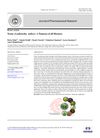 May 2023 in “Journal of Pharmaceutical Research”
 Neem is highly beneficial for health and beauty with no major side effects.