1 citations
,
December 2025 in “Baylor University Medical Center Proceedings” Leuprolide may better manage cholesterol and blood pressure in PCOS than spironolactone.
 February 2026 in “Zenodo (CERN European Organization for Nuclear Research)”
 Spironolactone effectively treats female pattern hair loss but requires ongoing use to maintain results.
February 2026 in “Journal of the American Academy of Dermatology” The combination of spironolactone and low-dose minoxidil is generally safe for treating hair loss in adult females, with mostly mild side effects.
 November 2025 in “Preprints.org”
 Phenytoin and spironolactone help prevent hair loss from chemotherapy by reducing stress and inflammation.
 February 2025 in “Journal of the American Academy of Dermatology”
 Spironolactone helps prevent swelling caused by minoxidil in women with hair loss.
 May 2024 in “Australasian journal of dermatology”
 Bicalutamide is more effective and safer than spironolactone for treating female hair loss.

Low-dose spironolactone can be effective for treating hair loss in women.
 December 2021 in “Journal of pharmaceutical research international”
 Spironolactone may be effective for acne and other skin conditions and could be used more in treatment.
Spironolactone is a promising alternative to antibiotics for treating acne in adult females.

Spironolactone may be a better acne treatment for adult women than antibiotics.
 January 1994 in “Journal of Dermatological Treatment”
 Spironolactone helped reduce excessive facial hair in a woman with porphyria cutanea tarda.
Spironolactone was effective in reducing hair growth in women with hirsutism.
April 2023 in “Journal of Investigative Dermatology” Low-dose spironolactone effectively treats female pattern hair loss with mild side effects.
September 2022 in “Journal of The American Academy of Dermatology” Dermatologists should monitor potassium levels in women taking spironolactone for acne, hair loss, and hirsutism.
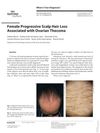 January 2019 in “Skin appendage disorders”
 A woman's hair loss was linked to a rare hormone-secreting ovarian tumor, treated with surgery and hair loss medication.
 February 2022 in “Chinese Journal of Dermatology”
 A 36-year-old woman with worsening hair loss over 10 years was treated with various medications, and after six months, her hair loss did not worsen significantly.
 23 citations
,
October 2016 in “Journal of Midwifery & Women's Health”
23 citations
,
October 2016 in “Journal of Midwifery & Women's Health” The document concludes that health care providers should offer culturally competent care and more research is needed to improve health outcomes for transgender individuals.
 December 2024 in “Research Journal for Social Affairs”
 PCOS causes hormonal issues and infertility, with treatment options including medication and lifestyle changes.
 April 2011 in “Global journal of health science”
 Aldactone effectively reduces hair thickness in women with excessive hair growth, both alone and with other treatments.
 April 2011 in “Global journal of health science”
 Spironolactone effectively makes hair shafts thinner in women with excessive hair growth.
 November 2023 in “Australasian journal of dermatology”
 Dermatologists are essential in helping transgender and gender diverse patients with skin and hair issues related to gender affirmation and hormone therapy.
 150 citations
,
February 2008 in “The Journal of clinical endocrinology and metabolism/Journal of clinical endocrinology & metabolism”
150 citations
,
February 2008 in “The Journal of clinical endocrinology and metabolism/Journal of clinical endocrinology & metabolism” Antiandrogens are somewhat effective in reducing excessive hair growth in women.
 121 citations
,
April 2008 in “The Journal of Clinical Endocrinology & Metabolism”
121 citations
,
April 2008 in “The Journal of Clinical Endocrinology & Metabolism” Insulin sensitizers may slightly reduce hirsutism but are less effective than other treatments.
88 citations
,
September 2003 in “Clinical endocrinology” Hormone treatment for transsexual individuals is effective but carries risks like thromboembolic events and mood changes, with most side effects being minor and reversible.
 78 citations
,
February 2011 in “Canadian Medical Association Journal”
78 citations
,
February 2011 in “Canadian Medical Association Journal” Acne treatment varies, with topical and systemic therapies effective, and more research needed on treatment order and long-term effects.
 76 citations
,
January 2007 in “American Journal of Clinical Dermatology”
76 citations
,
January 2007 in “American Journal of Clinical Dermatology” Women with PCOS often have skin problems like excessive hair, acne, hair loss, and dark patches, which can be treated with hormonal and non-hormonal therapies.
 49 citations
,
January 2021 in “Journal of The European Academy of Dermatology and Venereology”
49 citations
,
January 2021 in “Journal of The European Academy of Dermatology and Venereology” Anti-androgens, like finasteride, dutasteride, and spironolactone, may lessen the severity of COVID-19 in men, leading to fewer ICU admissions.
 43 citations
,
September 2012 in “International Journal of Dermatology”
43 citations
,
September 2012 in “International Journal of Dermatology” Hormonal therapies are safe and effective for treating adult women's acne.
 38 citations
,
October 1996 in “Dermatologic Clinics”
38 citations
,
October 1996 in “Dermatologic Clinics” Certain hormone treatments can improve acne and related conditions in women.
37 citations
,
May 2018 in “Transgender health” Oral estradiol works for many transgender women but needs personalized dosing and monitoring.