October 2022 in “Biomolecules” Allopregnanolone can reduce gut inflammation and normalize neurotransmitter levels after finasteride withdrawal.
New drugs, baricitinib and ritlecitinib, are effective for severe alopecia areata.
 June 2026 in “Zenodo (CERN European Organization for Nuclear Research)”
 Quercetin and kaempferol may be effective and safe natural treatments for hair loss.
 October 2025 in “Dermatology and Therapy”
 Ritlecitinib is being tested for effectiveness and safety in treating severe alopecia areata.
1 citations
,
January 2004 in “Wieś Jutra” Finasteride reduces hair loss by blocking testosterone's effects on scalp cells.
 11 citations
,
November 2019 in “Clinical Case Reports”
11 citations
,
November 2019 in “Clinical Case Reports” A Brazilian teenager with severe hair loss had total hair regrowth with no side effects after using tofacitinib.
July 2024 in “Journal of Investigative Dermatology” The Fas/FasL pathway may play a role in alopecia areata.
October 2020 in “Der Hautarzt” Tofacitinib helped regrow hair in a woman with alopecia areata.
January 2023 in “Cutaneous and Ocular Toxicology”  3 citations
,
February 2021 in “Molecules”
3 citations
,
February 2021 in “Molecules” A new method was created to test the effectiveness of Dihydrotestosterone (DHT) inhibitors, like finasteride and dutasteride, in human and fish cells. The results showed fish cells are more sensitive to these treatments, and dutasteride works better than finasteride in all tested cells.
April 2025 in “Anais Brasileiros de Dermatologia” Abrocitinib effectively treats severe alopecia areata with significant improvement and no side effects.
 April 2023 in “The journal of investigative dermatology/Journal of investigative dermatology”
 Ritlecitinib significantly improves scalp hair regrowth in alopecia areata patients over time.
February 2023 in “Reactions Weekly”  2 citations
,
January 2006 in “Durham e-Theses (Durham University)”
2 citations
,
January 2006 in “Durham e-Theses (Durham University)” Androsterone and finasteride have different solid forms, with new findings correcting previous errors and identifying a new form.
 7 citations
,
May 2015 in “Journal of The American Academy of Dermatology”
7 citations
,
May 2015 in “Journal of The American Academy of Dermatology” Finasteride helps treat frontal fibrosing alopecia, improving or stabilizing the condition in many patients.
9 citations
,
November 1980 in “Geburtshilfe und Frauenheilkunde” Fenoterol treatment causes increased hair growth due to higher metabolism in hair follicles, not hormones.
 4 citations
,
August 2010 in “Acta Biologica Hungarica”
4 citations
,
August 2010 in “Acta Biologica Hungarica” New steroidal compounds moderately block an enzyme related to testosterone conversion, less effectively than finasteride.
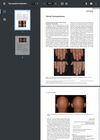 March 2024 in “International Journal of Dermatology”
 Baricitinib improved nail condition and hair regrowth in a patient with alopecia and nail abnormalities.
 6 citations
,
March 2009 in “Annals of Saudi Medicine”
6 citations
,
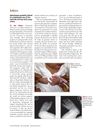
March 2009 in “Annals of Saudi Medicine” Finasteride use during early pregnancy may cause limb deformities in babies.
 16 citations
,
January 2017 in “Acta dermatovenerologica Alpina, Pannonica et Adriatica (Tiskana izd.)”
16 citations
,
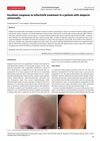
January 2017 in “Acta dermatovenerologica Alpina, Pannonica et Adriatica (Tiskana izd.)” A patient with complete hair loss regrew all her hair using tofacitinib.
 16 citations
,
January 2007 in “Actas dermo-sifiliográficas/Actas dermo-sifiliográficas”
16 citations
,
January 2007 in “Actas dermo-sifiliográficas/Actas dermo-sifiliográficas” The document concludes that there are no reliable treatments for frontal fibrosing alopecia, with only temporary benefits from current options.
 146 citations
,
July 2003 in “Journal of the American Academy of Dermatology”
146 citations
,
July 2003 in “Journal of the American Academy of Dermatology” Clobetasol propionate ointment can help some people with total hair loss regrow hair.
 January 2025 in “International Journal of Dermatology Venereology and Leprosy Sciences”
 Tofacitinib improved hair regrowth and quality of life in children with alopecia areata, with mild side effects.
10 citations
,
November 2017 in “Letters in drug design & discovery” Researchers identified promising inhibitors for the BRD4 protein, including finasteride and amentoflavone.
April 2017 in “The journal of investigative dermatology/Journal of investigative dermatology” Researchers found three different ways drugs work to treat hair loss from alopecia areata and identified key factors for personalized treatment.
 92 citations
,
June 2005 in “Journal of Investigative Dermatology”
92 citations
,
June 2005 in “Journal of Investigative Dermatology” All-trans retinoic acid causes hair loss by increasing TGF-β2 in hair follicle cells.
 11 citations
,
April 2020 in “Journal of Dermatological Treatment”
11 citations
,
April 2020 in “Journal of Dermatological Treatment” Taking oral isotretinoin with creams worked better for treating a type of hair loss than creams alone.
 January 2024 in “American journal of clinical dermatology”
 Ritlecitinib is safe and well-tolerated for treating alopecia areata in patients aged 12 and older.
4 citations
,
January 2010 in “International journal of trichology” Bexarotene gel shows promise as a new treatment for alopecia areata.
 November 2025 in “Mendeley Data”
 Standard dosing is more effective for severe alopecia areata in children, but unorthodox dosing can be safe and considered if needed.