New treatments for skin conditions show promise, especially Coacillium® for hair growth in young people with alopecia areata.
 37 citations
,
April 2019 in “Journal of The American Academy of Dermatology”
37 citations
,
April 2019 in “Journal of The American Academy of Dermatology” Some treatments like intralesional steroids and 5α-reductase inhibitors are effective for frontal fibrosing alopecia, but more research is needed.
Baricitinib effectively treats alopecia areata, with over half of patients improving after 52 weeks.
8 citations
,
January 2011 in “International journal of trichology” Accurate diagnosis of APL is crucial to avoid unnecessary treatments.
 November 2023 in “The journal of investigative dermatology/Journal of investigative dermatology”
 ARQ-234, a protein designed to treat atopic dermatitis, shows increased effectiveness in early testing.
36 citations
,
October 2009 in “Journal of biological chemistry/The Journal of biological chemistry” Two new compounds were found to build bone and muscle without affecting reproductive organs and skin oil glands.
January 2023 in “Dermatologic Therapy” Intralesional corticosteroids and 5-alpha-reductase inhibitors are the best treatments for frontal fibrosing alopecia.
January 2004 in “Drug Development and Industrial Pharmacy” GI197111X is best dissolved in Capmul MCM for trials.
October 2024 in “Skin Appendage Disorders” Higher FABP4 levels may indicate more severe alopecia areata.
 23 citations
,
December 2017 in “Scientific Reports”
23 citations
,
December 2017 in “Scientific Reports” ARL15 is important for fat cell development and the release of the hormone adiponectin.
6 citations
,
June 2021 in “EClinicalMedicine” ALRV5XR significantly improves hair density in women with hair loss and is well-tolerated.
 November 2023 in “Pakistan Journal of Health Sciences”
 Clobetasol propionate 0.05% is more effective for hair re-growth in alopecia areata than tacrolimus 0.1%.
March 2019 in “Reactions Weekly”  8 citations
,
January 2013 in “Medicinal chemistry”
8 citations
,
January 2013 in “Medicinal chemistry” The compound 4c showed strong potential as an anticancer agent.
 October 2023 in “Benha Journal of Applied Sciences”
 Methotrexate and vitamin D3 are potentially more effective and safer than triamcinolone for treating localized alopecia areata.
 13 citations
,
February 2007 in “British Journal of Dermatology”
13 citations
,
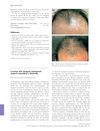
February 2007 in “British Journal of Dermatology” EF and PXE not closely related.

Topical latanoprost acid at 0.05% concentration improved hair growth in women with androgenetic alopecia.
Deuruxolitinib is approved to treat severe alopecia areata in adults.
 6 citations
,
June 2019 in “International Journal of Dermatology”
6 citations
,
June 2019 in “International Journal of Dermatology” Frontal fibrosing alopecia has occurred in two related male families.
12 citations
,
February 2023 in “Applied and Environmental Microbiology” Mutants of CYP154C2 enzyme significantly improved steroid conversion efficiency.
May 2025 in “Journal of the European Academy of Dermatology and Venereology” Ritlecitinib is effective for long-term hair regrowth in alopecia areata, especially in females and early treatment.
November 2023 in “Journal of Investigative Dermatology” JAK inhibitors are effective and generally safe for treating alopecia areata, but monitoring for side effects is important.
January 2026 in “Advances in Clinical Medicine”  10 citations
,
June 2005 in “The journal of investigative dermatology/Journal of investigative dermatology”
10 citations
,
June 2005 in “The journal of investigative dermatology/Journal of investigative dermatology” FP-1 is a key protein in rat hair growth, active only during the growth phase.
 1 citations
,
May 2015 in “Journal of The American Academy of Dermatology”
1 citations
,
May 2015 in “Journal of The American Academy of Dermatology” Finasteride for hair loss in young men may significantly increase the risk of sexual dysfunction.
 14 citations
,
May 2008 in “Journal of proteome research”
14 citations
,
May 2008 in “Journal of proteome research” Dutasteride may help reduce brain plaque linked to Alzheimer's by affecting cell energy structures and waste removal.
July 2025 in “The Egyptian Journal of Hospital Medicine” Both treatments improved alopecia areata, but methotrexate caused more skin darkening, while triamcinolone caused skin lightening and thinning.