Both treatments for localized alopecia areata are equally effective.
 August 2017 in “International journal of research in dermatology”
 0.05% betamethasone dipropionate is the most effective treatment for mild alopecia areata.
12 citations
,
October 1999 in “Journal of The American Academy of Dermatology”  January 2023 in “Surgical & Cosmetic Dermatology”
 The patient quickly recovered from hair loss caused by DRESS syndrome using topical minoxidil.
28 citations
,
July 2015 in “Dermatologic therapy” The combined therapy was effective and safe for children with severe alopecia areata.
 1 citations
,
July 2024 in “PharmacoEconomics - Open”
1 citations
,
July 2024 in “PharmacoEconomics - Open” The EQ-5D-5L tool may not accurately measure the impact of alopecia areata on patients' lives.
March 2026 in “Journal of the European Academy of Dermatology and Venereology” VESALT improves alopecia areata assessment by including non-scalp areas and is reliable and user-friendly.
January 2023 in “JOURNAL OF CLINICAL AND DIAGNOSTIC RESEARCH” Combining injections with lotion is more effective for hair regrowth in alopecia areata than using the lotion alone.
3 citations
,
February 2025 in “Journal of Dermatological Treatment” Hair regrowth in Alopecia Areata patients leads to increased satisfaction and reduced stress.
 May 2017 in “Journal of The American Academy of Dermatology”
 Finasteride and dutasteride increase sexual dysfunction reports.
 25 citations
,
November 2022 in “British journal of dermatology/British journal of dermatology, Supplement”
25 citations
,
November 2022 in “British journal of dermatology/British journal of dermatology, Supplement” Baricitinib for severe alopecia areata is generally safe, with common side effects like infections and acne, and low rates of serious complications.
 65 citations
,
February 2015 in “Neuro-Oncology”
65 citations
,
February 2015 in “Neuro-Oncology” Alisertib was found to be an effective and tolerable treatment for children with recurrent brain tumors.
July 2024 in “Journal of Investigative Dermatology” 5-alpha reductase inhibitors don't increase breast cancer or benign breast disorder risk in women.
 March 2014 in “Faculty Opinions – Post-Publication Peer Review of the Biomedical Literature”
 Dutasteride 0.5mg was found to be more effective than finasteride 1mg in treating male pattern hair loss, with similar side effects.
March 2013 in “The Journal of Urology” Non-daily Dutasteride is more cost-effective and has lower cancer incidence than daily treatment.
October 2024 in “Journal of Pakistan Association of Dermatologists” Intralesional triamcinolone is more effective than the Excimer laser for treating localized alopecia areata.
November 2025 in “Fayoum University Medical Journal/Fayoum University Medical Journal ” Intralesional vitamin D3 injections can improve vitamin D3 levels and may help treat alopecia areata.
 April 2019 in “The journal of investigative dermatology/Journal of investigative dermatology”
 Machine learning can predict how well patients with alopecia areata will respond to certain treatments.
 February 2025 in “Journal of the American Academy of Dermatology”
 Spironolactone helps prevent swelling caused by minoxidil in women with hair loss.
 1 citations
,
August 2021 in “Journal of The American Academy of Dermatology”
1 citations
,
August 2021 in “Journal of The American Academy of Dermatology” Baricitinib helped improve hair, eyebrow, and eyelash growth in alopecia areata patients.
 January 2020 in “Frontiers in Medical Case Reports”
 A dog developed skin issues from too many steroids, but reducing steroids and using a specific treatment fixed the problems.
 December 2024 in “Journal of the European Academy of Dermatology and Venereology”
 Sublingual and oral minoxidil are equally effective for hair growth, but sublingual causes fewer palpitations.
 January 2014 in “Anales Médicos de la Asociación Médica del Centro Médico ABC”
 The treatment effectively promoted hair growth with minimal side effects.
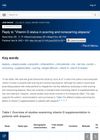 May 2022 in “Journal of the American Academy of Dermatology”
 The document suggests using a topical Vitamin D treatment for hair loss rather than oral supplements and calls for more research.
January 2021 in “Asian Journal of Research in Dermatological Science”  April 2018 in “Expert Opinion on Drug Safety”
 Dutasteride is a safe and effective treatment for hair loss.
October 2021 in “European urology open science”  3 citations
,
September 2002 in “Dermatologic Surgery”
3 citations
,
September 2002 in “Dermatologic Surgery” The evaluation system improved patient selection for hair loss surgery, leading to better results and satisfaction.
9 citations
,
June 2020 in “Trials” The trial aims to test if spironolactone is an effective acne treatment for women without the side effects of current treatments.
Fractional CO2 laser is more effective and safer than steroid injections for treating alopecia areata.