105 citations
,
December 1995 in “British journal of dermatology/British journal of dermatology, Supplement” PUVA treatment is generally ineffective for alopecia areata.
6 citations
,
September 1996 in “Journal of the European Academy of Dermatology and Venereology” Biotin supplements may help hair regrowth in alopecia areata patients with low biotinidase activity.
1 citations
,
September 1996 in “Journal of the European Academy of Dermatology and Venereology” Biotin supplements may help hair regrowth in some alopecia areata patients.
 July 2025 in “SKIN The Journal of Cutaneous Medicine”
 Adding dupilumab led to almost complete hair regrowth in a patient with alopecia areata who only partially responded to baricitinib.
21 citations
,
December 2005 in “The journal of investigative dermatology/Journal of investigative dermatology” T-cells in alopecia areata scalp show abnormal regulation, leading to less inflammation.
85 citations
,
November 2004 in “Journal of the American Academy of Dermatology” The 308-nm excimer laser helps hair regrowth in some alopecia areata cases but not all.
3 citations
,
April 2025 in “International Journal of Pharmaceutics” Nanocrystals improve alopecia areata treatment by better targeting hair follicles.
3 citations
,
June 2024 in “Skin Research and Technology” Higher LDL lipids may increase alopecia areata risk, while higher triglycerides may decrease it.
 April 2021 in “Sohag Medical Journal”
 Superficial cryotherapy is effective and safe for treating alopecia areata, especially eyebrow hair loss.
 November 2023 in “Cell Biology International”
 Tiny particles from umbilical cord stem cells may help hair grow back in a type of hair loss.
 September 2023 in “Pharmaceuticals”
 Tiny particles improved delivery of hair loss treatments to hair follicles, with lipid-based particles performing best.
15 citations
,
June 1993 in “Archives of Dermatology” A 22-year-old's gray hair partially turned back to its original color without known causes.
August 2017 in “Journal of biotechnology” Topical corticosteroids are the best initial treatment for children with Alopecia Areata.
 4 citations
,
September 2017 in “Skin appendage disorders”
4 citations
,
September 2017 in “Skin appendage disorders” The dog with an Alopecia Areata-like condition showed signs of an autoimmune disease and partially regrew hair without treatment, suggesting dogs could be models for human AA research.
 2 citations
,
September 2022 in “Dermatologic Therapy”
2 citations
,
September 2022 in “Dermatologic Therapy” Tofacitinib is a promising treatment for severe alopecia areata, with many patients experiencing complete or partial hair regrowth.
February 2026 in “International Journal of Clinical Dermatology” Alopecia areata in children shows varied forms and treatment challenges, with some achieving full or partial hair regrowth.
 January 2025 in “Universidad de Córdoba Insitutional Repository (Universidad de Córdoba)”
 An imbalanced scalp microbiome may worsen alopecia areata severity and inflammation, but treatment can partially restore balance.
 25 citations
,
December 2013 in “Journal of Investigative Dermatology Symposium Proceedings”
25 citations
,
December 2013 in “Journal of Investigative Dermatology Symposium Proceedings” New methods like nanoparticles and microneedles show promise for better skin drug delivery, especially for hair disorders.
 November 2021 in “Open Forum Infectious Diseases”
 Some COVID-19 pneumonia patients in Veracruz, Mexico had rare skin issues like temporary hair loss linked to disease severity.
 December 2020 in “Dermatology archives”
 Some COVID-19 pneumonia patients in Veracruz, Mexico, had skin issues, with reversible hair loss linked to disease severity.
May 2022 in “International Journal of Dermatology” A woman experienced sudden hair graying and loss after a COVID-19 vaccine, which improved with treatment.
 December 2017 in “Journal of the American Academy of Dermatology”
 The patient accepted her hair loss and adapted by wearing a wig and tattooing her eyebrows.
March 2016 in “Actas dermo-sifiliográficas/Actas dermo-sifiliográficas” Stopping the use of a tight headband and using specific treatments led to partial hair regrowth.
 1 citations
,
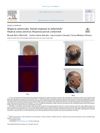
July 2019 in “Medicina Clínica (English Edition)”
1 citations
,
July 2019 in “Medicina Clínica (English Edition)” Tofacitinib partially improved hair regrowth in a patient with severe hair loss.
 February 2025 in “PubMed”
 CS12192 effectively treats alopecia areata with better safety than current options.
May 2020 in “Lithuanian University of Health Sciences” Alopecia areata is an autoimmune disease causing hair loss, with treatments often ineffective but new options are being researched.
 June 2024 in “Frontiers in immunology”
 Sequential therapy with dupilumab and baricitinib improved hair regrowth and atopic dermatitis in a child without adverse reactions.
130 citations
,
February 2019 in “JEADV. Journal of the European Academy of Dermatology and Venereology/Journal of the European Academy of Dermatology and Venereology” JAK inhibitors are effective for treating alopecia areata, with most patients seeing hair growth after treatment.
8 citations
,
July 2018 in “The Journal of Dermatology” Current corticosteroid pulse therapy is not very effective for severe rapidly progressive alopecia areata.
 1 citations
,
April 2018 in “Journal of Investigative Dermatology”
1 citations
,
April 2018 in “Journal of Investigative Dermatology” Tofacitinib helped most patients with alopecia areata regrow hair and changes in immune cells were linked to the treatment's effectiveness.