 April 2019 in “Sohag Medical Journal”
 Androgenetic alopecia is the most common cause of hair loss at Sohag University Hospital's hair clinic.
 November 2018 in “Journal of investigative dermatology, venereology and cosmetology”
 Biofield Energy Treatment, specifically The Trivedi Effect®, can potentially enhance hair growth by increasing the growth activity of human dermal papilla cells.
 July 2018 in “IP Indian journal of clinical and experimental dermatology”
 Hair loss in rural Indian children is often due to malnutrition, poor grooming, stress, and infections.
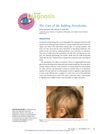 November 2017 in “Pediatrics in Review”
 A 4-year-old girl with hair loss was diagnosed with early-onset trichotillomania and improved with behavioral interventions.
 January 2016 in “Elsevier eBooks”
 Trichoscopy is a key method for dermatologists to quickly and effectively diagnose hair and scalp conditions.
 January 2015 in “Вестник дерматологии и венерологии”
 Patients with non-scarring hair loss often have emotional disorders.
 July 2014 in “Journal of the Portuguese Society of Dermatology and Venereology”
 Trichoscopy is useful for diagnosing and monitoring hair and scalp conditions.

Hair microscopy is a useful and affordable way to diagnose hair disorders.
January 2014 in “Jaypee Brothers Medical Publishers (P) Ltd. eBooks” Finasteride can cause side effects like liver issues and hormonal changes.
Human scalp hair follicles have PGE2 and its receptors, which might affect hair growth.
 January 2013 in “Revista Clínica Española”
 A postmenopausal woman's increased male hormone levels were successfully treated with surgery.
Melatonin helps regulate hair growth and may treat hair loss.
 January 2009 in “Springer eBooks”
 The document concludes that treating skin conditions should include psychological care and a multidisciplinary approach is essential for effective management.
 January 2005 in “Elektronische Hochschulschriften der LMU München (Ludwig-Maximilians-Universität München)”
 Topical immunotherapy with DPCP is most effective for certain alopecia areata types, with success linked to age and disease duration, and influenced by a gene polymorphism.
 December 2004 in “Medicine”
 A thorough history and examination are crucial for diagnosing skin diseases, which affect up to a third of people. This includes details about skin lesions, medication, general health, lifestyle, family, and contacts, as well as examining the rash, hair, nails, and mucous membranes. Changes in hair and nails can also indicate other medical and skin disorders.
 July 2004 in “Clinics in Dermatology”
 The Third World Congress of the International Academy of Cosmetic Dermatology discussed various topics like hair disorders, skin conditions, wound healing, shampoo technology, acne treatment, and the use of lasers in dermatology.
 January 2000 in “BioScience”
 The document concludes that understanding hair biology is key to treating hair disorders, with gene therapy showing potential as a future treatment.
 September 1998 in “Journal of The European Academy of Dermatology and Venereology”
 The conclusion is that proper recognition and treatment of skin conditions are crucial for the elderly due to changes in skin, nails, and hair with age, and the impact of these conditions on health and mobility.
 October 1996 in “Dermatologic Clinics”
 Research on hair disorders has advanced, with promising future progress in understanding and treating these conditions.
 November 1995 in “Journal of Pediatric Health Care”
 Most hair loss in kids and teens is due to common conditions, and hair usually grows back within 6 months.
July 1994 in “Archives of Dermatology” The book provides a thorough guide on hair and scalp diseases, covering causes, types, and evaluation methods.
 January 1983 in “Journal of The American Academy of Dermatology”
 The book is a valuable resource for understanding hair and scalp problems but could be updated with more information on certain conditions.
 July 1980 in “Journal of The American Academy of Dermatology”
 The conference concluded that understanding hair and nail disorders is important, iron deficiency may be linked to hair loss, and while some treatments for skin conditions are effective, they may have risks and high costs.
The document concludes that most hair loss treatments don't work, balding isn't caused by dandruff, and hair loss may indicate serious health issues that require medical attention.
 October 2021 in “International Journal of Andrology”
 Finasteride, a hair loss drug, has unaddressed sexual side effects due to the manufacturer's inadequate safety measures and lack of additional studies.
39 citations
,
July 1997 in “American Journal of Medical Genetics” The gene for Clouston syndrome in a large Indian family is located in the 13q11-q12.1 region.
 17 citations
,
June 2017 in “Gene”
17 citations
,
June 2017 in “Gene” A rare genetic mutation found in an Indian family can be detected through prenatal screening.
2 citations
,
June 2013 in “Journal of Dermatological Case Reports” Olmsted syndrome is a rare skin disorder causing thickened skin and other symptoms.
1 citations
,
March 2024 in “The Journal of Dermatology” A multidisciplinary approach with virtual sessions effectively reduces compulsive hair pulling in young people.
 1 citations
,
May 2002 in “Therapeutische Umschau”
1 citations
,
May 2002 in “Therapeutische Umschau” Children's hair diseases include compulsive hair-pulling, easily plucked hair, scalp fungal infections, and head lice, each requiring specific diagnosis and treatment.