
A 73-year-old woman's unusual hair loss and growth led to the discovery of a rare condition causing too much testosterone, which improved after her ovaries were removed.
16 citations
,
November 2011 in “Neuroscience Letters” Progesterone protects brain cells by converting to allopregnanolone and involving GABAA receptors.
 4 citations
,
May 2018 in “Electronic Journal of Biotechnology”
4 citations
,
May 2018 in “Electronic Journal of Biotechnology” All-trans retinoic acid at high doses harms goat hair growth cells and could be bad for hair growth.
 111 citations
,
August 2002 in “Journal of Medicinal Chemistry”
111 citations
,
August 2002 in “Journal of Medicinal Chemistry” New compounds were made that block an enzyme linked to breast cancer better than existing treatments.
 12 citations
,
March 2017 in “Journal of obstetrics and gynaecology Canada”
12 citations
,
March 2017 in “Journal of obstetrics and gynaecology Canada” Testosterone therapy can modestly improve sexual function in menopausal women but should be used cautiously and is not recommended for routine measurement in sexual dysfunction or hirsutism.
 14 citations
,
February 1994 in “Tetrahedron Letters”
14 citations
,
February 1994 in “Tetrahedron Letters” Adding cerium(III) chloride to Grignard reagents improves the making of compounds that could treat prostate issues and hair loss.
3 citations
,
November 2022 in “Separations” The method accurately measures seven androgens in plasma and shows different hormone levels in females with acne and obesity.
 August 2025 in “ACS Omega”
 New compounds show promise as nonsteroidal treatments for hair loss.
![Synthesis, Biological Evaluation, and Molecular Docking of 4-Amino-2H-benzo[h]chromen-2-one Analogs Containing the Piperazine Moiety](/images/assets/2ecf4eed-7dbe-4f1a-83db-739625546cdd/small/31808.jpg) 7 citations
,
August 2019 in “Bioorganic & medicinal chemistry”
7 citations
,
August 2019 in “Bioorganic & medicinal chemistry” Analog 23 is a promising compound for prostate cancer treatment.
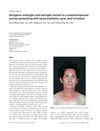 August 2009 in “International Journal of Dermatology”
 A postmenopausal woman's facial redness, acne, and excess hair were caused by too much hormone therapy for insomnia, but improved after stopping the treatment.
The trichohyalin gene is located at chromosomal region 1q21 with other skin-related protein genes.
 13 citations
,
August 1997 in “Steroids”
13 citations
,
August 1997 in “Steroids” Finasteride effectively lowers specific hormone levels, helping monitor treatment progress.
27 citations
,
July 1993 in “The journal of investigative dermatology/Journal of investigative dermatology”  January 1986 in “Journal of Steroid Biochemistry”
 Women with severe acne, hirsutism, and androgenic alopecia often have higher levels of certain androgens, but the specific pattern can't be predicted just by looking at symptoms.
 76 citations
,
September 1992 in “Endocrinology”
76 citations
,
September 1992 in “Endocrinology” The human type II 5α-reductase gene has a specific structure important for understanding certain medical conditions.
 70 citations
,
April 2014 in “Annales d'endocrinologie”
70 citations
,
April 2014 in “Annales d'endocrinologie” New genes and pathways are important for testosterone production and male sexual development.
33 citations
,
December 2005 in “British Journal of Clinical Pharmacology” The new testosterone patch works as well as the gel.
 96 citations
,
September 2008 in “Seminars in Cutaneous Medicine and Surgery”
96 citations
,
September 2008 in “Seminars in Cutaneous Medicine and Surgery” Hormonal treatments, including birth control and antiandrogens, can effectively treat acne in women.
May 2024 in “Reactions weekly” 269 citations
,
May 2002 in “Hormones and Behavior” Lowering 3α,5α-THP in the hippocampus increases anxiety and depression in proestrous rats.
 6 citations
,
July 2026 in “Zenodo (CERN European Organization for Nuclear Research)”
6 citations
,
July 2026 in “Zenodo (CERN European Organization for Nuclear Research)” Finasteride and dutasteride have limited use in feminising therapy and are not recommended for routine use.
September 2025 in “Journal of the American Academy of Dermatology”  November 2010 in “Clin-Alert”
 Monitoring for adverse effects in clinical treatments is crucial.
 3 citations
,
January 2003 in “Synthetic Communications”
3 citations
,
January 2003 in “Synthetic Communications” Scientists made two new chemicals that might help treat diseases caused by male hormones.
January 2004 in “Pharmaceutical biotechnology” Finasteride effectively inhibits the enzyme steroid 5 alpha-reductase II.
 15 citations
,
October 2011 in “Gynecological Endocrinology”
15 citations
,
October 2011 in “Gynecological Endocrinology” Obesity changes androgen levels in women with PCOS, leading to higher testosterone relative to androstenedione.
16 citations
,
December 2016 in “ecancermedicalscience” Hair analysis may help detect breast cancer early by identifying changes in lipid content.
 6 citations
,
November 2010 in “Histochemistry and cell biology”
6 citations
,
November 2010 in “Histochemistry and cell biology” The proteins transthyretin and megalin are more present in the growth phase of hair, suggesting they might affect hair health and growth.
 March 2025 in “Clinical Cosmetic and Investigational Dermatology”
 The Tru9I variant in the VDR gene may influence alopecia areata risk and vitamin D levels.