July 2005 in “The American Journal of Human Genetics” The AR gene is linked to male-pattern baldness, TNFSF4 to heart disease, SLC19A3 to BBGD, MCT8 to a syndrome, and segmental duplications to genetic variation.
 19 citations
,
June 2007 in “Veterinary Dermatology”
19 citations
,
June 2007 in “Veterinary Dermatology” Amitraz effectively treated sarcoptic mange in three alpacas.
 1 citations
,
May 2023 in “European Journal of Human Genetics”
1 citations
,
May 2023 in “European Journal of Human Genetics” Rare ULBP3 gene changes may raise the risk of Alopecia areata, a certain FAS gene deletion could cause a dysfunctional protein in an immune disorder, and having one copy of a specific genetic deletion is okay, but two copies cause sickle cell disease.
 July 2012 in “European journal of cancer”
 MPA increases cancer spread by boosting Eph A2 activity.
4 citations
,
January 2011 in “Dermatopathology” April 2023 in “Journal of Investigative Dermatology” 3D ultrasound can detect hair follicle changes and disease phases in alopecia areata.
September 2023 in “Journal of the American Academy of Dermatology” Ixekizumab is safe for long-term use with low rates of major heart-related events.
 February 2024 in “PubMed”
 The new minoxidil lotion using Aloplus Total is stable and can be mixed with other ingredients for treating hair loss.
 17 citations
,
August 2012 in “Journal of Medical Genetics”
17 citations
,
August 2012 in “Journal of Medical Genetics” A new mutation in the XEDAR gene might cause a rare skin condition called hypohidrotic ectodermal dysplasia.
23 citations
,
July 2003 in “Journal of Investigative Dermatology” Genetic testing for hairless gene mutations is crucial to correctly diagnose and treat atrichia with papular lesions.
 September 2023 in “bioRxiv (Cold Spring Harbor Laboratory)”
 The mTurq2-Col4a1 mouse model shows that cells can divide while attached to stable basement membranes during development.
 6 citations
,
August 2012 in “The Journal of Pediatrics”
6 citations
,
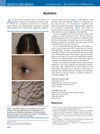
August 2012 in “The Journal of Pediatrics” A 12-year-old girl was diagnosed with monilethrix, a genetic condition causing fragile, beaded hair that breaks easily, with no effective treatment available.
 October 2024 in “Dermatologica Sinica”
 ECM changes may play a role in hair loss, with differences between males and females.
5 citations
,
January 2015 in “Molecular Genetics and Metabolism”  January 2018 in “General internal medicine and clinical innovations”
 Busulfan/cyclophosphamide and total bone irradiation are equally effective for AML transplants.
Alopecia areata patients have higher levels of certain immune receptors, suggesting new treatment possibilities.
18 citations
,
January 2018 in “BMC dermatology” A new mutation in the PLEC gene causes a rare condition with skin blistering, muscle weakness, and hair loss.
22 citations
,
September 2003 in “Journal of Investigative Dermatology” New mutations in the EBP gene cause CDPX2, affecting bones, skin, eyes, and hair, with females generally less affected than males.
 35 citations
,
August 2010 in “The American journal of pathology”
35 citations
,
August 2010 in “The American journal of pathology” Researchers created a new mouse model for studying Citrullinemia Type I and similar conditions, showing symptoms and treatment responses like those in humans.
 10 citations
,
May 2012 in “PloS one”
10 citations
,
May 2012 in “PloS one” Low ERCC3 gene activity is linked to non-pigmented hair growth.
Ritlecitinib can reduce inflammation and help hair regrow in Alopecia Areata.
 10 citations
,
August 2011 in “Clinics”
10 citations
,
August 2011 in “Clinics” The author clarified that Alopecia Areata Incognita (AAI) and diffuse Alopecia Areata (AA) are different conditions and the case discussed was actually AA, not AAI.
3 citations
,
January 2002 in “Actas Dermo-Sifiliográficas” Excessive minoxidil use can damage hair structure.
November 2025 in “Plant Foods for Human Nutrition”  43 citations
,
September 2014 in “Molecular Plant”
43 citations
,
September 2014 in “Molecular Plant” CLE40 and CRN/CLV2 pathways have opposite effects on root growth in Arabidopsis.
3 citations
,
January 2013 in “Dermatology” New genetic mutations causing hair loss were found in a Chinese family.
July 2025 in “Journal of Investigative Dermatology” AI-09 is safe, effective, and reduces wrinkles for up to 6 months.
 April 2023 in “The journal of investigative dermatology/Journal of investigative dermatology”
 Too much IKZF1 and Ikaros protein may cause alopecia areata.
 2 citations
,
May 2021 in “Clinical Pharmacology in Drug Development”
2 citations
,
May 2021 in “Clinical Pharmacology in Drug Development” Clascoterone is safe for the heart, even at high doses.