January 2003 in “Linchuang pifuke zazhi” A benign skin tumor was removed from a man's leg, and it didn't come back after 9 months.
38 citations
,
December 2006 in “Journal of Investigative Dermatology” Keratin patterns in hair follicles help understand hair growth and potential hair and nail disorders.
 4 citations
,
February 2019 in “Journal of Cutaneous Pathology”
4 citations
,
February 2019 in “Journal of Cutaneous Pathology” The marker 5-hmC changes in hair follicle stem cells when they start to grow.
 June 2020 in “bioRxiv (Cold Spring Harbor Laboratory)”
 Activating β-catenin increases melanocytes and decreases Schwann cells.

Ocu-miR-205 affects hair density in Rex rabbits by promoting cell changes and influencing hair follicle phases.
November 2024 in “Journal of Investigative Dermatology” Changes in hair follicle structure may help diagnose and monitor alopecia.
 July 2022 in “The journal of investigative dermatology/Journal of investigative dermatology”
 MPZL3 protein helps keep sebaceous gland size and cell growth in check.
34 citations
,
October 1975 in “Biochimica et Biophysica Acta (BBA) - Nucleic Acids and Protein Synthesis”  15 citations
,
January 1995 in “Archives of Dermatological Research”
15 citations
,
January 1995 in “Archives of Dermatological Research” Minoxidil boosts elastin production, potentially helping skin diseases.
61 citations
,
August 1993 in “PubMed” Basal cell epithelioma likely starts from the hair follicle's outer root sheath.
77 citations
,
April 2005 in “Journal of Investigative Dermatology” Repetin is a protein involved in skin and hair development, binding calcium and compensating for other proteins when needed.
14 citations
,
April 2008 in “PROTEOMICS” Increased 14-3-3 proteins may block hair cycle regression, causing hair loss.
 76 citations
,
May 2011 in “Cell death and differentiation”
76 citations
,
May 2011 in “Cell death and differentiation” A20 protein is crucial for normal skin and hair development.
 31 citations
,
May 2019 in “Nature communications”
31 citations
,
May 2019 in “Nature communications” Single Blimp1+ cells can create functional sebaceous gland organoids in the lab.
August 2007 in “Faculty Opinions – Post-Publication Peer Review of the Biomedical Literature” Overexpression of a specific receptor in mice skin causes skin thinning, early skin barrier formation, eye issues, and hair loss.
 November 2023 in “Cell Proliferation”
 A protein from fat-derived stem cells, DKK1, is linked to hair loss and blocking it may help treat alopecia areata.
31 citations
,
October 1992 in “PubMed” A mycobacterial protein shares a similar region with a human skin protein, possibly affecting skin diseases.
 19 citations
,
December 2006 in “Archives of dermatology”
19 citations
,
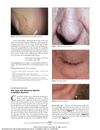
December 2006 in “Archives of dermatology” Hair casts and cutaneous spicules can be signs of multiple myeloma.
January 2015 in “OpenBU/Boston University Institutional Repository (Boston University)” Neuropilin 2 may be a biomarker for melanoma and affects melanocyte behavior.
39 citations
,
December 1998 in “Journal of Cell Science” The LEF-1 binding site enhances gene expression in hair follicles, with other proteins aiding specific regulation.
 June 2022 in “Scientific Reports”
 Prevelex, a polyampholyte, can create a cell-repellent coating on microdevices, which can be useful in biomedical applications like hair follicle regeneration.
130 citations
,
December 1998 in “The journal of investigative dermatology/Journal of investigative dermatology” Hair follicle melanocytes die during hair regression.
17 citations
,
September 2018 in “Matrix Biology” Laminin-511 is essential for proper melanocyte movement and development in mice.
6 citations
,
March 2011 in “European Journal of Dermatology” Nestin-positive cells are important for hair follicle regeneration in alopecia areata.
22 citations
,
September 2001 in “Journal of Investigative Dermatology” S100A8 and S100A9 proteins help form hair shafts during growth.
 April 2017 in “Journal of Investigative Dermatology”
 Certain microRNAs may protect against hair loss in alopecia areata and could be potential treatment targets.
52 citations
,
May 1997 in “Journal of Biological Chemistry” High ornithine decarboxylase levels may lead to hair loss and cancer by increasing CK2 activity in the nucleus.
3 citations
,
August 2018 in “Journal of Structural Biology” KAP8.1 protein is crucial for hair structure and interacts with keratin 85.
44 citations
,
April 1979 in “Journal of Ultrastructure Research”  11 citations
,
April 2020 in “Life sciences”
11 citations
,
April 2020 in “Life sciences” Pantothenic acid helps mink hair follicles grow by affecting certain cell signals.