 1 citations
,
March 2024 in “International Journal of Applied Pharmaceutics”
1 citations
,
March 2024 in “International Journal of Applied Pharmaceutics” Propylene glycol concentration improves rice water gel shampoo's thickness and foam, extending its shelf life.
December 2020 in “Macromolecular Symposia” These polymers can improve hair texture and reduce water loss in hair cosmetics.
 2 citations
,
October 2001 in “Analytical Sciences”
2 citations
,
October 2001 in “Analytical Sciences” A new compound that could treat various androgen-related conditions was created and analyzed.
 34 citations
,
October 1994 in “Journal of Pharmaceutical Sciences”
34 citations
,
October 1994 in “Journal of Pharmaceutical Sciences” Ethanol over 50% helps minoxidil absorb better into skin.
 16 citations
,
October 2003 in “Journal of applied polymer science”
16 citations
,
October 2003 in “Journal of applied polymer science” 2-iminothiorane hydrochloride improves hair waving permanence without damage.
 1 citations
,
April 2021 in “Han'gug miyong haghoeji/Journal of the Korean society of cosmetology”
1 citations
,
April 2021 in “Han'gug miyong haghoeji/Journal of the Korean society of cosmetology” Aspartic acid at 0.75% makes perms more effective and less damaging to hair.
 9 citations
,
August 2005 in “Experimental Dermatology”
9 citations
,
August 2005 in “Experimental Dermatology” Modified pep7, named EPM peptide, effectively promotes hair growth at low concentrations and works well with minoxidil.
23 citations
,
June 2014 in “International Journal of Cosmetic Science” Glyoxylic acid is a safer alternative to formaldehyde for hair straightening and effectively changes hair structure.
 September 2010 in “Reactions Weekly”
 A woman was allergic to 5% minoxidil, with stronger reactions to higher concentrations.
1 citations
,
June 1999 in “American Journal of Contact Dermatitis” Shampoos should treat scalp issues while keeping hair soft and shiny.
 January 2026 in “Journal of Community Medicine and Health Solutions”
 PP405 shows promise as a new, effective treatment for hair loss with minimal side effects.
 May 2024 in “Journal of cosmetic dermatology”
 Heat-treated Limosilactobacillus fermentum with menthol, salicylic acid, and panthenol promotes hair growth and balances scalp microbiome in people with androgenetic alopecia.
 2 citations
,
February 2016 in “Journal of sol-gel science and technology”
2 citations
,
February 2016 in “Journal of sol-gel science and technology” A small molecule can strengthen fine hair, making it more resistant and natural-feeling.
 2 citations
,
January 2008 in “Journal of Society of Cosmetic Chemists of Japan”
2 citations
,
January 2008 in “Journal of Society of Cosmetic Chemists of Japan” PMS nanoparticles improve damaged hair by protecting and restoring its surface and color.
16 citations
,
November 2011 in “Neuroscience Letters” Progesterone protects brain cells by converting to allopregnanolone and involving GABAA receptors.
5alpha-DHP may be a safe, effective treatment for certain seizures without causing sedation.
 March 2014 in “Journal of The American Academy of Dermatology”
 Cortexolone 17a-propionate may be an effective new treatment for hair loss.
January 2026 in “Molecules” A new perming method is less damaging to hair and works as well as traditional methods.
9 citations
,
April 2006 in “International Journal of Dermatology” DFMO may help control hair growth and treat cancer.
20 citations
,
February 2017 in “European journal of pharmaceutical sciences” The MPA-ISO cocrystal improved solubility and dissolution rate, while the others did not.
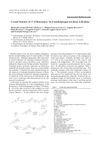 February 1999 in “Analytical Sciences”
 A new antiandrogen compound was made and its detailed three-dimensional shape was described.
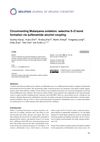 January 2026 in “Beilstein Journal of Organic Chemistry”
 A new, efficient method creates sulfinimidate esters from sulfenamides and alcohols without metals.
6 citations
,
May 2022 in “Journal of Organometallic Chemistry” The process efficiently converts α-pinene oxide to campholenic aldehyde using a special catalyst, achieving high yields quickly.
 1 citations
,
July 2023 in “International Journal of Biological Macromolecules”
1 citations
,
July 2023 in “International Journal of Biological Macromolecules” The study created a new hair loss treatment paste that regrows hair faster and with fewer side effects than minoxidil alone.
 March 2018 in “International Pharmacy Acta”
 New niosomal formulation effectively delivers aminexil through rat skin.
 October 2024 in “International Journal of Pharmaceutical Sciences Review and Research”
 A 5% minoxidil spray could effectively treat male baldness with fewer side effects and better patient comfort.
 April 2024 in “Research Square (Research Square)”
 16-MHA can restore the barrier and moisture of damaged hair, making it similar to undamaged hair.
 7 citations
,
June 2010 in “Bioorganic & medicinal chemistry letters”
7 citations
,
June 2010 in “Bioorganic & medicinal chemistry letters” Two new compounds were found to effectively reduce hair growth in mice.

The best mix of propylene glycol and sorbitol was found for a cream to prevent hair loss using saw palmetto extract.
January 2017 in “Zenodo (CERN European Organization for Nuclear Research)” The minoxidil emulgel is feasible and may be more effective for treating male pattern baldness.