Search
for
Sort by
Research
300-330 / 1000+ resultsresearch Alopecia Areata in Aging C3H/HeJ Mice
Alopecia areata in these mice is inherited, more common in young females, and can be treated with triamcinolone acetonide.
research Trichorrhexis Nodosa Secondary to Argininosuccinicaciduria
Hair thinning and loss in a girl with a rare metabolic disorder was linked to her condition.

research Autoimmune Polyglandular Syndrome Type 2 Presentation with Alopecia Universalis, Hashimoto’s Disease, and Addison’s Disease
Timely diagnosis and treatment of complex autoimmune diseases like APS2 are crucial to prevent complications and improve life quality.
research Granulomatous alopecia areata is a valid but rare histologic subset of a common disease
Granulomatous alopecia areata is a rare but real form of hair loss.
research Diffuse Alopecia Areata
Diffuse alopecia areata causes widespread hair thinning due to an autoimmune response.
research Autoimmune Polyglandular Syndrome Type 3-D
Autoimmune Polyendocrine Syndromes involve specific combinations of autoimmune diseases.
research Ophthalmologic Comorbidities in Alopecia Areata
Alopecia areata patients should have eye check-ups due to increased risk of eye problems.
research Angora Mouse Mutation: Altered Hair Cycle, Follicular Dystrophy, Phenotypic Maintenance of Skin Grafts, and Changes in Keratin Expression
The angora mouse mutation causes long hair and hair defects due to a gene deletion.
research Epithelial elements in superficial angiomyxomas: mimicry of adnexal development, and mesenchymal‐to‐epithelial transition
Epithelial elements in superficial angiomyxomas are non-neoplastic growths mimicking embryogenesis.
research A CLINICO-INVESTIGATIVE STUDY OF ALOPECIA AREATA WITH SPECIAL REFERENCE TO ITS ASSOCIATION WITH VARIOUS SYSTEMIC AND DERMATOLOGICAL DISORDERS
Alopecia Areata is often linked to other health issues like allergies, thyroid problems, and diabetes.
research New familial association between ocular coloboma and loose anagen syndrome
Two siblings were the first reported cases of inheriting both eye coloboma and loose anagen syndrome together.

research Analysis of a multiple nuclear dots pattern in a large cohort of dermatological patients.
Anti-MND antibodies are present in various diseases, not just PBC, and their levels don't correlate with disease activity or skin symptoms.
research Murine Cytomegalovirus is Not Associated With Alopecia Areata in C3H/HeJ Mice
Murine cytomegalovirus does not cause alopecia areata in these mice.
research Polythelia pilosa: A Particular Form of Accessory Mammary Tissue
Polythelia pilosa is a type of extra breast tissue with hair and should be classified as such.

research Autoimmune alopecia areata due to thymoma without myasthenia gravis: a case report
A woman's hair loss improved after removing a tumor in her thymus gland, suggesting hair loss can be linked to such tumors even without a specific muscle weakness condition.
research Melanocytes: A possible autoimmune target in alopecia areata
Melanocytes might be targeted by the immune system in people with alopecia areata, but more research is needed.
research Madarosis from mitochondriopathy
Mitochondriopathy may cause eyelash loss.
research Immunologic Studies in Patients With Alopecia Areata
Alopecia areata may be caused by the immune system attacking hair follicles.
research Histopathologic Findings of Cutaneous Hyperpigmentation in Addison Disease and Immunostain of the Melanocytic Population
The study found increased skin pigmentation and variable melanocyte density in a patient with Addison's disease.
research P-017 CUSHING'S SYNDROME DUE TO PRIMARY BILATERAL MACRONODULAR ADRENAL HYPERPLASIA AND METACRONOUS PHEOCHROMOCYTOMA
A rare case of Cushing's syndrome and pheochromocytoma requires careful re-evaluation to avoid complications.
research Refractory alopecia areata with single hairs imitating frontal fibrosing alopecia: a prospective observational study
A unique type of hair loss mimics another condition but has minimal inflammation and specific immune cells present.
research Annular alopecia areata: Report of two cases
Two people had unusual ring-shaped hair loss due to an autoimmune disorder.
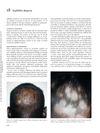
research Syphilitic alopecia
Syphilitic alopecia is a rare hair loss condition in secondary syphilis that looks similar to another condition but can be diagnosed with specific tests and responds to antibiotics.
research A 39‐year‐old woman with Lupus, Myositis, and a Recalcitrant Vasculopathy
Antituberculous drugs improved symptoms in a woman with lupus and myositis.
research Canine alopecia X-Like disorder
The dog likely has a canine alopecia X-like disorder.
research Porokeratotic adnexal ostial nevus: a paradigm of cutaneous mosaicism
PAON shows skin patterns due to genetic mosaicism.
research In vivo CD44‐CD49d complex formation in autoimmune disease has consequences on T cell activation and apoptosis resistance
The CD44-CD49d complex boosts T cell activation and survival in autoimmune disease.
research The Association of Lacrimal Gland Inflammation with Alopecia Areata
Lacrimal gland inflammation and alopecia areata can happen together due to autoimmune issues.
research A CASE-CONTROL STUDY TO ASSESS THE ASSOCIATION OF ALOPECIA AREATA WITH THYROID DYSFUNCTION AND THYROID AUTOIMMUNITY
People with alopecia areata are more likely to have thyroid autoimmunity, but not thyroid disease.