 12 citations
,
October 2016 in “Anais Brasileiros de Dermatologia”
12 citations
,
October 2016 in “Anais Brasileiros de Dermatologia” Frontal Fibrosing Alopecia may be linked to autoimmune diseases like Sjögren's syndrome.
3 citations
,
July 2022 in “Brain and Behavior” The HtrA1L364P mutation causes brain dysfunction and blood vessel damage.
November 2025 in “Journal of Investigative Dermatology” Certain CD8+ T cells attack hair follicles in alopecia areata, suggesting they could be targeted for treatment.
55 citations
,
August 2009 in “Journal of Feline Medicine and Surgery” Cats with adrenal tumors may have both hyperaldosteronism and hyperprogesteronism.

Endoscopic evaluation is crucial for diagnosing complex conditions like Satoyoshi syndrome.
1 citations
,
September 2021 in “DOAJ (DOAJ: Directory of Open Access Journals)” Alopecia areata patients often have other autoimmune diseases, especially women with nail issues or atopic diseases.
6 citations
,
April 2012 in “Muscle & nerve” Recognizing the link between certain autoimmune disorders and neurological conditions can improve diagnosis and treatment.
27 citations
,
December 1999 in “American Journal of Dermatopathology” Necrobiosis lipoidica may need new criteria for accurate diagnosis due to similarities with another condition.
10 citations
,
April 2014 in “Molecular and Clinical Oncology” Alopecia areata can be an early sign of Hodgkin’s lymphoma and may improve with lymphoma treatment.
January 2025 in “Clinical Case Reports” Timely and aggressive treatment is crucial for improving outcomes in severe complications of adult-onset Still's disease.
 64 citations
,
August 2014 in “The journal of allergy and clinical immunology/Journal of allergy and clinical immunology/The journal of allergy and clinical immunology”
64 citations
,
August 2014 in “The journal of allergy and clinical immunology/Journal of allergy and clinical immunology/The journal of allergy and clinical immunology” A deficiency in the TTC7A gene causes immune problems, gut issues, and hair loss.
7 citations
,
August 2008 in “Immunogenetics” A gene mutation in mice causes increased mast cells and disorganized hair follicles in their skin.
 6 citations
,
December 2004 in “Anais Brasileiros de Dermatologia”
6 citations
,
December 2004 in “Anais Brasileiros de Dermatologia” Some family members had a condition with both loose hair and unique eye changes, possibly indicating a new type of ectodermal dysplasia.
3 citations
,
July 2024 in “Journal of Clinical Medicine” Alopecia areata patients have a higher risk of subclinical atherosclerosis, and carotid ultrasound can help assess their cardiovascular risk.
March 2025 in “JAAD International” Alopecia areata is rare in organ transplant patients and may be linked to the drug tacrolimus.
 2 citations
,
March 2019 in “Veterinary dermatology”
2 citations
,
March 2019 in “Veterinary dermatology” Thymoma in cats can cause hair loss without inflammation.
 23 citations
,
October 2005 in “Journal of The American Academy of Dermatology”
23 citations
,
October 2005 in “Journal of The American Academy of Dermatology” Two transplant patients on cyclosporine unexpectedly developed hair loss.
 33 citations
,
June 2012 in “Journal of Crohn's and colitis”
33 citations
,
June 2012 in “Journal of Crohn's and colitis” Alopecia Areata might be linked to Crohn's disease.
22 citations
,
June 2010 in “Experimental Dermatology” Lower MC2R expression may contribute to alopecia areata.
July 2024 in “LA Referencia (Red Federada de Repositorios Institucionales de Publicaciones Científicas)” Adipose tissue and eccrine gland displacement are common in certain alopecias but don't help differentiate between them.
9 citations
,
February 2012 in “Clinical Neurology and Neurosurgery” Dystonia may be part of PAS-4 and linked to immune issues.
22 citations
,
February 2000 in “Journal of the American Academy of Dermatology” Eosinophils are not a reliable marker for diagnosing alopecia areata.
14 citations
,
August 2004 in “Veterinary Dermatology” The horse had a rare type of hair loss caused by immune cells attacking hair follicles.
 11 citations
,
March 2007 in “Digestive Diseases and Sciences”
11 citations
,
March 2007 in “Digestive Diseases and Sciences” The conditions alopecia areata, primary sclerosing cholangitis, and ulcerative colitis may be linked by shared autoimmune and cell death mechanisms.
 March 2021 in “Research Square (Research Square)”
 Patients with RASopathies have a higher risk of autoimmune disorders and should be routinely screened.
September 2024 in “Archives of Dermatological Research” July 2024 in “Clinical Case Reports” Recognizing rare hair loss patterns in young females can improve understanding and treatment.
 October 2010 in “Reproductive Biomedicine Online”
 A new method can almost perfectly distinguish adenomyosis from similar conditions using blood tests.
2 citations
,
June 2023 in “Clinical and Experimental Neuroimmunology” Thymoma may link myasthenia gravis, nail dystrophy, and alopecia areata.
 April 2012 in “Informa Healthcare eBooks”
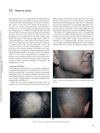
 Alopecia areata is a common autoimmune condition causing varying hair loss, diagnosed by specific patterns of inflammation around hair follicles, with several treatment options available.