 September 2023 in “Medicina-lithuania”
 The study suggests that analyzing DNA can help treat hair loss, but more research is needed.
 January 1996 in “Springer eBooks”
 Hair loss increases with age and is triggered by hormones like androgens.
 July 2026 in “Zenodo (CERN European Organization for Nuclear Research)”
 Alopecia areata and androgenic alopecia can be confused, so careful evaluation is needed to tell them apart.
 165 citations
,
December 2002 in “Molecular and Cellular Endocrinology”
165 citations
,
December 2002 in “Molecular and Cellular Endocrinology” Male hormones, particularly DHT, are linked to male pattern hair loss, and treatments like finasteride can help, but they don't work for postmenopausal women's hair loss, which may have different causes.
April 2023 in “Journal of Investigative Dermatology” New drug targets for hair loss treatment were identified by studying cell interactions in hair follicles.
January 2025 in “Pharmaceutical journal/The pharmaceutical journal” Alopecia areata causes patchy hair loss due to the immune system attacking hair follicles.
22 citations
,
January 1987 in “Dermatology” Hair loss is common, influenced by genetics and androgens, and can affect mental health.
 61 citations
,
September 2010 in “Genomics”
61 citations
,
September 2010 in “Genomics” The study found that immune responses disrupt hair growth cycles, causing hair loss in alopecia areata.
 235 citations
,
January 2011 in “Journal of Clinical Investigation”
235 citations
,
January 2011 in “Journal of Clinical Investigation” Men with baldness due to androgenetic alopecia still have hair stem cells, but lack specific cells needed for hair growth.
 5 citations
,
September 2011 in “Pediatric Dermatology”
5 citations
,
September 2011 in “Pediatric Dermatology” Two young siblings experienced hair loss without hormone issues or other skin problems.
 1 citations
,
February 2017 in “MOJ bioequivalence & bioavailability”
1 citations
,
February 2017 in “MOJ bioequivalence & bioavailability” Treating hair loss effectively may require a multi-sided approach, using different treatments together, and topical treatments could be more effective and safer than oral ones.
January 2026 in “Journal of Biosciences and Medicines” Androgenetic alopecia treatments focus on reducing hair loss by targeting hormones, with new therapies showing promise but needing more research.
 June 2023 in “British journal of dermatology/British journal of dermatology, Supplement”
 A woman's rare hair loss condition improved on its own, suggesting this type might recover like common cases.
 59 citations
,
January 2002 in “Dermatology”
59 citations
,
January 2002 in “Dermatology” A new type of sudden, complete female hair loss was found, with most patients fully recovering within 6 months without needing steroid treatment.
 13 citations
,
July 2004 in “Skinmed”
13 citations
,
July 2004 in “Skinmed” Common types of non-scarring hair loss have various causes and treatments, but more effective solutions are needed.
April 2021 in “Aktuelle Dermatologie” Frontal Fibrosing Alopecia is a type of hair loss that mainly affects postmenopausal women, has unclear causes, and lacks evidence-based treatments.
161 citations
,
March 1992 in “International Journal of Dermatology” Alopecia areata often starts before age 20, is more common in women, and may have a genetic link with other autoimmune diseases.
 March 2025 in “Human Genetics and Genomics Advances”
 Genetic predictions of baldness in Europeans don't apply well to African men.
 December 2015 in “Вестник дерматологии и венерологии”
 Men with male pattern baldness may not have different hormone levels, but their hair follicles are likely more sensitive to hormones.
 5 citations
,
January 2018 in “Acta Dermatovenerologica Alpina Pannonica et Adriatica”
5 citations
,
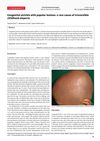
January 2018 in “Acta Dermatovenerologica Alpina Pannonica et Adriatica” Congenital atrichia with papular lesions causes permanent hair loss in children.
16 citations
,
December 2015 in “Journal of Investigative Dermatology” Alopecia areata involves persistent gene abnormalities and immune activity, even in regrown hair, suggesting a risk of relapse.
 February 2026 in “JOURNAL OF CLINICAL AND DIAGNOSTIC RESEARCH”
 Trichoscopy effectively detects early hair follicle changes before visible baldness in men under 40.
 52 citations
,
June 2009 in “Current Opinion in Endocrinology, Diabetes and Obesity”
52 citations
,
June 2009 in “Current Opinion in Endocrinology, Diabetes and Obesity” The document concludes that hair transplantation and gene therapy may be important for future hair loss treatment.
 February 2012 in “Expert Review of Endocrinology & Metabolism”
 The document suggests more research is needed to understand the link between baldness and prostate cancer.
 9 citations
,
June 2014 in “British Journal of Dermatology”
9 citations
,
June 2014 in “British Journal of Dermatology” The study found that balding scalps have more thin hairs and larger oil glands, which might contribute to skin conditions related to hair loss.
 July 2023 in “Deleted Journal”
 Alopecia areata is the most common type of baldness treated with corticosteroids and minoxidil.
 June 2023 in “Research Square (Research Square)”
 Hair loss in male pattern baldness is linked to changes in immune cell behavior around hair follicles.
 7 citations
,
January 1990 in “Clinical and Experimental Dermatology”
7 citations
,
January 1990 in “Clinical and Experimental Dermatology” Hair loss gradually happens, and minoxidil helps regrow hair.
 44 citations
,
November 1998 in “Australasian Journal of Dermatology”
44 citations
,
November 1998 in “Australasian Journal of Dermatology” Accurate diagnosis is key for treating different kinds of hair loss, and immune response variations may affect the condition and treatment results.
October 2025 in “Diagnostics” Temporal triangular alopecia is a harmless, non-progressive hair loss condition.