5 citations
,
November 2003 in “Biomedical Papers of the Faculty of Medicine of Palacký University, Olomouc Czech Republic” The exact causes of baldness are not fully understood, limiting treatment options.
 April 2026 in “Zenodo (CERN European Organization for Nuclear Research)”
 DHT increases scalp heat, causing hair loss.
October 2023 in “University of Zadar Institutional Repository” Androgenic alopecia is hereditary hair loss treated with medications, therapies, and support.
 3 citations
,
October 2019 in “Dermatologic Therapy”
3 citations
,
October 2019 in “Dermatologic Therapy” Hair loss in men is mainly caused by hormones and genes, and while current treatments can slow it down, they can't fully stop it.
January 2025 in “Surgical & Cosmetic Dermatology” Temporal triangular alopecia causes permanent hair loss and can be managed with treatments like minoxidil or hair transplantation.

Minoxidil and finasteride are the only FDA-approved treatments for hair loss caused by genetic and hormonal factors, but their effectiveness is often doubted, indicating a need for new treatments.
 May 2024 in “British journal of dermatology/British journal of dermatology, Supplement”
 Hair follicles in androgenetic alopecia age faster, especially in the front.
 December 2016 in “Int J Genet”
 Male pattern baldness is partly caused by specific genes, but most genetic factors are still unknown.
July 2022 in “DOAJ (DOAJ: Directory of Open Access Journals)” Androgenetic alopecia is common, affects self-image, and has no complete cure yet.
January 2024 in “Revista Dermatológica Centro Uraga” Frontal fibrosing alopecia is increasingly affecting men, causing hair loss around the hairline and possibly other areas.
January 2004 in “Springer eBooks”  2 citations
,
January 1997 in “Archives of Dermatology”
2 citations
,
January 1997 in “Archives of Dermatology” Alopecia areata can regrow hair in a pattern similar to androgenetic alopecia.
 June 2023 in “Zenodo (CERN European Organization for Nuclear Research)”
 Inflammation in hair follicles is a key risk factor for developing common baldness.
 June 2023 in “Brazilian Journal of Health Review”
 Common baldness is a hereditary condition that can be treated with medications or surgery to prevent progression and improve self-esteem.
 4 citations
,
April 2002 in “Medical Hypotheses”
4 citations
,
April 2002 in “Medical Hypotheses” Hormones cause hair loss by affecting cell growth and weakening cell attraction.
January 2008 in “Journal of Practical Dermatology”  January 2003 in “Springer eBooks”
 Androgenic alopecia is a type of hair loss that's partly inherited and can be due to hormonal imbalance.
 4 citations
,
January 2002 in “Annals of Dermatology”
4 citations
,
January 2002 in “Annals of Dermatology” Androgenetic alopecia, or hair loss, is most common in people in their 30s, can start early, is often inherited, and may be influenced by factors like hormones and scalp health.
 1 citations
,
March 2020 in “Australasian Journal of Dermatology”
1 citations
,
March 2020 in “Australasian Journal of Dermatology” The paper concludes that recognizing bitemporal alopecia areata is important for early treatment and preventing its progression.

Androgenetic alopecia is a common type of hair loss in men and women, caused by a testosterone byproduct affecting hair follicles, with sensitivity determined by genetics.
 July 2019 in “Journal of Investigative Dermatology”
 The research found that male pattern hair loss is mostly genetic and involves hair thinning due to hormonal effects and changes in gene expression.
 September 2021 in “CRC Press eBooks”
 Alopecia areata incognita causes sudden hair thinning, responds well to steroids, and is more common in those with genetic hair loss conditions.
 December 2023 in “Scientific Reports”
 Scientists created cell lines from balding patients and found that cells from the front of the scalp are more affected by hormones that cause hair loss than those from the back.
April 2022 in “Journal of Investigative Dermatology” Androgenetic alopecia causes hair thinning due to increased androgen activity, treatable with minoxidil and finasteride.
 6 citations
,
July 2017 in “Case Reports”
6 citations
,
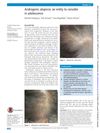
July 2017 in “Case Reports” Hair loss, known as androgenic alopecia, can start in teenage years and may not always be hormone-related. It's important to do extra tests in young cases and remember it can greatly affect a teenager's mental health.
 1 citations
,
January 1996 in “Springer eBooks”
1 citations
,
January 1996 in “Springer eBooks” Androgenetic alopecia is a condition causing noticeable hair loss, especially in middle age, which is more severe than normal balding.
1 citations
,
January 2012 in “Human health handbooks” Male pattern baldness is mainly caused by genetics and hormones, treatable with minoxidil and finasteride.
 6 citations
,
May 2006 in “Skinmed”
6 citations
,
May 2006 in “Skinmed” Androgens contribute to common male hair loss; more research needed for hair growth medication.
 12 citations
,
January 2005 in “Journal of Cosmetic Dermatology”
12 citations
,
January 2005 in “Journal of Cosmetic Dermatology” AGA affects many, progresses differently, and early treatment is crucial.