 January 2007 in “Elsevier eBooks”
 Alopecia areata is a reversible, autoimmune-related hair loss that can have significant emotional impact and uncertain treatment effectiveness.
 February 2023 in “Journal of vaccines and immunology”
 Alopecia areata causes sudden hair loss, often on the scalp, and can be severe, especially with early onset or related health issues.
May 2026 in “Journal of International Medical Research” Atrichia with papular lesions causes irreversible hair loss from infancy and is often misdiagnosed.
 30 citations
,
November 2012 in “Anais Brasileiros De Dermatologia”
30 citations
,
November 2012 in “Anais Brasileiros De Dermatologia” Diagnosing diffuse alopecia, a hair loss condition, can be challenging and may require a scalp biopsy or tracking the disease's progression when symptoms and skin tests aren't enough.
 May 2015 in “Hair transplant forum international”
 Androgenetic alopecia causes hair loss by shrinking hair follicles due to androgens, with the connection between the muscle and hair follicle determining if the loss is reversible.
 52 citations
,
April 2004 in “Journal of The American Academy of Dermatology”
52 citations
,
April 2004 in “Journal of The American Academy of Dermatology” Male pattern baldness involves three mechanisms and finasteride can help reverse it.
10 citations
,
October 2000 in “PubMed” Androgenetic alopecia affects many people, impacting quality of life, and treatment focuses on reversing hair follicle miniaturization.
 June 2023 in “Frontiers in Medicine”
 Protein tyrosine kinases are key in male pattern baldness, affecting skin structure, hair growth, and immune responses.
 1 citations
,
March 2021 in “Dermatological reviews”
1 citations
,
March 2021 in “Dermatological reviews” AGA, a common hair loss, is caused by genetics, hormones, age, and environmental factors.

DNA analysis can help tailor alopecia treatment.
 January 2024 in “Journal of Biosciences and Medicines”
 Future treatments for androgenic alopecia may focus on reactivating hair follicle stem cells and improving drug delivery.
 666 citations
,
September 1977 in “British Journal of Dermatology”
666 citations
,
September 1977 in “British Journal of Dermatology” Common baldness, also known as Androgenetic Alopecia, is caused by a combination of genetic factors and hormones called androgens.
 December 2024 in “Australian Journal of General Practice”
 The woman's hair loss pattern doesn't match typical conditions like alopecia areata or female pattern hair loss.
January 2026 in “OSF Preprints (OSF Preprints)” A new treatment plan for hair loss combines targeted therapies and regenerative strategies to stabilize, reverse, and maintain hair growth.
 May 2023 in “International Journal of Medical Arts (Print)”
 Retrograde Alopecia is fairly common in men with severe hair loss and needs careful examination for treatment and safe hair transplantation.
 January 1953 in “The Lancet”
 Alopecia areata's causes are unclear, treatments exist but relapses are common.
 January 1998 in “Current Therapeutics”
 Different causes of hair loss require specific treatments, and most men and women will experience some form of hair thinning as they age.
 January 2024 in “bioRxiv (Cold Spring Harbor Laboratory)”
 The research found that genetic factors for male pattern baldness in African men differ significantly from those in Europeans.
 March 2026 in “Zenodo (CERN European Organization for Nuclear Research)”
 Restoring communication in hair follicle networks may treat hair loss and improve sexual dysfunction.
January 2020 in “International journal of scientific research” Dermoscopy shows that varying hair shaft thickness and single hair follicles are main signs of male pattern baldness, especially in the fronto-temporal region.
February 2026 in “Journal of Allergy and Clinical Immunology” Alopecia areata involves immune system issues and specific cell types that disrupt hair growth, leading to hair loss.
March 2025 in “Revista Foco” Early diagnosis of Alopecia Frontal Fibrosante is crucial for effective treatment.
 June 2018 in “Advances in Cosmetic Surgery”
 Hair loss caused by genetics and hormones; more research needed for treatments.
January 1995 in “대한피부과학회지” Androgenetic alopecia is linked to family history and androgen effects.
July 2022 in “DOAJ (DOAJ: Directory of Open Access Journals)” Early detection and trichoscopy are key for treating hair loss effectively.
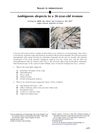
The woman has unexplained hair loss and it's unclear what her condition is or how to treat it.
2 citations
,
September 1997 in “Archives of Dermatology”  December 2025 in “Zenodo (CERN European Organization for Nuclear Research)”
 Hair loss is caused by mechanical, thermal, and metabolic stress, not just hormones.
 February 2018 in “PubMed”
 Society's pressure to have children later in life favors genes that increase the risk of early baldness in male offspring.