 2 citations
,
September 2004 in “Fertility and sterility”
2 citations
,
September 2004 in “Fertility and sterility” High androgen levels can cause excessive hair growth and may indicate serious health issues, including heart disease and fertility problems.
 1 citations
,
September 2023 in “JCEM case reports”
1 citations
,
September 2023 in “JCEM case reports” GnRH analogues are effective for diagnosing and treating female androgen excess, offering a non-surgical option.
 48 citations
,
February 2008 in “Nutrition in Clinical Practice”
48 citations
,
February 2008 in “Nutrition in Clinical Practice” Dietary changes, including weight loss and a balanced diet, are important for managing PCOS, especially in overweight women.
 31 citations
,
November 2014 in “Journal of Endocrinological Investigation”
31 citations
,
November 2014 in “Journal of Endocrinological Investigation” Women with androgen excess, especially those with PCOS, have a much higher risk of heart disease and stroke.
 20 citations
,
December 2000 in “Fertility and Sterility”
20 citations
,
December 2000 in “Fertility and Sterility” The N363S gene variant does not cause higher adrenal androgen levels in women with polycystic ovary syndrome.
 63 citations
,
March 2011 in “Clinical Endocrinology”
63 citations
,
March 2011 in “Clinical Endocrinology” Evaluate postmenopausal women with high androgen levels using medical history, physical exams, lab tests, and imaging to manage health risks.
 December 2023 in “Frontiers in endocrinology”
 Excess androgens may cause PCOS, not just be a symptom.
 947 citations
,
February 2004 in “The Journal of Clinical Endocrinology and Metabolism”
947 citations
,
February 2004 in “The Journal of Clinical Endocrinology and Metabolism” Most women with excess male hormones have Polycystic Ovary Syndrome, and hormonal therapy can improve symptoms but may cause side effects.
 352 citations
,
January 2006 in “The Journal of Clinical Endocrinology and Metabolism”
352 citations
,
January 2006 in “The Journal of Clinical Endocrinology and Metabolism” Most women referred for excess male hormone symptoms had polycystic ovary syndrome (PCOS), with other conditions being less common.
 253 citations
,
March 2006 in “The Journal of Clinical Endocrinology and Metabolism”
253 citations
,
March 2006 in “The Journal of Clinical Endocrinology and Metabolism” Exposure to too much androgen before birth might cause polycystic ovary syndrome later in life.
 99 citations
,
August 2003 in “Fertility and Sterility”
99 citations
,
August 2003 in “Fertility and Sterility” Too much male hormone is the main cause of Polycystic Ovary Syndrome.
 70 citations
,
February 2012 in “Human Reproduction”
70 citations
,
February 2012 in “Human Reproduction” Many young women who donate blood have hormonal disorders like excess male hormones and PCOS.
 14 citations
,
September 2015 in “Expert Opinion on Therapeutic Targets”
14 citations
,
September 2015 in “Expert Opinion on Therapeutic Targets” The conclusion is that while oral contraceptive pills are effective for PCOS-related high androgen levels, new treatments with fewer side effects are needed.
 82 citations
,
May 2016 in “Best Practice & Research in Clinical Obstetrics & Gynaecology”
82 citations
,
May 2016 in “Best Practice & Research in Clinical Obstetrics & Gynaecology” The conclusion is that managing androgen excess requires long-term treatment, including hormonal contraceptives and androgen blockers, with follow-up after six months.
 21 citations
,
January 2017 in “European Journal of Obstetrics & Gynecology and Reproductive Biology”
21 citations
,
January 2017 in “European Journal of Obstetrics & Gynecology and Reproductive Biology” Acne is an important sign of androgen excess disorders in women.
 282 citations
,
October 2006 in “The Journal of Clinical Endocrinology and Metabolism”
282 citations
,
October 2006 in “The Journal of Clinical Endocrinology and Metabolism” The Endocrine Society advised against routine testosterone therapy for women, citing a need for more research on long-term safety and a clear definition of androgen deficiency.
 114 citations
,
March 2018 in “PLOS Medicine”
114 citations
,
March 2018 in “PLOS Medicine” Women with PCOS are more than twice as likely to develop nonalcoholic fatty liver disease.
 40 citations
,
February 2005 in “Fertility and Sterility”
40 citations
,
February 2005 in “Fertility and Sterility” Some women with PCOS have CYP21 mutations and IRS1 variants, but these genetic factors are not major contributors to PCOS.
 9 citations
,
January 1997 in “Gynecological Endocrinology”
9 citations
,
January 1997 in “Gynecological Endocrinology” The document concludes that treating androgen excess needs patience, managing expectations is important, and many drugs used are not officially approved, suggesting cosmetic options for mild cases.
 2 citations
,
November 2020 in “Fertility Research and Practice”
2 citations
,
November 2020 in “Fertility Research and Practice” The survey helps identify menstrual irregularities and excess male hormones, aiming to detect conditions like Polycystic Ovary Syndrome.
 December 2015 in “University of Birmingham Institutional Research Archive (University of Birmingham)”
 AKR1C3 could be a treatment target for metabolic issues in PCOS.
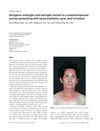 August 2009 in “International Journal of Dermatology”
 A postmenopausal woman's facial redness, acne, and excess hair were caused by too much hormone therapy for insomnia, but improved after stopping the treatment.
 20 citations
,
October 2017 in “Clinical Endocrinology”
20 citations
,
October 2017 in “Clinical Endocrinology” The conclusion is that removing both ovaries is the best treatment for excess male hormones in postmenopausal women, with medication as another option, and managing insulin resistance is important for diagnosis and treatment.
 16 citations
,
April 2007 in “Journal of Obstetrics and Gynaecology Research”
16 citations
,
April 2007 in “Journal of Obstetrics and Gynaecology Research” Prostate-specific antigen may be a new marker for excess male hormones in women with polycystic ovary syndrome.
 14 citations
,
March 2022 in “Clinical Endocrinology”
14 citations
,
March 2022 in “Clinical Endocrinology” The document concludes that a systematic approach is crucial to identify causes of androgen excess in women beyond the most common cause, Polycystic ovary syndrome (PCOS).
In 2020, a new online survey was made to help identify Polycystic ovary syndrome (PCOS) in women, but it needs some improvements for better understanding and accuracy.
 467 citations
,
October 2014 in “European Journal of Endocrinology”
467 citations
,
October 2014 in “European Journal of Endocrinology” The European Society of Endocrinology advises individualized long-term management for PCOS, focusing on lifestyle changes, accurate diagnosis, and treatments for associated health risks and symptoms.
 October 2023 in “Journal of the Endocrine Society”
 Losing weight and taking birth control pills can greatly improve severe male hormone excess in women with PCOS.
7 citations
,
September 2024 in “International Journal of Molecular Sciences” PCOS involves high 11-oxygenated androgens and BPA may worsen it, while IH is not inflammatory.
January 2025 in “Human Reproduction Open” 25% of premenopausal women with Type 1 diabetes have undiagnosed androgen excess disorders.