120 citations
,
April 2019 in “The Journal of clinical investigation/The journal of clinical investigation” Both estrogens and androgens are important for health in both males and females.
 99 citations
,
August 2003 in “Fertility and Sterility”
99 citations
,
August 2003 in “Fertility and Sterility” Too much male hormone is the main cause of Polycystic Ovary Syndrome.
 66 citations
,
January 2000 in “Hormone Research in Paediatrics”
66 citations
,
January 2000 in “Hormone Research in Paediatrics” Androgens can both promote and prevent hair growth due to differences in gene expression in hair follicles.
 58 citations
,
January 2003 in “Thrombosis and Haemostasis”
58 citations
,
January 2003 in “Thrombosis and Haemostasis” Testosterone may slow down wound healing and increase inflammation.
 44 citations
,
January 2008 in “Fertility and Sterility”
44 citations
,
January 2008 in “Fertility and Sterility” Longer CAG repeat lengths in the androgen receptor gene are linked to higher testosterone levels in women with PCOS.
 42 citations
,
April 2009 in “Human Genetics”
42 citations
,
April 2009 in “Human Genetics” A specific genetic mutation may increase male pattern baldness risk, especially in Europeans.
29 citations
,
May 1986 in “Journal of Steroid Biochemistry” Androgens don't directly affect hair cell growth or protein production.
 26 citations
,
September 2010 in “Experimental Dermatology”
26 citations
,
September 2010 in “Experimental Dermatology” Two gene areas linked to male pattern baldness found, more research needed.
 26 citations
,
November 1993 in “Progress in Neuro-psychopharmacology & Biological Psychiatry”
26 citations
,
November 1993 in “Progress in Neuro-psychopharmacology & Biological Psychiatry” Treatment during development affects hormone balance and sexual behavior in male rats.
 20 citations
,
September 2005 in “Endocrinology”
20 citations
,
September 2005 in “Endocrinology” Certain changes to the B-ring of androgen receptor ligands can increase their effectiveness for potential treatments of muscle and bone conditions.
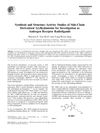 18 citations
,
April 2001 in “Bioorganic & Medicinal Chemistry Letters”
18 citations
,
April 2001 in “Bioorganic & Medicinal Chemistry Letters” The nature of the side chain in RU 58841 derivatives greatly affects its AR affinity, with the N-(iodopropenyl) derivative 13 showing the highest AR binding affinity, suggesting its potential for developing high-affinity radioiodinated AR radioligands.
10 citations
,
July 2022 in “Journal of the Turkish-German Gynecological Association” Vitamins B3, B6, C, and iron intake affect hormone levels in women with certain types of PCOS.
10 citations
,
March 2021 in “Clinical Cosmetic and Investigational Dermatology” Certain gene variants are linked to severe acne, especially in males.
 9 citations
,
September 2015 in “Reproductive Biomedicine Online”
9 citations
,
September 2015 in “Reproductive Biomedicine Online” Longer GGN repeats in the androgen receptor gene are linked to polycystic ovary syndrome.
 7 citations
,
July 2014 in “Reproductive Biomedicine Online”
7 citations
,
July 2014 in “Reproductive Biomedicine Online” The length of CAG repeats in the androgen receptor gene is linked to ovarian reserve but does not affect how the ovaries respond to stimulation.
3 citations
,
January 2021 in “Andrology” Low androgen levels reduce nitric oxide production in rat penile cells.
2 citations
,
October 2020 in “Annals of Oncology” Androgen deprivation therapy might help prevent severe COVID-19, but more research is needed.
1 citations
,
January 2019 in “Journal of Research in Medical Sciences” Fewer GGC sequences in the androgen receptor gene improve finasteride treatment for hair loss.
January 2026 in “Neurochemistry International” 24-Hydroxycholesterol reduces DHT formation in brain cancer cells, linking cholesterol and hormone metabolism.
 October 2025 in “Scientific Reports”
 AR gene variations don't affect aging markers in men.
 December 2022 in “Urology Herald”
 Hormonal status from androgen deprivation therapy may affect COVID-19 severity in men.
 April 2019 in “Molecular Informatics”
 Researchers developed reliable models to predict how well certain compounds bind to androgen receptors, emphasizing the importance of atomic electronegativity.
 February 2017 in “Cancer Causes & Control”
 Swedish men with the E213 A-allele of the androgen receptor have a lower risk of prostate cancer.
February 1990 in “PubMed” Higher DHEA-S levels in hirsute females affect hair growth phases.
115 citations
,
March 2001 in “Baillière's best practice and research in clinical endocrinology and metabolism/Baillière's best practice & research. Clinical endocrinology & metabolism” Key enzymes control androgen levels, affecting hormone activity and potential treatments.
 22 citations
,
October 2011 in “Bone”
22 citations
,
October 2011 in “Bone” Androgens affect bone and fat cell development differently based on the cells' embryonic origin.
 8 citations
,
March 2012 in “The Journal of Steroid Biochemistry and Molecular Biology”
8 citations
,
March 2012 in “The Journal of Steroid Biochemistry and Molecular Biology” Testosterone and dihydrotestosterone have similar effects on body composition and metabolic health in men.
 January 1995 in “Adolescent and pediatric gynecology”
 Mutations in the androgen receptor gene cause different levels of androgen insensitivity, making it hard to create simple tests for the condition.
 11 citations
,
May 2009 in “Medical Hypotheses”
11 citations
,
May 2009 in “Medical Hypotheses” Male pattern baldness is an unintended side effect of the body's use of androgens for muscle growth, especially in those genetically prone to it.
 12 citations
,
January 2016 in “Journal of Assisted Reproduction and Genetics”
12 citations
,
January 2016 in “Journal of Assisted Reproduction and Genetics” Certain gene variations are linked to higher male hormone levels in Chinese women with PCOS and insulin resistance.