 16 citations
,
January 2003 in “Nuclear Receptor Signaling”
16 citations
,
January 2003 in “Nuclear Receptor Signaling” Androgens and SARMs play a role in body mass, frailty, skin health, and hair growth, and are used in treating prostate cancer, acne, and hair loss, with potential for new uses and improved versions in the future.
 14 citations
,
August 2007 in “Bioorganic & Medicinal Chemistry Letters”
14 citations
,
August 2007 in “Bioorganic & Medicinal Chemistry Letters” The compound (1R,2S)-4-(2-Cyano-cyclohexyl-oxy)-2-trifluoromethyl-benzonitrile can stimulate hair growth and reduce oil production when applied topically.
 11 citations
,
August 2007 in “Bioorganic & Medicinal Chemistry Letters”
11 citations
,
August 2007 in “Bioorganic & Medicinal Chemistry Letters” Scientists made a chemical (compound 4e) that can be applied on skin to reduce oil production, which can help with acne, but it might cause skin sensitivity to light.
 5 citations
,
January 2022 in “Clinical cancer investigation journal”
5 citations
,
January 2022 in “Clinical cancer investigation journal” Certain Dibenzo derivatives may help treat prostate cancer.
 5 citations
,
July 2003 in “Drug Development Research”
5 citations
,
July 2003 in “Drug Development Research” Fluridil promotes hair growth safely and effectively for androgenetic alopecia.
 2 citations
,
November 2017 in “Elsevier eBooks”
2 citations
,
November 2017 in “Elsevier eBooks” Different substances that activate or block the androgen receptor can affect male development and treat conditions like prostate cancer.
 October 2023 in “Frontiers in endocrinology”
 Androgens and androgen receptors are important for metabolic health, affecting how the body uses glucose and fats through mitochondrial function.
 June 2021 in “EBioMedicine”
 The authors maintain that shorter androgen receptor alleles may lead to milder COVID-19 by positively affecting the immune response, not due to changes in testosterone levels or activity.
 March 1998 in “Journal of Dermatological Science”
 Combining RU58841 and minoxidil significantly increases hair growth.
 7 citations
,
April 2009 in “Bioorganic & Medicinal Chemistry Letters”
7 citations
,
April 2009 in “Bioorganic & Medicinal Chemistry Letters” Diphenyl ethers can potentially reduce excess oil production when applied on the skin, helping treat conditions like acne.
 1 citations
,
May 2020 in “Beilstein Journal of Organic Chemistry”
1 citations
,
May 2020 in “Beilstein Journal of Organic Chemistry” Scientists made a sensor that can detect a specific type of RNA related to androgen receptors quickly and accurately.
 211 citations
,
May 2013 in “Journal of Nutrition Health & Aging”
211 citations
,
May 2013 in “Journal of Nutrition Health & Aging” MK-0773 safely increased muscle mass but did not improve muscle strength or function in elderly women with sarcopenia.
 93 citations
,
June 2001 in “The Journal of Clinical Endocrinology and Metabolism”
93 citations
,
June 2001 in “The Journal of Clinical Endocrinology and Metabolism” Certain genetic variations in the AR and ERβ genes can affect androgen levels in women.
 82 citations
,
February 1989 in “The Journal of clinical endocrinology and metabolism/Journal of clinical endocrinology & metabolism”
82 citations
,
February 1989 in “The Journal of clinical endocrinology and metabolism/Journal of clinical endocrinology & metabolism” A three-month treatment with a GnRH agonist significantly lowered androgen levels and 5α-reductase activity in men with benign prostatic hyperplasia.
 76 citations
,
April 2005 in “Cancer Epidemiology, Biomarkers & Prevention”
76 citations
,
April 2005 in “Cancer Epidemiology, Biomarkers & Prevention” E211 G>A gene linked to lower risk of severe prostate cancer and hair loss.
 68 citations
,
April 2014 in “Journal of Molecular Endocrinology”
68 citations
,
April 2014 in “Journal of Molecular Endocrinology” The document concludes that targeting the androgen receptor may be a promising breast cancer treatment, especially for certain types.
 60 citations
,
February 2013 in “Cell reports”
60 citations
,
February 2013 in “Cell reports” The balance between androgen receptor and p53 is crucial for sebaceous gland differentiation.
 59 citations
,
April 2016 in “Breast Cancer Research and Treatment”
59 citations
,
April 2016 in “Breast Cancer Research and Treatment” Targeting vitamin D and androgen receptors may effectively treat triple-negative breast cancer, especially with chemotherapy.
 46 citations
,
June 2015 in “Journal of Investigative Dermatology”
46 citations
,
June 2015 in “Journal of Investigative Dermatology” Androgen receptor activity blocks Wnt/β-catenin signaling, affecting hair growth and skin cell balance.
 42 citations
,
April 2009 in “Human Genetics”
42 citations
,
April 2009 in “Human Genetics” A specific genetic mutation may increase male pattern baldness risk, especially in Europeans.
 25 citations
,
June 2019 in “Endocrine Related Cancer”
25 citations
,
June 2019 in “Endocrine Related Cancer” Mutations in certain receptors can cause diseases and offer new treatment options.
 23 citations
,
May 2019 in “Expert Opinion on Therapeutic Patents”
23 citations
,
May 2019 in “Expert Opinion on Therapeutic Patents” New androgen receptor modulators show promise for treating diseases like prostate cancer and muscle wasting.
 23 citations
,
May 2009 in “International Journal of Dermatology”
23 citations
,
May 2009 in “International Journal of Dermatology” AR gene not major factor in female hair loss; different from male hair loss.
 21 citations
,
March 2019 in “Critical Reviews in Clinical Laboratory Sciences”
21 citations
,
March 2019 in “Critical Reviews in Clinical Laboratory Sciences” The androgen receptor is a promising target for breast cancer treatment, especially in triple-negative cases, but more research is needed for personalized therapies.
 20 citations
,
May 2011 in “Cancer Biology & Therapy”
20 citations
,
May 2011 in “Cancer Biology & Therapy” Finasteride may improve prostate cancer treatment outcomes.
 18 citations
,
February 2018 in “International Journal of Molecular Sciences”
18 citations
,
February 2018 in “International Journal of Molecular Sciences” PGD2 increases androgen receptor activity in hair cells, which could be targeted to treat hair loss.
 16 citations
,
August 2004 in “Tetrahedron”
16 citations
,
August 2004 in “Tetrahedron” Scientists made all eight versions of a compound called cyoctol, but found it's not an anti-androgen and it fully breaks down in the skin.
 12 citations
,
December 2012 in “Current Drug Targets”
12 citations
,
December 2012 in “Current Drug Targets” The Androgen Receptor could be a target for treating diseases like cancer, but more research is needed to confirm the effectiveness of potential treatments.
 12 citations
,
October 2004 in “Experimental Gerontology”
12 citations
,
October 2004 in “Experimental Gerontology” Changes in testosterone and estrogen receptor genes can affect how men age, influencing body fat, hair patterns, and possibly leading to skin disorders.
 11 citations
,
May 2010 in “Journal of Medicinal Chemistry”
11 citations
,
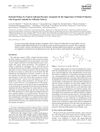
May 2010 in “Journal of Medicinal Chemistry” A new compound was created in 2010 that can control oil production when applied to the skin, and its effects are completely reversible after two weeks.