 April 2017 in “Journal of Investigative Dermatology”
 Hair loss patterns differ between males and females due to 5 master regulators and JAK-STAT signaling affects hair growth.
 58 citations
,
December 2020 in “Mayo Clinic Proceedings”
58 citations
,
December 2020 in “Mayo Clinic Proceedings” The conclusion is that individual differences in COVID-19 severity are influenced by factors like age, sex, race, and genetics, which are important for personalized medicine.
 152 citations
,
December 2007 in “Gender Medicine”
152 citations
,
December 2007 in “Gender Medicine” Male and female skin differ due to hormones, affecting conditions like hair loss, acne, and skin cancer, and suggesting a need for gender-specific treatments.
 113 citations
,
July 2020 in “Communications biology”
113 citations
,
July 2020 in “Communications biology” Men, especially older ones with health issues like prostate cancer, may have worse COVID-19 outcomes and could benefit from therapies targeting male hormones.
93 citations
,
September 2014 in “Diabetes” Lack of 5α-Reductase type 1 can lead to insulin resistance and liver problems.
 77 citations
,
July 2020 in “European Journal of Clinical Pharmacology”
77 citations
,
July 2020 in “European Journal of Clinical Pharmacology” Blocking the virus's entry into cells by targeting certain pathways could lead to early COVID-19 treatments.
 32 citations
,
April 1994 in “Journal of the American Academy of Dermatology”
32 citations
,
April 1994 in “Journal of the American Academy of Dermatology” High androgen levels and genetic factors likely cause Becker's nevus and related symptoms.
 16 citations
,
December 2021 in “Frontiers in Endocrinology”
16 citations
,
December 2021 in “Frontiers in Endocrinology” Sex hormones may affect COVID-19 severity, with estrogen possibly reducing risk and testosterone potentially increasing it.
 11 citations
,
May 2021 in “Journal of Medical Virology”
11 citations
,
May 2021 in “Journal of Medical Virology” Men are more likely to have severe respiratory viral infections like COVID-19 due to hormonal and genetic differences, while women generally have stronger immune responses.
 4 citations
,
June 2025 in “Medeniyet Medical Journal”
4 citations
,
June 2025 in “Medeniyet Medical Journal” TMPRSS2 is crucial for COVID-19 infection and is a potential target for treatment.
1 citations
,
July 2011 in “Hair transplant forum international” Epigenetic changes might protect occipital hair from male pattern baldness.
 January 2024 in “Journal of Biosciences and Medicines”
 Future treatments for androgenic alopecia may focus on reactivating hair follicle stem cells and improving drug delivery.
 November 2022 in “Journal of the Endocrine Society”
 A 21-year-old male with a rare genetic disorder experienced sudden hair loss and high DHEAS levels, likely due to a condition similar to PCOS, usually seen in women.
May 2020 in “Scientific periodicals of Ukraine” Alopecia and acne in women are complex conditions needing coordinated care and personalized treatment.
 December 2016 in “Int J Genet”
 Male pattern baldness is partly caused by specific genes, but most genetic factors are still unknown.
CAG repeat numbers in the AR gene likely don't affect male pattern baldness in Korean men.
Most severe COVID-19 patients had hair loss, suggesting a possible link.
 January 1996 in “Springer eBooks”
 Hair loss increases with age and is triggered by hormones like androgens.
22 citations
,
February 2008 in “Biochemical and Biophysical Research Communications” Androgen effects on hair follicles vary by skin area.
 103 citations
,
October 2003 in “Birth Defects Research”
103 citations
,
October 2003 in “Birth Defects Research” Both genes and environmental factors like chemicals may contribute to the increase in hypospadias, but the exact causes are still unclear.
 29 citations
,
July 2012 in “Fertility and Sterility”
29 citations
,
July 2012 in “Fertility and Sterility” Low and ultralow doses of flutamide can cause liver damage in young women with high androgen levels, regardless of dose or birth control use, with higher risk for those with higher BMI and liver enzyme levels before treatment.
 January 2026 in “Biology”
 Androgenetic alopecia is influenced by multiple genes and pathways, with genetic risk varying by population, and personalized treatments are being explored.
 185 citations
,
August 2020 in “Mayo Clinic Proceedings”
185 citations
,
August 2020 in “Mayo Clinic Proceedings” Men are more likely to have severe COVID-19 cases and fatalities than women due to factors like lifestyle, aging, and biological differences.
 37 citations
,
May 1999 in “Australasian Journal of Dermatology”
37 citations
,
May 1999 in “Australasian Journal of Dermatology” Early diagnosis and treatment are crucial for preventing permanent hair loss in various scalp conditions, and while new treatments are promising, more research is needed to evaluate their effectiveness.
 3 citations
,
April 2015 in “American journal of biomedical sciences”
3 citations
,
April 2015 in “American journal of biomedical sciences” Androgens play a key role in hair growth and disorders like baldness and excessive hairiness.
 139 citations
,
December 2020 in “Cell Stem Cell”
139 citations
,
December 2020 in “Cell Stem Cell” Male hormones affect COVID-19 severity and certain drugs targeting these hormones could help reduce the risk.
 32 citations
,
August 1999 in “Journal of Investigative Dermatology”
32 citations
,
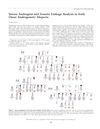
August 1999 in “Journal of Investigative Dermatology” Early onset hair loss linked to genetics and androgen levels.
 190 citations
,
October 2002 in “The FASEB journal”
190 citations
,
October 2002 in “The FASEB journal” Androgens may cause hair loss by increasing TGF-beta1 from scalp cells, which inhibits hair cell growth.
 123 citations
,
May 2020 in “Drug Development Research”
123 citations
,
May 2020 in “Drug Development Research” Men's sensitivity to male hormones might affect how severe COVID-19 gets for them.
 121 citations
,
November 2020 in “Endocrine”
121 citations
,
November 2020 in “Endocrine” Male hormones like testosterone may make COVID-19 worse, and testing for sensitivity to these hormones could help predict how severe a patient's symptoms might be. Treatments that reduce these hormones are being explored.