 6 citations
,
January 2016 in “Evidence-based complementary and alternative medicine”
6 citations
,
January 2016 in “Evidence-based complementary and alternative medicine” Saw palmetto supplements may reduce prostate cancer cell growth without being toxic.
 August 2009 in “International Journal of Dermatology”
 A postmenopausal woman's facial redness, acne, and excess hair were caused by too much hormone therapy for insomnia, but improved after stopping the treatment.
 February 2024 in “Malahayati Nursing Journal”
 High androgen levels can cause hirsutism and increase inflammation.
 947 citations
,
February 2004 in “The Journal of Clinical Endocrinology and Metabolism”
947 citations
,
February 2004 in “The Journal of Clinical Endocrinology and Metabolism” Most women with excess male hormones have Polycystic Ovary Syndrome, and hormonal therapy can improve symptoms but may cause side effects.
 165 citations
,
December 2002 in “Molecular and Cellular Endocrinology”
165 citations
,
December 2002 in “Molecular and Cellular Endocrinology” Male hormones, particularly DHT, are linked to male pattern hair loss, and treatments like finasteride can help, but they don't work for postmenopausal women's hair loss, which may have different causes.
 119 citations
,
November 2009 in “Human Reproduction”
119 citations
,
November 2009 in “Human Reproduction” Women with PCOS and higher androgen levels are more likely to have fatty liver disease.
 93 citations
,
June 2001 in “The Journal of Clinical Endocrinology and Metabolism”
93 citations
,
June 2001 in “The Journal of Clinical Endocrinology and Metabolism” Certain genetic variations in the AR and ERβ genes can affect androgen levels in women.
 37 citations
,
January 2008 in “Gynecological Endocrinology”
37 citations
,
January 2008 in “Gynecological Endocrinology” Shorter CAG repeats in a specific gene may increase male hormone activity and symptoms like acne and excess hair in women with PCOS.
 31 citations
,
November 2014 in “Journal of Endocrinological Investigation”
31 citations
,
November 2014 in “Journal of Endocrinological Investigation” Women with androgen excess, especially those with PCOS, have a much higher risk of heart disease and stroke.
 30 citations
,
November 2013 in “PLOS ONE”
30 citations
,
November 2013 in “PLOS ONE” Androgen receptor signaling causes early aging of cells important for hair growth by damaging their DNA.
 27 citations
,
April 2017 in “European journal of endocrinology”
27 citations
,
April 2017 in “European journal of endocrinology” The research found that MRI and certain hormone levels can help tell apart ovarian tumors from hyperthecosis in postmenopausal women, but tissue analysis is still needed for a definite diagnosis.
 19 citations
,
October 2017 in “The FASEB Journal”
19 citations
,
October 2017 in “The FASEB Journal” Male hormones cause different growth in identical human hair follicles due to their unique epigenetic characteristics.
 2 citations
,
January 2019 in “BMC Cancer”
2 citations
,
January 2019 in “BMC Cancer” Baldness may lower the risk of testicular cancer.
 July 2015 in “Cambridge University Press eBooks”
 Androgens like testosterone affect skin health and can lead to conditions such as acne and hair loss, with various treatments available.
 May 2015 in “Endocrinología y nutrición”
 The conclusion is that adult males with muscle weakness and hormonal imbalances should be tested for Kennedy's disease.
 January 2014 in “European Geriatric Medicine”
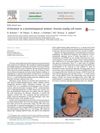
 A postmenopausal woman's virilization was caused by a rare ovarian tumor that was hard to detect but was successfully treated with surgery.
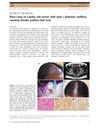 August 2019 in “Journal of Dermatology”
 Woman with diabetes had hair loss due to rare ovarian tumor; surgery improved hair growth.
 12 citations
,
December 2012 in “Current Drug Targets”
12 citations
,
December 2012 in “Current Drug Targets” The Androgen Receptor could be a target for treating diseases like cancer, but more research is needed to confirm the effectiveness of potential treatments.
 May 2024 in “Scientific Reports”
 Androgen receptors in the mouse brain may explain cognitive and mood changes in prostate cancer treatment.
 251 citations
,
October 2014 in “The Journal of Clinical Endocrinology & Metabolism”
251 citations
,
October 2014 in “The Journal of Clinical Endocrinology & Metabolism” The guidelines advise against using testosterone and DHEA in women for most conditions due to safety and effectiveness concerns, but suggest considering testosterone for postmenopausal women with low sexual desire.
 166 citations
,
March 2007 in “Hypertension”
166 citations
,
March 2007 in “Hypertension” High androgen levels in young women with PCOS are linked to higher blood pressure.
 99 citations
,
June 1999 in “The Journal of Clinical Endocrinology and Metabolism”
99 citations
,
June 1999 in “The Journal of Clinical Endocrinology and Metabolism” Testosterone replacement may help some postmenopausal women with symptoms like fatigue and low libido, but more research is needed to fully understand its effects.
 93 citations
,
February 2009 in “Annals of the New York Academy of Sciences”
93 citations
,
February 2009 in “Annals of the New York Academy of Sciences” 5α‐reductase isozymes are crucial for prostate development and health, and targeting them can help prevent and treat prostate issues.
 81 citations
,
November 2012 in “Journal of the National Cancer Institute”
81 citations
,
November 2012 in “Journal of the National Cancer Institute” The tumor suppressor gene FLCN affects mitochondrial function and energy use in cells.
 76 citations
,
April 2005 in “Cancer Epidemiology, Biomarkers & Prevention”
76 citations
,
April 2005 in “Cancer Epidemiology, Biomarkers & Prevention” E211 G>A gene linked to lower risk of severe prostate cancer and hair loss.
 68 citations
,
April 2014 in “Journal of Molecular Endocrinology”
68 citations
,
April 2014 in “Journal of Molecular Endocrinology” The document concludes that targeting the androgen receptor may be a promising breast cancer treatment, especially for certain types.
 60 citations
,
February 2013 in “Cell reports”
60 citations
,
February 2013 in “Cell reports” The balance between androgen receptor and p53 is crucial for sebaceous gland differentiation.
 58 citations
,
January 2003 in “Thrombosis and Haemostasis”
58 citations
,
January 2003 in “Thrombosis and Haemostasis” Testosterone may slow down wound healing and increase inflammation.
 54 citations
,
January 2016 in “Cell reports”
54 citations
,
January 2016 in “Cell reports” Activating β-catenin in different skin stem cells causes various types of hair growth and skin tumors.
 45 citations
,
November 2012
45 citations
,
November 2012 The conclusion is that androgen receptor gene polymorphism might be a marker for polycystic ovary syndrome, but more research is needed.