 8 citations
,
May 2018 in “The Journal of Allergy and Clinical Immunology”
8 citations
,
May 2018 in “The Journal of Allergy and Clinical Immunology” Activating the Nrf2 pathway reduces inflammation and cell activation in human hair follicles, suggesting a potential treatment for certain hair loss conditions.
 January 2025 in “Clinical and Translational Medicine”
 A specific RNA can help hair growth in baldness by boosting stem cell activity.
 June 2025 in “Stem Cell Research & Therapy”
 Combining stem cells with ATP significantly boosts hair regrowth in mice with hair loss.
 2 citations
,
January 2025 in “Frontiers in Pharmacology”
2 citations
,
January 2025 in “Frontiers in Pharmacology” Purple corn extract may help reduce prostate enlargement and inflammation.

1′S-1′-Acetoxychavicol acetate may help treat hair loss by reducing oxidative stress.
 11 citations
,
May 2016 in “Naunyn-Schmiedeberg's Archives of Pharmacology”
11 citations
,
May 2016 in “Naunyn-Schmiedeberg's Archives of Pharmacology” A substance called 15-deoxy prostaglandin J2 can cause hair follicle cells to die, which might explain how prostaglandin D2 can lead to hair loss.
1 citations
,
April 2025 in “Drug Delivery and Translational Research”  7 citations
,
January 2011 in “Journal of The American Academy of Dermatology”
7 citations
,
January 2011 in “Journal of The American Academy of Dermatology” Most women with hyperandrogenism first show acne, and skin conditions like hirsutism and acanthosis nigricans are good indicators of the condition.

Certain drugs can worsen hair loss in people prone to androgenetic alopecia.
 May 2024 in “Indian Journal of Dermatology”
 Androgenetic alopecia in men is genetic and linked to health issues like obesity and heart disease, with treatments including minoxidil, finasteride, and hair transplants.
 2 citations
,
May 2013 in “The primary care companion for CNS disorders”
2 citations
,
May 2013 in “The primary care companion for CNS disorders” A teenage girl's excessive hair growth was caused by a medication for mania, but improved after stopping the medication.
 1 citations
,
February 1988 in “The BMJ”
1 citations
,
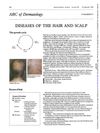
February 1988 in “The BMJ” The document explains different hair and scalp conditions, including common hair loss after pregnancy or illness, drug-induced hair loss, hereditary excessive hair growth, patterned baldness, autoimmune hair loss, and permanent loss due to skin disease, with generally limited treatment options.
 July 2010 in “British Journal of Dermatology”
 Hair loss in women may have multiple causes, and eyebrow regrowth possible with specific injections.
Androgen receptors significantly affect hair loss in women with androgenetic alopecia.
 1 citations
,
January 2009 in “Drug delivery system”
1 citations
,
January 2009 in “Drug delivery system” Anti-aging treatments like hair transplants, minoxidil, and finasteride effectively promote hair growth.
 3 citations
,
November 2015 in “Journal of Investigative Dermatology”
3 citations
,
November 2015 in “Journal of Investigative Dermatology” Testosterone can both promote hair growth and cause baldness by affecting hair growth signals.
February 2026 in “Case Reports in Dermatology” Finasteride can cause melasma, especially in people with darker skin.

Proper medical treatments can control and even reverse female pattern hair loss, but it's important to check for related conditions like excessive male hormone production, especially in severe cases.
 13 citations
,
January 2014 in “PubMed”
13 citations
,
January 2014 in “PubMed” Adiantum capillus-veneris Linn reduced hair loss and improved hair growth in mice with testosterone-induced alopecia.
 9 citations
,
August 2013 in “Archives of Dermatological Research”
9 citations
,
August 2013 in “Archives of Dermatological Research” A gene called BMAL1 plays a role in controlling hair growth.
 52 citations
,
September 2018 in “International Journal of Molecular Sciences”
52 citations
,
September 2018 in “International Journal of Molecular Sciences” Ginseng and its compounds may help hair growth and prevent hair loss, but more human trials are needed to confirm this.
 December 2023 in “International journal of drug delivery technology”
 The polyherbal hair serum helped prevent hair loss and improved hair growth better than the usual treatment.
231 citations
,
December 1999 in “Journal of Investigative Dermatology” Hair follicle size is mainly influenced by the number of cells and extracellular matrix volume, with cell number having a larger impact.

research Acne
2 citations
,
May 2011 in “Harper's Textbook of Pediatric Dermatology” Acne is a common skin condition linked to diet, hormones, and genetics, and early treatment can prevent scarring.
 1 citations
,
March 2015 in “Journal of Visualized Experiments”
1 citations
,
March 2015 in “Journal of Visualized Experiments” Researchers developed a new, precise method to measure hair loss in mice using image analysis.
March 2025 in “JAAD reviews.” Bimatoprost effectively improves eyelashes in chemotherapy patients.
 January 2009 in “CRC Press eBooks”
 Androgenetic alopecia, or common baldness, is the main cause of hair loss in men due to shrinking hair follicles from hormones, and it's normal but can be a problem if it's too much or too early.
 49 citations
,
April 2012 in “Phytotherapy Research”
49 citations
,
April 2012 in “Phytotherapy Research” Rosemary leaf extract may be an effective natural treatment for hair growth and male pattern baldness.
 4 citations
,
November 2015 in “Journal of Investigative Dermatology”
4 citations
,
November 2015 in “Journal of Investigative Dermatology” Testosterone may worsen hair loss by affecting hair growth signals, while different prostaglandins can either hinder or promote hair growth.
 1 citations
,
January 2013 in “Advanced Biomedical Research”
1 citations
,
January 2013 in “Advanced Biomedical Research” Men with more severe hair loss had a lower risk of schizophrenia, but hair loss and testosterone levels were not linked.