December 2020 in “Ambiance in Life” Women with hair loss may have higher heart disease risk.
January 2019 in “International Journal of Case Reports and Images” Combining microneedling with light therapy increased hair density by 26% in men.
January 2014 in “Medical Innovation of China” Androgen receptor differences may contribute to hair loss in AGA patients.
January 2013 in “Chinese Archives of Traditional Chinese Medicine” Traditional Chinese medicine liniment helps regrow hair in androgenetic alopecia.
January 2011 in “The Chinese Journal of Dermatovenereology” Shorter GGN repeats in the androgen receptor gene are linked to androgenetic alopecia.
January 2008 in “Chinese Archives of Traditional Chinese Medicine” Quzhi Fangtuo Pill is more effective than Chuzhi Shengfa Pill for early hair loss.
January 2006 in “Chinese Journal of Dermatology” Shorter GGC triplet repeats in the androgen receptor gene are linked to less hair loss in Han men.
January 2004 in “The Chinese Journal of Dermatovenereology” Yishen Decoction effectively reduces blood viscosity and improves hair loss in patients.
 70 citations
,
April 1990 in “Journal of The American Academy of Dermatology”
70 citations
,
April 1990 in “Journal of The American Academy of Dermatology” Minoxidil treatment increased hair growth for up to 5 years, requiring twice daily application.
 1 citations
,
August 2017
1 citations
,
August 2017 Minoxidil helps stimulate hair growth and enlarge small follicles in common hair loss, but doesn't stop it, and its effects can be boosted when combined with finasteride.
1 citations
,
July 2021 in “Journal of Central South University. Medical sciences” Regular aerobic exercise for over 60 minutes can delay and improve androgenic alopecia symptoms.
 February 2026 in “Zenodo (CERN European Organization for Nuclear Research)”
 Current treatments can slow hair loss and promote regrowth, with hair transplantation being most effective for advanced cases.
 February 2026 in “Zenodo (CERN European Organization for Nuclear Research)”
 Current treatments can slow hair loss and promote regrowth, with hair transplantation being most effective for advanced cases.
 June 2024 in “International Journal of Health Science”
 Current treatments for androgenetic alopecia are often ineffective and have side effects, needing better options.
Cetosomal minoxidil is safer and as effective as alcohol-based minoxidil for male hair loss treatment.

Higher levels of heat shock protein 27 and lower levels of miR-1 can increase AR levels, leading to hair loss in men.
 September 2024 in “Zagazig University Medical Journal”
 PRP did not significantly improve hair restoration results but improved scar tissue quality.
December 2024 in “Archives of Dermatological Research”  May 2025 in “Dermatologie pro praxi”
 Autologous progenitor cell transplantation can effectively improve hair growth and quality with minimal side effects.
 60 citations
,
October 2009 in “Dermatology”
60 citations
,
October 2009 in “Dermatology” Alopecia areata may appear differently depending on the individual's type of hair loss and scalp condition.
May 2026 in “Zenodo (CERN European Organization for Nuclear Research)” May 2026 in “Zenodo (CERN European Organization for Nuclear Research)”  68 citations
,
May 2012 in “Annals of Oncology”
68 citations
,
May 2012 in “Annals of Oncology” Some breast cancer chemotherapy can cause permanent hair loss.
January 2025 in “Aesthetic Plastic Surgery” 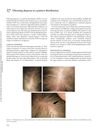 April 2012 in “Informa Healthcare eBooks”
 Fibrosing alopecia in a pattern distribution is a unique hair loss condition with inflammation and scarring, resembling but distinct from common balding.
January 2026 in “Zagazig University Medical Journal” November 2025 in “Zenodo (CERN European Organization for Nuclear Research)” November 2025 in “Zenodo (CERN European Organization for Nuclear Research)”  April 2020 in “Dermatology and therapy”