 April 2010 in “The Journal of Urology”
 The research found that androgens help control blood flow in the rat prostate through a specific binding site.
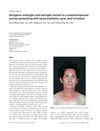 August 2009 in “International Journal of Dermatology”
 A postmenopausal woman's facial redness, acne, and excess hair were caused by too much hormone therapy for insomnia, but improved after stopping the treatment.
 July 1996 in “Trends in Endocrinology and Metabolism”
 The book is a valuable reference on androgenic disorders for professionals but not suitable for laypeople or medical students.
 May 2026 in “Frontiers in Pharmacology”
 Dendrobium officinale polysaccharide helps hair regrowth in hair loss mice by affecting local steroid metabolism and hair follicle responses.
 November 2025 in “Scientific Reports”
 Liver disease is linked to hair loss, especially in women and those with unhealthy lifestyles.
 June 2025 in “International Journal of Research and Review”
 Unani medicine offers a natural, effective approach to treating hair loss with minimal side effects, but needs more scientific validation.
 June 2024 in “Research Square (Research Square)”
 Early-onset AGA shows different hair and metabolic characteristics compared to normal-onset AGA.
 May 2024 in “Scientific Reports”
 Androgen receptors in the mouse brain may explain cognitive and mood changes in prostate cancer treatment.
 April 2024 in “Journal of dermatology research reviews & reports”
 Using a laser helmet with Minoxidil works better for male hair loss than Minoxidil alone, with no extra side effects.
 June 2023 in “Sains Malaysiana”
 Cinchonine Nanostructured Lipid Carriers serum safely and effectively stimulates hair growth and increases the number and size of hair follicles.
 April 2019 in “Journal of Investigative Dermatology”
 Testosterone affects androgen receptors and lipid storage in cells, while DHEA does not convert to testosterone or affect these receptors in the same way.
 February 2012 in “Expert Review of Endocrinology & Metabolism”
 The document suggests more research is needed to understand the link between baldness and prostate cancer.
 May 2021 in “Lasers in Surgery and Medicine”
 Minoxidil and photobiomodulation together improve hair growth better than minoxidil alone.
 May 2021 in “Experimental Cell Research”
 FOXC1 boosts SFRP1 in hair loss, suggesting new treatments.
 August 2020 in “International Journal of Clinical Practice”
 No link between hair loss and blood groups or Rhesus factor.
 July 2020 in “Bioinformatics and Bioengineering”
 Found key genes affecting hair loss, immune response, and skin development; more research needed for better treatments.
 March 2020 in “Journal of Laser Applications”
 Photobiomodulation therapy significantly increases hair density and growth for androgenic alopecia, but more research is needed to confirm safety.
 August 2019 in “Journal of The American Academy of Dermatology”
 Platelet-rich plasma helps hair regrowth and improves quality of life in women with hair loss, but minoxidil may be more effective.

Women with androgenetic alopecia (hair loss) have normal prostate specific antigen levels but higher testosterone levels.
 January 2019 in “Springer eBooks”
 PRP and LLLT can improve hair growth in AGA, but more research needed.
 February 2017 in “Clinical dermatology open access journal”
 Men with early hair loss may have higher insulin resistance and should be checked for related health issues.
 November 2015 in “Springer eBooks”
 Hair loss treated with minoxidil, finasteride, laser/light, hair transplant, and scalp prostheses; more research needed for skin of color.
 January 2014 in “Journal of Pharmaceutical Negative Results”
 Liquorice and Indian jujube root extracts don't help in fighting male pattern baldness.
 September 2010 in “Advances in Dermatology and Allergology/Postępy Dermatologii i Alergologii”
 TrichoScan is reliable for counting and measuring hair density but may not accurately assess hair types in women with hair loss.
 November 1999 in “Journal of Cutaneous Medicine and Surgery”
 Treatments for hair loss include hormone modifiers, minoxidil, and hair transplant surgery.

Hair loss can cause significant social and emotional issues, especially for women and young men.
 88 citations
,
July 2019 in “International Journal of Molecular Sciences”
88 citations
,
July 2019 in “International Journal of Molecular Sciences” Using human fat tissue derived stem cells in micrografts can safely and effectively increase hair density in people with hair loss.
 49 citations
,
January 1994 in “The Journal of Steroid Biochemistry and Molecular Biology”
49 citations
,
January 1994 in “The Journal of Steroid Biochemistry and Molecular Biology” RU 58841 may treat acne, hair loss, and excessive hair growth.
 45 citations
,
November 2009 in “British Journal of Dermatology”
45 citations
,
November 2009 in “British Journal of Dermatology” Women with early hair loss have higher blood pressure and aldosterone; screening and treatment may help.
 37 citations
,
January 2010 in “Acta dermato-venereologica”
37 citations
,
January 2010 in “Acta dermato-venereologica” People with early onset baldness have higher bad cholesterol and lower good cholesterol, increasing their heart disease risk.