4 citations
,
January 2018 in “Health” Ostrich antibodies are a promising, cost-effective treatment for various skin diseases and conditions.
Liquid nitrogen cryotherapy worked well for many patients with stubborn alopecia areata.
61 citations
,
September 1970 in “Journal of the American Geriatrics Society” Anabolic steroids may help prevent aging effects by reducing toxicity, not by their usual functions.
 January 2024 in “Dermatology practical & conceptual”
 Atopic dermatitis in kids with alopecia areata can predict poor response to topical immunotherapy.
29 citations
,
July 2008 in “British Journal of Dermatology” The patient had paraneoplastic pemphigus without mucosal involvement.
July 2026 in “Current Medical Issues” Topical anesthetics don't effectively reduce pain during scalp PRP injections.
 1 citations
,
April 2022 in “Journal of The American Academy of Dermatology”
1 citations
,
April 2022 in “Journal of The American Academy of Dermatology” Hair loss in men (androgenetic alopecia) is significantly linked to decreased scalp sensitivity, but not temperature sensitivity. More research is needed to confirm this. Comparing this hair loss to leprosy is unsupported and stigmatizing.
 48 citations
,
May 1999 in “International Journal of Dermatology”
48 citations
,
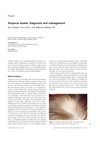
May 1999 in “International Journal of Dermatology” Alopecia areata is an unpredictable autoimmune hair loss condition, treated based on severity, with half of patients regrowing hair within a year without treatment.
 June 2023 in “Dermatology and therapy”
 The Middle East and Africa need better data, treatment consensus, and support for Alopecia Areata.
1 citations
,
September 2023 in “Journal of the American Academy of Dermatology” Increasing social support and acceptance can reduce self-stigma in alopecia areata patients.
 February 2026 in “Indian Journal of Dermatology”
 Adults are more reactive to allergens than older adults, who are more sensitive to medication-related allergens.
Low-dose oral minoxidil can cause dry mouth.
October 2007 in “Journal of Korean Medicine Rehabilitation” January 2017 in “Elsevier eBooks” Radiation therapy for cancer often causes skin problems like redness, dryness, and pain.
March 1998 in “Journal of Dermatological Science” Eccrine gland activity may be linked to alopecia areata.
 January 2010 in “Yearbook of Endocrinology”
 Two new compounds can block androgen receptor activity in different ways and may lead to new treatments for androgen-related diseases.
 April 2020 in “Journal of The American Academy of Dermatology”
 Microneedling with platelet-rich plasma can cause temporary, painful lymph node swelling in some patients.
Liquid nitrogen cryotherapy is an effective treatment for alopecia areata.
2 citations
,
July 2021 in “UNC Libraries” Mutations at Val-889 and Arg-752 disrupt key interactions in androgen receptor dimerization.
 4 citations
,
September 2017 in “Skin appendage disorders”
4 citations
,
September 2017 in “Skin appendage disorders” The dog with an Alopecia Areata-like condition showed signs of an autoimmune disease and partially regrew hair without treatment, suggesting dogs could be models for human AA research.
26 citations
,
June 1988 in “PubMed” 3% topical minoxidil is ineffective for severe chronic alopecia areata.
66 citations
,
January 2008 in “Pharmacology Biochemistry and Behavior” AC-5216 reduces anxiety in mice through neurosteroids affecting GABAA receptors.
71 citations
,
January 1998 in “Pathobiology” The document concludes that certain rats and mice are useful for studying hair loss in humans and testing treatments.
 5 citations
,
December 2015 in “Dermatologic Therapy”
5 citations
,
December 2015 in “Dermatologic Therapy” Using a certain drug on the skin can help prevent hair loss caused by pulling on the hair.
2 citations
,
November 2004 in “Blood” RXRa is crucial for Th2 immune cell development and may link nutrition to immune health.
 March 2005 in “Journal of the American Academy of Dermatology”
 Bexarotene 1% topical gel helped some patients with alopecia areata regrow hair.
 January 2025 in “Annals of Thoracic and Cardiovascular Surgery”
 Removing the thymoma improved the patient's alopecia areata, suggesting a possible link between the two.
 2 citations
,
September 1980 in “Experientia”
2 citations
,
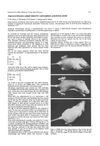
September 1980 in “Experientia” Polyethylene alanine caused hair loss in young lab animals but not in adults, with hair regrowth occurring within 20 days.
 July 2023 in “Journal of lasers in medical sciences”
 Red laser therapy helped regrow hair in an alopecia areata patient within 21 days.
 July 2023 in “IntechOpen eBooks”
 New treatments for alopecia areata show promise, but more research is needed to confirm their effectiveness.