 April 2024 in “Jurnal Agroindustri Halal/Jurnal agroindustri halal”
 The hair tonic with the highest seaweed extract content showed the best hair growth results.
 March 2024 in “International Journal of Drug Delivery Technology”
 Electrospun nanofiber mats are effective drug carriers for improving wound healing.

The Chromolaena odorata patch significantly speeds up wound healing.
 January 2024 in “Journal of cellular immunology”
 Hair follicle stem cells are important for maintaining healthy skin and interact with many signals.
 January 2024 in “Regenerative Biomaterials”
 Metal organic frameworks-based scaffolds show promise for tissue repair due to their unique properties.
 December 2023 in “International Journal of Newgen Research in Pharmacy & Healthcare”
 Both herbal and synthetic shampoos in India are generally safe and effective.
 November 2023 in “Regenerative Biomaterials”
 The new adhesive seals wounds quickly, works well in wet conditions, and helps with healing.
 October 2023 in “Biomedical science and engineering”
 Innovative methods are reducing animal testing and improving biomedical research.
 October 2023 in “Urologie in der Praxis”
 Primary care providers should understand Geschlechtsinkongruenz to offer better care for transitioning individuals.
 October 2023 in “bioRxiv (Cold Spring Harbor Laboratory)”
 Immune cells are essential for early hair and skin development and healing.
 September 2023 in “Asian journal of beauty & cosmetology”
 Lipids are important for healthy hair, but their exact role is not fully understood and needs more research.
 September 2023 in “Bangladesh Journal of Neurosurgery”
 Stereotactic Radiosurgery is an effective non-invasive treatment for cerebral AVM, with successful outcomes and minimal side effects.
 August 2023 in “Jurnal Pharmacia Mandala Waluya”
 Albizia saponaria bark extract at 20% concentration promotes hair growth in rabbits.
 June 2023 in “Historical records of Australian science/Historical Records of Australian Science”
 George Ernest Rogers was a notable scientist who made important discoveries about hair and wool proteins.
 January 2023 in “Pakistan Armed Forces Medical Journal”
 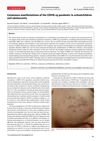 January 2023 in “Acta dermatovenerologica Alpina, Pannonica et Adriatica (Tiskana izd.)”
 The article concludes that schoolchildren and adolescents experienced various skin issues during the COVID-19 pandemic, including acne from masks and other skin reactions from the virus and vaccines.
 January 2023 in “International Journal of Pharmaceutical Research and Development”
 Nanotechnology therapies can help improve quality of life for those with hair loss.
 January 2023 in “Book of Abstracts”
 COVID-19 can cause different types of hair loss, with telogen effluvium being the most common.
 September 2022 in “Acta Medica”
 The pandemic caused new skin problems in children, mainly due to mask-wearing and stress.
 July 2022 in “International Journal of Research in Dermatology”
 Some children with COVID-19 develop skin symptoms linked to a severe inflammatory condition.
 May 2022 in “Research Square (Research Square)”
 OBEME effectively enhances wound healing and could be a promising carrier for skin treatments.
 May 2022 in “International Journal of Clinical Trials”
 PRF may offer better healing and recovery than PRP for immediate implants.
 May 2022 in “Research Square (Research Square)”
 Certain Chinese herbs may help treat kidney fibrosis by targeting TGF-β.
 March 2022 in “Pakistan BioMedical Journal”
 Many young women in Pakistan are unaware of their PCOS symptoms.
 March 2022 in “Marmara University Open Access System”
 Digital games are part of new media but need a deeper look at their complex nature and cultural roots.
 January 2022 in “Eduvest”
 A teenage girl with a fungal scalp infection got better with antifungal and allergy medication, plus medicated shampoo.

Human hair keratins can be turned into useful 3D biomedical scaffolds through a freeze-thaw process.
 September 2021 in “Farmacja Polska”
 Scalp needle mesotherapy can effectively treat hair loss and improve hair growth.

Wild African goats have genetic adaptations for surviving harsh desert conditions.
 March 2021 in “bioRxiv (Cold Spring Harbor Laboratory)”
 A specific immune response helps control mite populations on the skin, maintaining healthy hair follicles.