 April 2017 in “The journal of investigative dermatology/Journal of investigative dermatology”
 Both induced and spontaneous AA lymphocytes can cause alopecia areata in mice.
5 citations
,
January 2018 in “Indian Journal of Dermatology/Indian journal of dermatology” A woman got a skin rash from taking aceclofenac, which went away after she stopped the drug.
8 citations
,
April 2013 in “Advances in Wound Care” α3β1 integrin is essential for skin stability and proper wound healing.
43 citations
,
May 1999 in “Journal of Biological Chemistry” Agouti protein affects melanocortin receptors through competitive antagonism and receptor down-regulation.
July 2022 in “Journal of Investigative Dermatology” Arg1+ macrophages may play a role in Alopecia Areata, offering new treatment targets.
20 citations
,
August 2003 in “Clinical and Experimental Dermatology” A new genetic mutation in the hairless gene causes a rare hair loss disorder.
 1 citations
,
April 2025 in “Tropical Journal of Natural Product Research”
1 citations
,
April 2025 in “Tropical Journal of Natural Product Research” Avicennia marina shows potential to treat Hepatitis C by targeting key proteins.
January 2004 in “Kölner Universitäts PublikationsServer (Universität zu Köln)” Collagen XVII and CD151 affect cell movement, with CD151 inhibiting migration when bound to integrins.
April 2018 in “DSpace@MIT (Massachusetts Institute of Technology)” Nephronectin is linked to worse outcomes in breast cancer and helps cancer spread.
 September 2024 in “Journal of the American Academy of Dermatology”
 AH-001 could be a safer and more effective treatment for hair loss.
 September 2023 in “Frontiers in bioengineering and biotechnology”
 JAGGED1 could help regenerate tissues for bone loss and heart damage if delivered correctly.
GPC1 is important for blood vessel growth in hair follicles and could help treat hair loss.
5 citations
,
April 2022 in “Cell Biology International” JAM-A modification speeds up skin wound healing by boosting fibroblast growth.
 April 2023 in “Cancer research”
 KRTAP2-3 could help predict cancer recurrence by identifying specific cancer cells.
7 citations
,
May 2025 in “Journal of Biomedical Science” Keratin 6A increases skin inflammation, suggesting it could be a target for treating certain skin diseases.
 April 2023 in “The journal of investigative dermatology/Journal of investigative dermatology”
 p120-catenin helps control skin inflammation by regulating cadherin levels.
Higher apelin-12 levels may indicate more severe acne.
Thymosin β4 helps with healing, inflammation, and organ protection.
April 2010 in “Cancer Research” Mcl-1 can activate Wnt signaling in skin cells, promoting growth and possibly cancer.
3 citations
,
December 2018 in “Biomedical and pharmacology journal/Biomedical & pharmacology journal” Compound 3 protects the heart from damage by activating A1-adenosine receptors.
 10 citations
,
November 2015 in “Experimental Dermatology”
10 citations
,
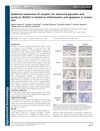
November 2015 in “Experimental Dermatology” Skin RAGE levels are linked to inflammation and cell death.

A new AIRE gene mutation causes rare autoimmune symptoms in a Lebanese boy.
Arabidopsis Formin 2 stabilizes actin filaments, affecting cell-to-cell movement and virus susceptibility.
November 2022 in “Journal of Investigative Dermatology” NCSTN gene mutation causes abnormal skin cell differentiation and more inflammation, contributing to Hidradenitis Suppurativa.
6 citations
,
November 1977 in “International Journal of Legal Medicine” Human hair contains a substance that shows blood group A activity.
 23 citations
,
December 2013 in “British Journal of Dermatology”
23 citations
,
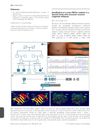
December 2013 in “British Journal of Dermatology” A new gene mutation linked to a skin condition was found in a Spanish family.
July 2026 in “bioRxiv (Cold Spring Harbor Laboratory)” FAKΔe4 helps cells sense and respond to different stiffness levels in their environment.
47 citations
,
September 2012 in “Human molecular genetics online/Human molecular genetics” Folliculin deficiency causes problems with cell division and positioning due to disrupted RhoA signaling and interaction with p0071.
180 citations
,
April 2002 in “Cell Death and Differentiation”  6 citations
,
January 2015 in “Biochemical Society Transactions”
6 citations
,
January 2015 in “Biochemical Society Transactions” The Ysc84/SH3yl1 protein family is important for cell movement and the process of taking in materials by interacting with actin and cell membranes.